
 简体中文
简体中文 Русский
 Français
 Português
 Español
 لالعربية

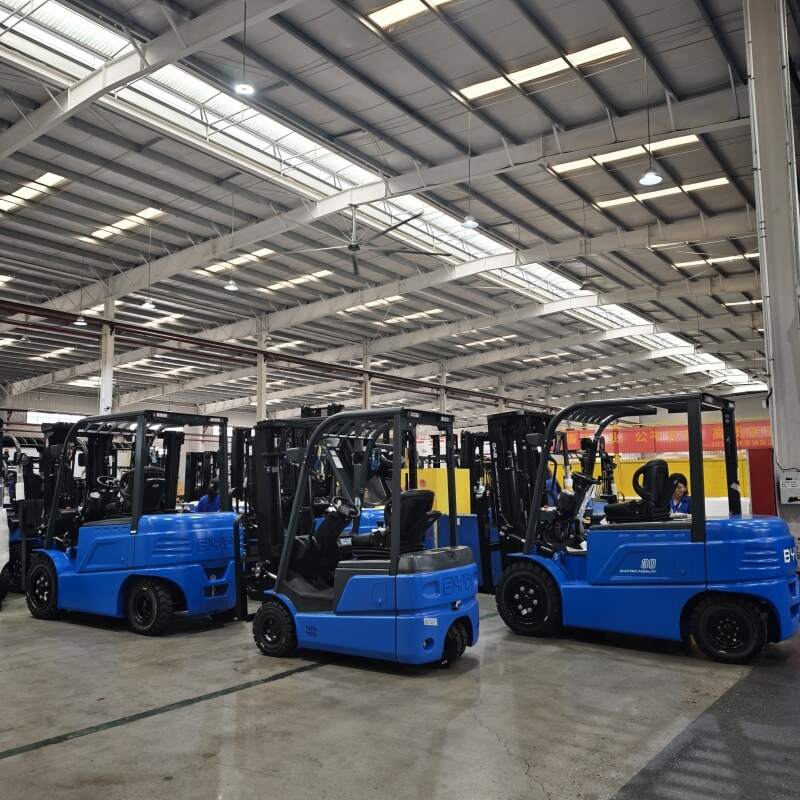
The global warehousing and logistics industry is undergoing steady transformation towards higher operation efficiency and lower environmental impact, and equipment selection criteria are no longer limited to load capacity and handling efficiency only, while emission-free operation has gradually become a non-negligible core evaluation indicator for most warehouse operators.
First, it helps enterprises fully comply with increasingly strict local environmental management regulations. Many regions have introduced clear indoor air quality control rules for enclosed working spaces in recent years. Traditional fuel-powered warehouse equipment will produce exhaust gas containing particulate matter and carbon monoxide during operation, which is very likely to exceed the limited value of indoor air quality standards after long-term use in closed warehouse spaces, bringing extra compliance risks to operation teams. Warehouse equipment with full emission-free operation mode will not discharge any harmful gas at the work site, which can easily meet the requirements of all kinds of indoor emission control rules and effectively reduce the unnecessary compliance management cost for operators.
Second, emission-free operation effectively optimizes the on-site working environment for front-line staff. Most warehouse operation spaces are semi-enclosed or fully enclosed, with relatively limited air circulation efficiency. Exhaust gas accumulated for a long time will increase the probability of respiratory discomfort among long-term on-site workers. Equipment with zero on-site emissions will not produce any harmful exhaust during normal operation, which can maintain good air quality in the warehouse all the time, create a more comfortable and healthy working environment for staff, and also help enterprises reduce extra management investment related to occupational health protection.
Third, this operation mode can bring stable long-term economic benefits for warehouse projects. Most emission-free warehouse equipment adopts electric power architecture, the number of core components of the power system is much smaller than that of traditional fuel equipment, and there is no need for high-frequency maintenance procedures such as regular oil replacement and fuel filter cleaning. The overall daily maintenance workload is significantly reduced, and the energy consumption cost per unit working hour is also lower than that of fuel-powered equipment. For warehouses that keep high-frequency material handling operation all year round, emission-free equipment can help control the overall operation cost at a stable level in the whole service cycle.
In addition, emission-free operation of warehouse equipment helps enterprises adapt to the low-carbon development trend of the whole supply chain. More and more upstream and downstream partners have put forward clear requirements for carbon footprint traceability of logistics services in recent years. The operation data of emission-free warehouse equipment can be directly included in the enterprise's carbon emission reduction account, which helps the enterprise meet the green procurement requirements of downstream customers and obtain more opportunities for long-term stable cooperation. At present, emission-free operation is no longer an optional additional feature for warehouse equipment, but a core factor that balances compliance, staff welfare, operation cost and long-term business development, and it will be further popularized in more diversified warehouse handling scenarios in the future.


