
 English
 简体中文
 Français
 Português
 Español
 لالعربية


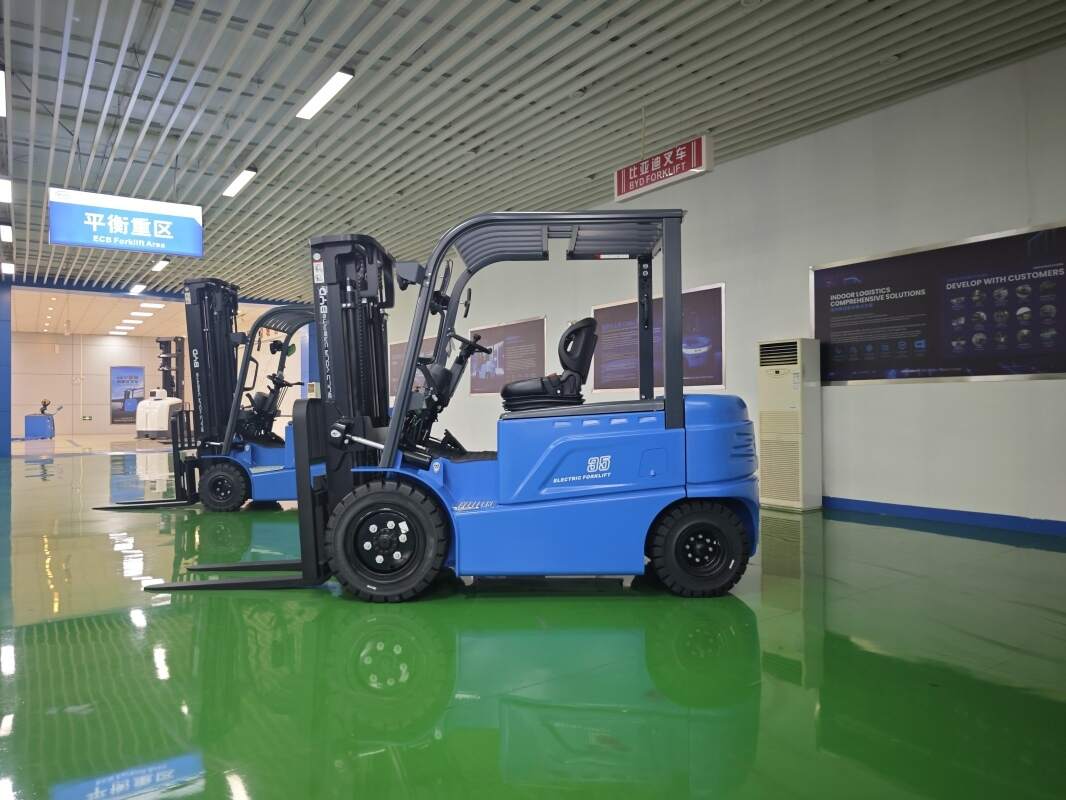
As low-carbon logistics becomes the mainstream trend across industrial storage sectors, electric forklifts have become one of the most widely adopted material handling tools for small, medium and large warehouse sites across different industries. This guide sorts out professional, down-to-earth practical knowledge accumulated from years of industry research, to help relevant practitioners master proper usage logic without excessive learning cost.
Core Performance Characteristics of Modern Electric Forklifts
Different from traditional internal combustion handling equipment, electric forklifts get rid of exhaust emission output during normal operation, which makes them suitable for semi-enclosed and fully enclosed indoor storage spaces with relatively high air quality requirements. Most current models operate with relatively low noise, which can effectively reduce the noise interference to on-site operators and avoid the hidden safety hazards caused by blurred communication in high-noise working environments. The whole machine has relatively few core wearing parts, which reduces the daily lubrication and accessory replacement work to a certain extent under the premise of following standard operation procedures.
Standard Routine Operation and Maintenance Points
Operators need to complete pre-operation inspection before each shift, including checking the remaining power of the battery, the flexibility of the lifting and steering system, and the effectiveness of the safety warning devices installed on the vehicle. When the remaining power drops to the set warning threshold, operators should arrange charging in time at the designated charging area, avoid deep discharge for a long time, which will cause extra load loss to the battery pack. After the daily operation work is finished, operators should park the equipment in the designated storage area, lower the lifting fork to a position that is 10 to 15 centimeters away from the ground, and cut off the main power supply of the whole machine. Regularly arrange professional personnel to check the wear condition of tires, motors and transmission components every certain working cycle, and replace the aging accessories in time according to the actual wear degree.
Scenario Matching Suggestions to Improve Usage Efficiency
Warehouse operators can select corresponding load capacity and lifting height parameters according to the maximum weight of conventional handling goods and the maximum height of storage shelves, so as to avoid performance waste caused by excessive configuration or insufficient operation ability caused by insufficient configuration. For sites with narrow passage width, users can choose electric forklift models with corresponding small turning radius, which can effectively improve the circulation efficiency of the whole storage operation line. Under the premise of meeting relevant safety operation specifications, reasonably arrange the operation shift and charging schedule, to make the equipment maintain a stable working state for a long time.


