简体中文
简体中文 Русский
 Français
 Português
 Español
 لالعربية

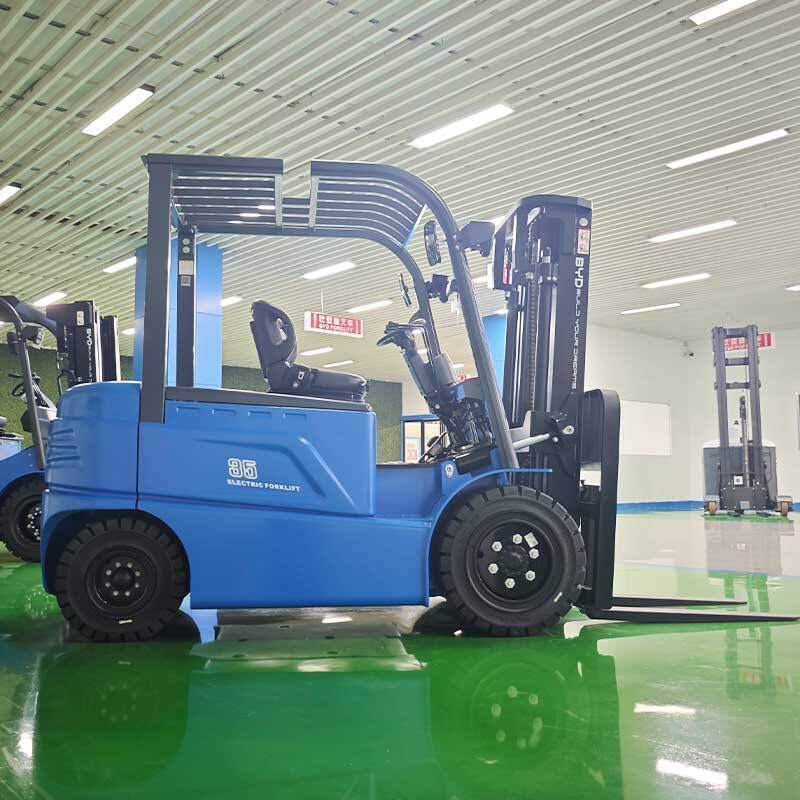
Against the background of continuous upgrading of material handling demand in warehousing, manufacturing and port scenarios, electric forklifts, which are widely recognized for low operation noise, zero local emission and low daily maintenance cost, are gradually endowed with more autonomous functions to match flexible operation requirements. The whole upgrade process follows the principle of not damaging the original stable performance of electric forklifts, and realizes the incremental addition of smart capabilities on the basis of retaining the original manual operation mode, which can effectively reduce the operation burden of operators in long-time repeated handling scenarios.
The first step of adding autonomous features is the reasonable deployment of the perception layer. Multiple types of sensing components including laser ranging modules, visual identification units and ultrasonic detection probes are installed at suitable positions on the body frame, which will not affect the normal operation of the original power system, hydraulic lifting system and safety protection structure of the electric forklift. After systematic calibration, these sensing components can identify static obstacles, dynamically moving personnel, pallet position marks and ground road condition changes within the set sensing range, providing accurate environmental data support for subsequent autonomous operation actions.
The second core link is the adaptive transformation of the control system. An independent special operation calculation module is added on the basis of the original electric forklift electronic control unit, and two-way safe data interconnection is realized between the new module and the original control system, which will not interfere with the original inherent safety protection logic of the equipment. Operators can freely switch between manual operation mode and autonomous operation mode according to actual work needs. Under the autonomous mode, the equipment can complete preset conventional actions such as automatic path tracking, accurate fork alignment, low-level stacking and fixed-point material transfer, effectively reducing the operation error rate caused by operator fatigue after long hours of continuous work.
At present, the addition of autonomous electric forklift features follows a gradual promotion route. Most products first launch practical auxiliary autonomous functions for common scenarios, and continuously expand the scope of applicable scenarios through subsequent function iteration. This upgrade method can help users of different scales complete the intelligent transformation of handling equipment at a reasonable cost, and realize the smooth transition from traditional manual operation mode to man-machine collaborative efficient operation mode. In the follow-up development process, the autonomous features of electric forklifts will also realize more friendly docking with general warehouse management systems, further improve the overall circulation efficiency of materials in the work site, and provide more flexible and reliable choices for various industrial handling scenarios.