
 简体中文
简体中文 Русский
 Français
 Português
 Español
 لالعربية

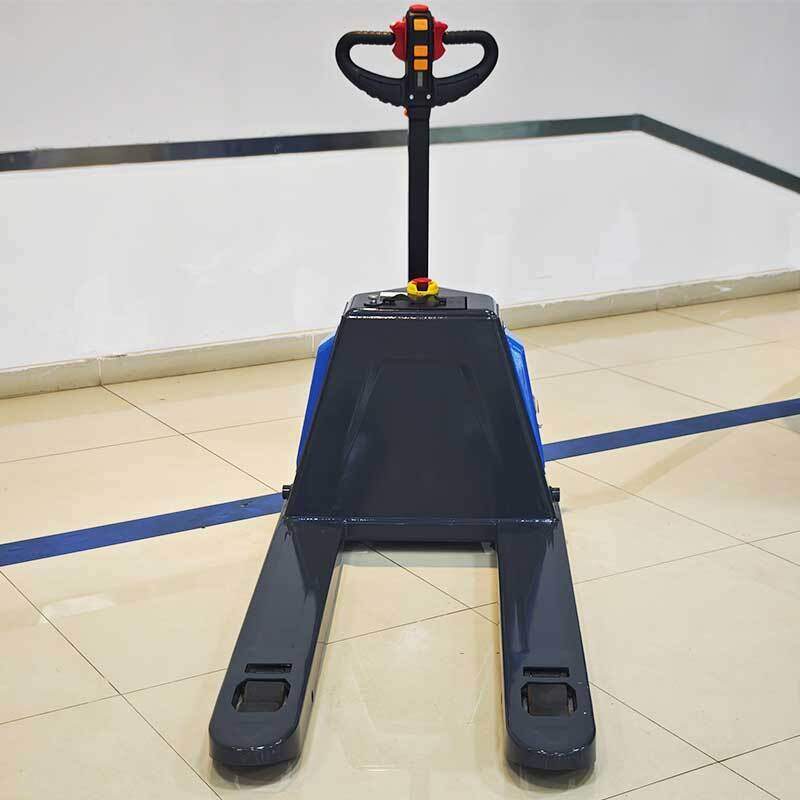
Food processing plants have special requirements for material handling links that are different from ordinary industrial scenarios, because any potential contamination risk or operation interruption may affect the qualification of final food products and the continuity of daily production. Choosing a suitable electric handling truck is an important part of building a stable and compliant internal logistics system, and relevant procurement teams can make decisions from the following multiple dimensions instead of only referring to the initial product quotation.
First of all, priority should be given to verifying the hygiene compliance performance of the equipment. All parts that may be exposed to raw food, semi-finished products or food packaging materials are recommended to adopt food-grade rust-proof and corrosion-resistant materials, without easy-to-fall surface coatings, and the overall structure is convenient for daily disassembly and cleaning, which will not leave hidden sanitary dead corners that are easy to breed bacteria. Do not choose ordinary industrial handling trucks that are not designed for food scenarios, so as to avoid foreign matter contamination risks that do not meet food safety production specifications.
Secondly, confirm that the equipment parameters fully match the actual operation conditions of the plant. For cold chain processing workshops that work for a long time in low temperature environment, it is necessary to select products with low temperature resistant electronic control and battery components, to avoid sudden drop of working duration caused by low temperature. For clean packaging workshops, it is recommended to select models with ultra-low noise and no volatile gas emission, which will not affect the air cleanliness of the production area. The procurement team also needs to calculate the commonly used handling load, the width of the narrow passage in the workshop, and the daily continuous operation time, so as to select the equipment with matching rated load, turning radius and battery life, avoiding unnecessary cost waste caused by blindly pursuing high configuration.
Third, evaluate the comprehensive operation cost in the full life cycle. In addition to the initial purchase cost of the equipment, it is also necessary to investigate the subsequent cost of battery maintenance, wearing parts replacement, and the local after-sales service response efficiency. Most food processing plants maintain continuous 24-hour operation, once the handling truck breaks down unexpectedly, the stagnant fresh raw materials may go bad and cause extra loss. Choosing a supplier that can provide fast on-site after-sales support in the surrounding area can effectively reduce the downtime risk.
Finally, it is recommended to confirm that the supplier can provide standardized operation training for on-site operators, so that the staff can master the operation specifications of the equipment in different functional areas of the food workshop, and reduce the probability of man-made damage to food materials and finished products in the handling process.


