
 English
 简体中文
 Русский
 Français
 Português
 لالعربية


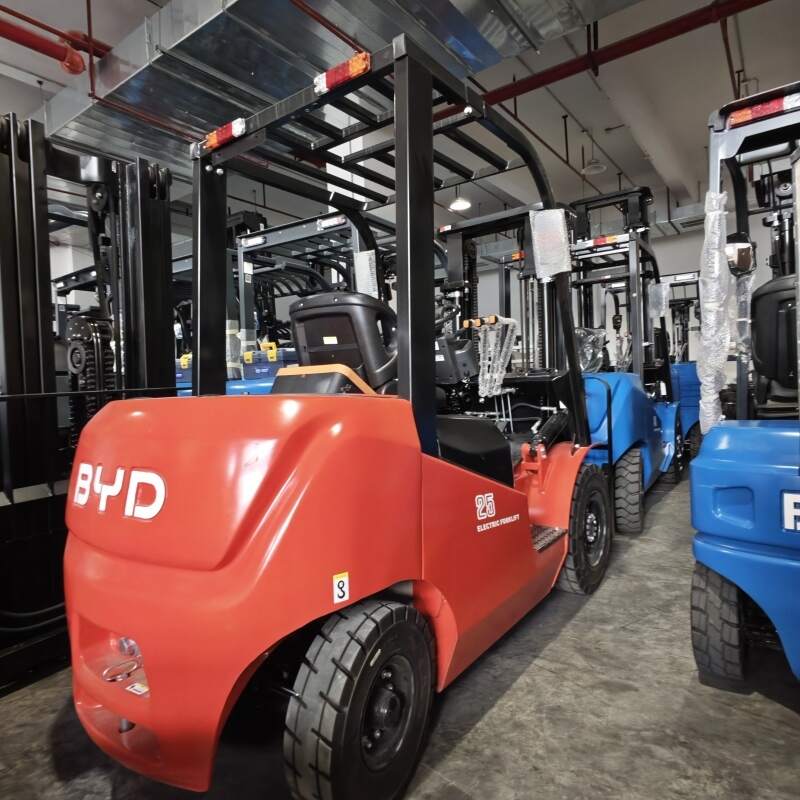
As low-carbon logistics becomes a mainstream trend in the industrial sector, electric forklifts have gained wider adoption across different material handling scenarios in recent years. For warehouse managers and frontline operators, mastering systematic knowledge of electric forklift use and management can help maximize equipment value while reducing unnecessary operation risks.
Core Operational Basics for Daily Use
Before starting each shift, operators need to conduct a visual check on key components including the power system, brake structure and load bearing parts, to confirm no obvious abnormality exists. During operation, operators need to keep proper driving speed according to site conditions, avoid sharp turns on uneven ground, and keep a safe distance from surrounding personnel and stacked goods. For load handling, users need to follow the rated load parameter of the equipment, avoid long-time carrying of loads that exceed the specified limit, and adjust the fork height properly according to the stacking height to keep stable operation status.
Routine Maintenance Practices to Extend Service Life
Regular maintenance work can effectively reduce equipment failure rate and extend the whole service cycle of electric forklifts. Users need to arrange regular inspection for the power storage module according to the manufacturer’s suggested cycle, keep the surface of the module clean and avoid prolonged exposure to extreme high or low temperature environments. The moving parts of the walking and lifting system need to be lubricated on schedule, and worn parts should be replaced in time according to actual wear condition. Operators also need to arrange proper storage for equipment during non-working hours, park the forklift in designated dry and ventilated areas, and avoid long-term suspension of power supply when the power level is too low.
Scenario Adaptation and Efficiency Optimization Suggestions
Different working scenarios have different requirements for electric forklift performance configuration. For large closed warehouse scenes with flat ground, users can select proper models with corresponding lifting height to match their daily stacking demand. For scenes with frequent cross-shift operation, arranging proper charging or power replacement plan can avoid interruption of normal operation rhythm. Users can also adjust the operation flow according to the site layout, to reduce unnecessary moving routes and improve overall material handling efficiency without violating safety operation specifications. With continuous development of related industrial technology, the performance of electric forklifts will keep improving, and users can update their operation and maintenance knowledge gradually to adapt to new application demands in the logistics sector.


