
 English
 简体中文
 Русский
 Français
 Português
 Español


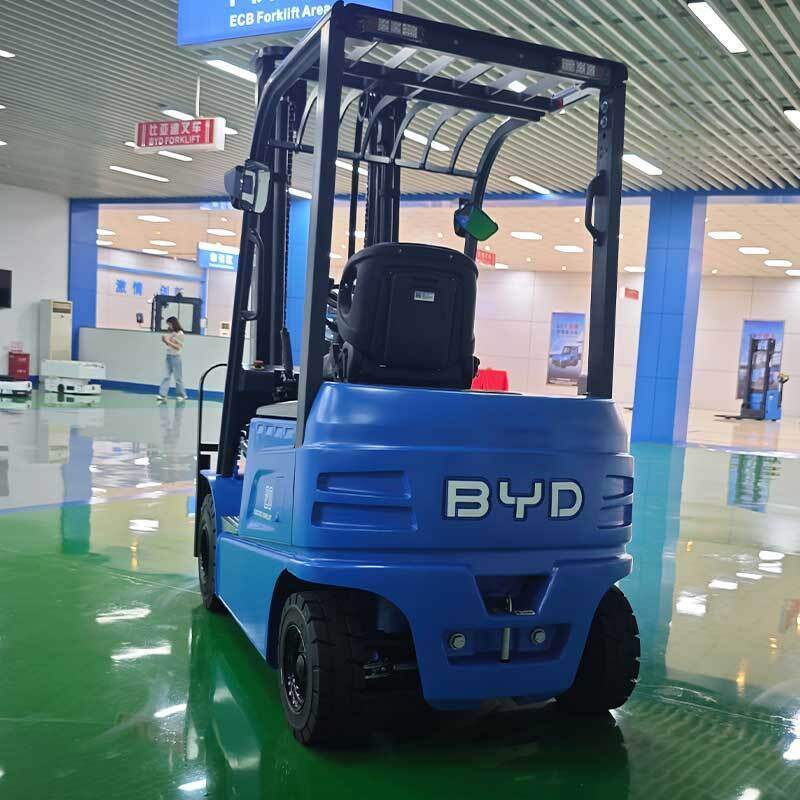
As the core equipment for modern warehouse material handling, electric forklifts have been widely applied in various logistics, manufacturing and distribution scenarios for their low noise, zero local emission and flexible operation features. Mastering proper usage and management rules can help teams give full play to the equipment’s advantages while avoiding unnecessary operating risks.
Pre-operation Daily Inspection Essentials
Before each shift, operators need to conduct a quick full check of the equipment to eliminate hidden risks in advance. The inspection scope covers the remaining power status of the power system, the flexibility of brake and steering components, the wear condition of fork arms and lifting chains, as well as the integrity of safety warning lights and alarms. Any abnormal sign such as unresponsive braking or unsteady lifting should be reported to the management team in time, and operators are not allowed to start the equipment for operation before the hidden danger is completely removed.
Standardized Operation Norms to Reduce Unnecessary Wear
During the operation process, operators need to follow the rated load limit requirements strictly, and do not carry over-weight goods that exceed the equipment’s bearing range for a long time. When driving on ramps, keep the goods facing the uphill direction to avoid slipping risk, and do not turn sharply at high speed on smooth warehouse ground. When stacking or picking up goods, keep the goods 10 to 15 centimeters above the ground to avoid scratching the ground or colliding with surrounding stored goods. Avoid frequent rapid acceleration and sudden deceleration in narrow operation channels, which can effectively reduce the loss of the power system and tire parts.
Routine Maintenance Practices for Stable Long-term Operation
For daily maintenance, operators need to wipe the dust and goods debris on the surface of the equipment and the heat dissipation parts of the power system after each shift, to avoid the accumulated dust affecting the normal heat dissipation effect. For the power battery part, follow the corresponding charging specification, and do not store the equipment in a high temperature or super humid environment for a long time. Arrange professional personnel to conduct regular systematic inspection on the hydraulic system, transmission components and electrical circuit connection parts according to the actual use frequency, so as to find potential aging problems in time. Adhering to the above operation and management rules can effectively improve the comprehensive utilization rate of electric forklifts, reduce the frequency of unexpected failures, and create a safer and more efficient material handling working environment for the front-line operation team.


