
 English
 简体中文
 Русский
 Français
 Português
 Español


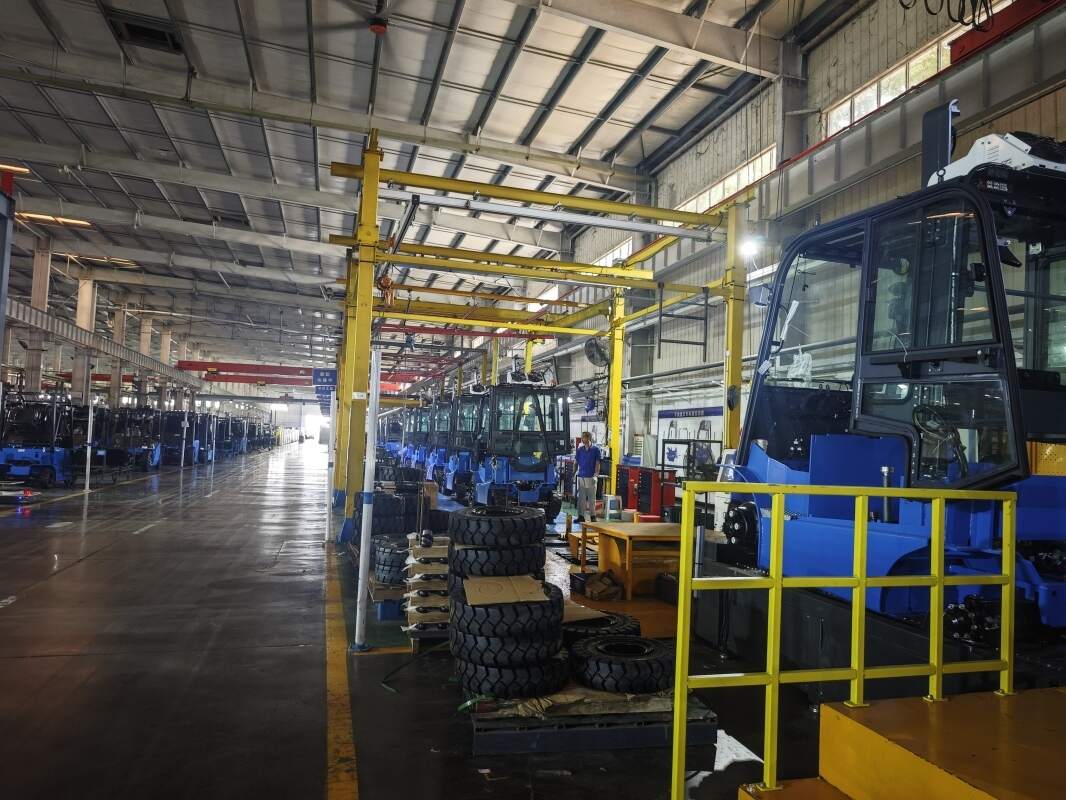
As the low-carbon logistics trend keeps advancing across the global material handling sector, electric forklifts have become a mainstream equipment choice for most warehousing, manufacturing and distribution scenarios in recent years. Unlike traditional internal combustion counterparts, electric forklifts feature zero tail emission, lower operation noise and relatively milder operation threshold, which requires operators and managers to master systematic related knowledge to give full play to its performance.
Core Performance Features of Modern Electric Forklifts
The current mainstream electric forklift products are mostly powered by high-capacity energy storage battery packs, with the driving and lifting system driven by high-efficiency motors. Compared with fuel-powered equipment, their average daily operation energy consumption is at a relatively low level, and no complicated exhaust gas treatment parts are required in the basic structure. Such equipment usually runs stably on flat indoor pavement, and will not generate extra noise interference to the surrounding working staff, which can effectively improve the overall comfort of the closed working environment.
Standardized Daily Operation Specifications
Before starting each shift, operators need to conduct a basic inspection of the whole equipment, including checking the remaining power level, the flexibility of the lifting hydraulic system, the sensitivity of the braking and steering system, and the integrity of the safety protection structures around the vehicle. During the operation process, operators should avoid overloading the equipment beyond the rated load limit, keep a safe distance from surrounding staff and goods stacks, and do not carry out sharp steering or high-speed driving when the fork is lifted to a high position. When the operation task of the shift is completed, the operator should lower the fork to a position 10 to 15 cm above the ground, turn off the power supply, and park the equipment in the designated safe area.
Routine Maintenance and Care Tips
For the electric forklift, the daily maintenance work mainly focuses on the energy storage unit, the motor system and the transmission mechanism. Users need to follow the official instructions to complete the regular charge and discharge cycle operation of the battery pack, avoid long-term over-discharge or full power storage for more than 72 hours, to extend the overall service life of the battery pack. The dust and sundries accumulated on the surface of the motor and heat dissipation parts should be cleaned regularly, and the lubricating oil of the transmission and hydraulic parts should be replaced on schedule as required. Regular maintenance can effectively reduce the probability of sudden equipment failure, and lower the overall long-term operation cost of the equipment.
Scenario Matching Reference Principles
When selecting applicable electric forklift models, relevant managers need to combine the actual average weight of the handled goods, the average height of the goods stacking, the width of the working passage and the pavement condition of the working site to make a comprehensive judgment. For narrow passage scenarios, users can choose the corresponding compact telescopic models, for long-time continuous operation scenarios, they can choose the configuration with larger battery capacity, to fit the actual operation demands of different sites.


