
 English
 简体中文
 Русский
 Français
 Português
 Español


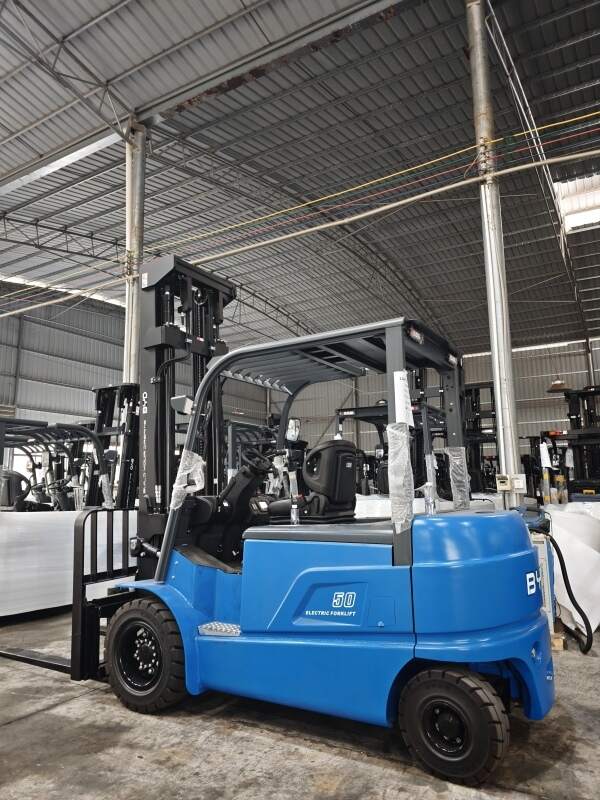
With the rapid development of green logistics and intelligent warehousing, electric forklifts have become one of the most widely used material handling equipment in indoor operation scenarios, due to their low noise, zero on-site emission and relatively stable operating characteristics. For most logistics operation teams, mastering systematic professional knowledge of electric forklift use and management can effectively reduce unnecessary operation costs and improve overall work safety level.
Core Safe Operation Specifications for Daily Use
Before each formal operation, operators need to complete basic pre-check work, including confirming the remaining battery power, testing the flexibility of the braking system and steering structure, and checking whether the forks and lifting accessories have obvious deformation or damage. During the driving process, operators need to control the driving speed within the safe range adapted to the site condition, avoid sharp turning or sudden braking on slippery ground, and keep a safe distance with surrounding staff and stacked goods. Overload operation is not recommended, as it will cause extra load on the power system and lifting structure, increasing hidden safety risks.
Practical Routine Maintenance Strategies
Standardized daily maintenance can effectively extend the service cycle of electric forklifts and reduce unexpected fault probability. Operators need to clean the surface of battery contacts regularly to prevent dust and accumulated moisture from causing poor contact, and follow the official charging instructions to avoid over-discharging the battery below the recommended lowest power level. It is also necessary to check the sealing state of the hydraulic system at regular intervals, timely clean the dust accumulated on the motor heat dissipation structure, and replace severely worn walking tire parts in time to keep the running stability.
Scenario Matching to Improve Operational Efficiency
Different application scenarios have different requirements for electric forklift configuration, and reasonable matching can give full play to the equipment’s performance advantages. For narrow channel warehousing scenarios, selecting equipment with flexible steering parameters can effectively improve the space utilization rate of goods stacking. For low-temperature operation scenarios, adding related protective configurations can avoid the impact of low temperature on the battery activity and operation sensitivity. For long-time continuous operation scenarios, arranging reasonable battery rotation plan can effectively reduce the non-operation waiting time, to support smooth and orderly material handling workflow.


