English
 简体中文
 Русский
 Français
 Português
 Español


Agriculture facility managers bear the core responsibility of optimizing material handling efficiency across different functional areas, including open-air planting yards, closed seedling greenhouses, low-temperature cold storage rooms, feed processing zones and finished agricultural product storage areas. Choosing a suitable counterbalance forklift is a key decision that directly affects daily operation efficiency, long-term cost control and on-site operation safety.
First of all, it is necessary to confirm the scenario adaptability of the counterbalance forklift to the actual agricultural operation environment. Different from standard flat industrial workshops, agricultural operation sites usually have uneven muddy roads, narrow passageways between greenhouse racks, and operation environments with strict requirements for no exhaust pollution. The counterweight design of the counterbalance forklift can maintain stable load performance when lifting palletized agricultural products, bulk feed bags and large farm tools, and will not easily roll over on slightly bumpy roads. The electric counterbalance forklift produces no exhaust gas during operation, and will not cause pollution to fresh fruits, vegetables and crop seeds stored in closed spaces, which meets the hygiene management standards of modern agricultural facilities.
Secondly, operation and maintenance cost control is a non-negligible consideration point. The electric counterbalance forklift has no engine fuel consumption cost, and the noise generated during operation is much lower than that of traditional internal combustion equipment, which will not interfere with the normal growth of sensitive crops in the greenhouse. Its daily maintenance work is relatively simple, operators only need to regularly check the battery status, brake sensitivity and wear of tire parts, without complicated engine oil circuit maintenance procedures, which can reduce the annual maintenance investment for agricultural facilities. For the seasonal peak operation demand in agricultural production, the electric counterbalance forklift can ensure continuous operation through short-time supplementary power, and will not produce extra energy consumption when it is on standby in the slack farming season.
In addition, the operation friendliness of the counterbalance forklift matches the staffing characteristics of agricultural facilities. Most on-site operators of agricultural facilities have not received long-term professional heavy machinery training, and the electric counterbalance forklift is designed with a smooth steering system and open operation vision, which can accurately control the driving speed in narrow passages, avoid collision with crops, storage containers and surrounding staff. The whole machine has a suitable dustproof and waterproof grade, which can adapt to the multi-dust and occasional rainy operation environment in the outdoor farm yard, and effectively reduce the unexpected failure rate in daily use.
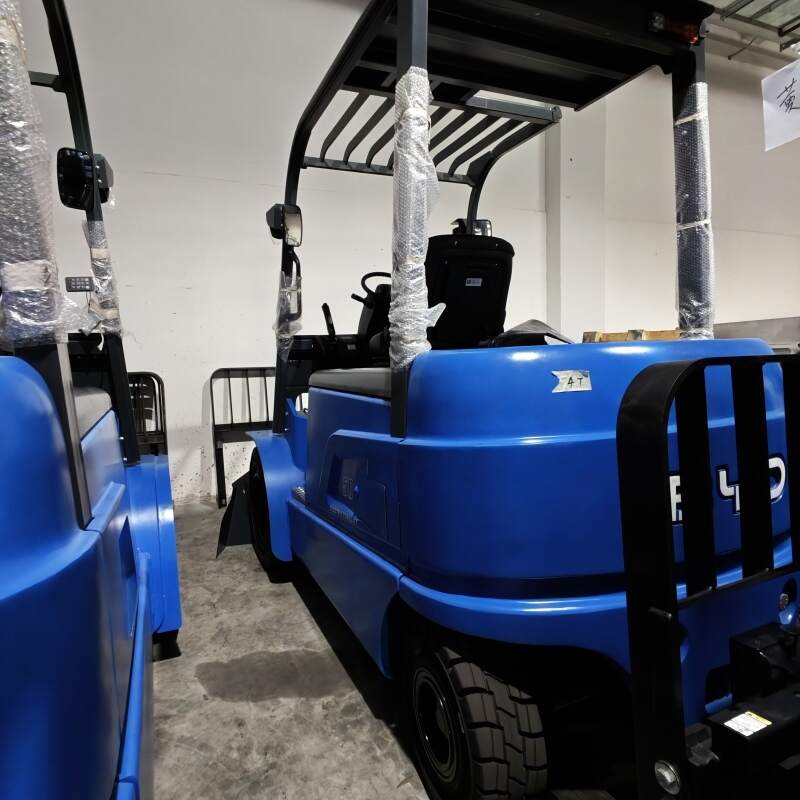
As Jian Shu New Energy, we focus on high-quality BYD electric forklift solutions tailored for agricultural operation scenarios. If you have relevant demands for counterbalance forklift configuration selection, operation guidance or after-sales support, you can contact us via email at [email protected] for further detailed communication.