
 English
 简体中文
 Русский
 Français
 Português
 Español


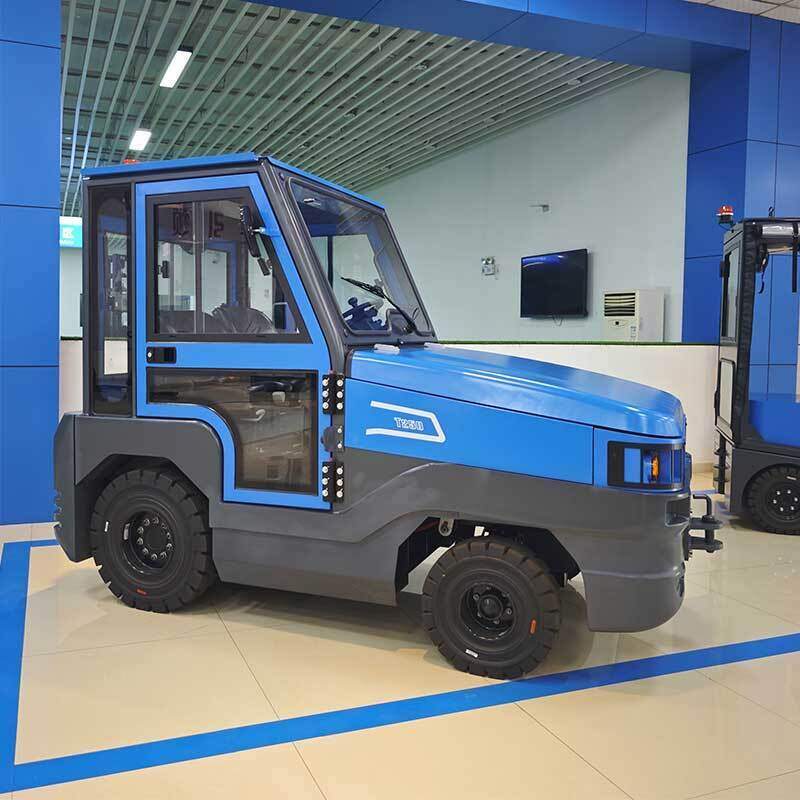
As low-carbon material handling solutions gain wider popularity across global industrial and warehouse scenarios, electric forklifts have become one of the most commonly used logistics equipment for frontline operation teams. Mastering systematic professional knowledge of operation, maintenance and scenario adaptation can help relevant personnel give full play to the core advantages of such equipment in actual daily work.
Basic Daily Operation Specifications for Electric Forklifts
Before starting each shift, operators need to complete a full pre-shift inspection covering power status, brake sensitivity, lifting mechanism flexibility and tire condition, to eliminate hidden risks that may cause abnormal operation. During the driving process, operators should keep the load center within the allowable range specified by the equipment parameter, avoid sudden acceleration or emergency braking on uneven road surfaces, and never carry out over-height loading and unloading operations beyond the rated load limit. Operators are also required to receive regular skill assessment to ensure their operation behavior conforms to current safety production specifications.
Routine Maintenance Measures to Reduce Equipment Failure Rate
Compared with internal combustion forklifts, electric forklifts have more precise power components, so regular targeted maintenance can effectively reduce unexpected shutdown probability. Operators should clean the surface dust and sundries of the power module after each long-time operation, check the cable connection status regularly, and follow official guidance to complete the standardized charging process, avoid overcharging or deep power depletion that may cause irreversible damage to the power system. The transmission and hydraulic components also need to be checked periodically for lubrication status, to keep the operation of the whole equipment stable and smooth.
Scenario Adaptation Strategies to Improve Handling Efficiency
In closed warehouse scenarios, electric forklifts can give full play to their low-noise and zero-emission advantages, matching different attachment tools to complete diverse handling tasks of pallet goods, boxed materials and special large-size cargo. For outdoor scenarios with good road conditions, personnel can select equipment with appropriate battery capacity according to continuous operation time requirement, to arrange work schedule reasonably and avoid unexpected power interruption in the middle of operation. Reasonable route planning can also further reduce repeated moving distance, and improve the overall operation efficiency of the whole material handling process.


