
 English
 简体中文
 Русский
 Français
 Português
 Español


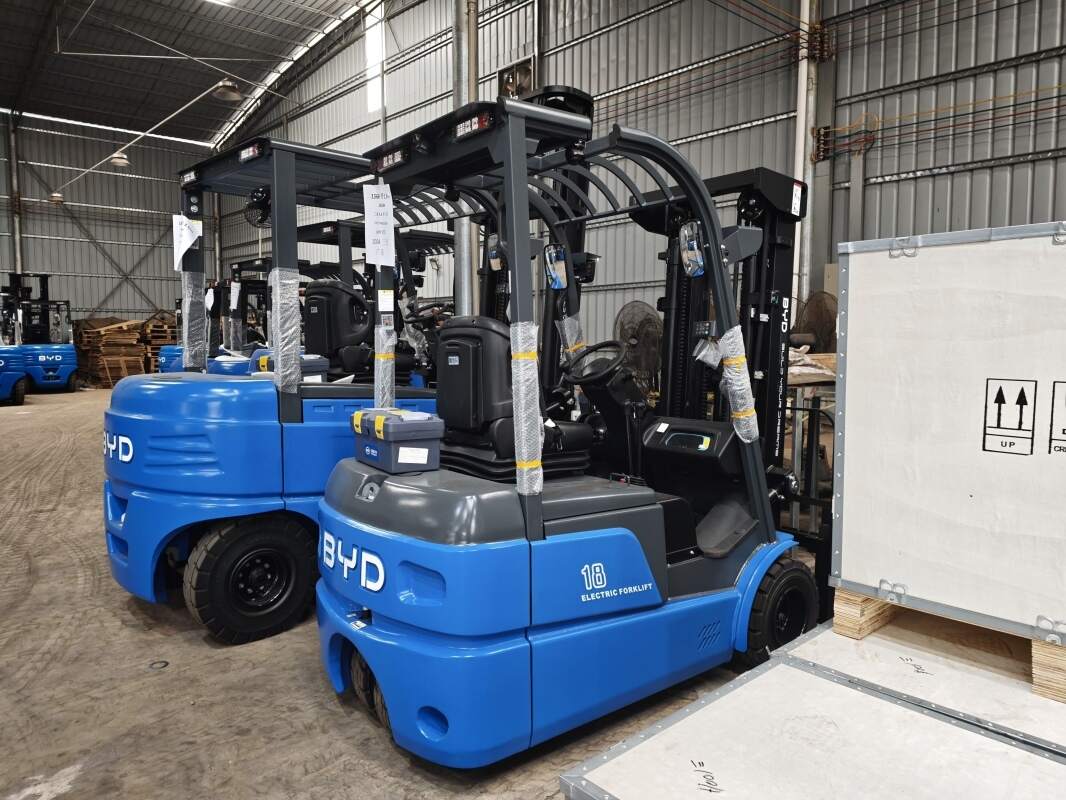
As the low-carbon logistics trend gains steady momentum across the global material handling industry, electric forklifts have gradually become a mainstream choice for most warehouse and industrial operation scenarios, bringing distinct operation experiences compared with traditional internal combustion counterparts.
Core Operational Advantages of Electric Forklifts
Unlike traditional fuel-powered handling equipment, electric forklifts rely on on-board power modules to provide power output, which generates far less noise and no exhaust emissions during the whole operation process. This feature makes them highly compatible with enclosed operation spaces that have high air quality requirements, such as food storage warehouses, pharmaceutical distribution centers and enclosed production workshops. The power output curve of most electric forklift models is relatively stable during operation, and the response of the operating handle is sensitive, which can help operators complete goods stacking, short-distance transportation and loading and unloading work more smoothly in narrow operation passages.
Key Points for Daily Routine Maintenance
Doing a good job in standardized daily maintenance can effectively extend the service life of electric forklifts and reduce the probability of unexpected failures during peak operation periods. Operators need to check the remaining power level before each shift, and arrange supplementary charging in time according to the planned operation tasks of the day, to avoid sudden power loss in the middle of the operation process. It is also necessary to regularly clean the dust and debris accumulated on the surface of the power module and the heat dissipation structure, check the wear degree of the tire surface and the flexibility of the braking system, and arrange professional personnel to carry out regular system inspection according to the actual operation frequency.
Scenario Matching Optimization Suggestions
In different operation scenarios, operators can adjust the operation parameters of electric forklifts appropriately to get better use effect. For high-intensity continuous operation scenarios that last more than 8 hours a day, it is recommended to arrange spare power modules for replacement to avoid affecting the operation rhythm due to long charging waiting time. For narrow channel scenarios with a width of less than 3 meters, operators can adjust the power output limit to a reasonable range, to ensure operation safety while meeting basic handling power demand. For low-temperature operation environments below zero degrees Celsius, it is recommended to preheat the power module for a short time before starting the device, to keep the power output in a normal and stable state. Reasonable operation and targeted maintenance can give full play to the use value of electric forklifts, bring more stable and efficient support for the daily material handling work of logistics and manufacturing enterprises.


