
 English
 简体中文
 Русский
 Français
 Português
 Español


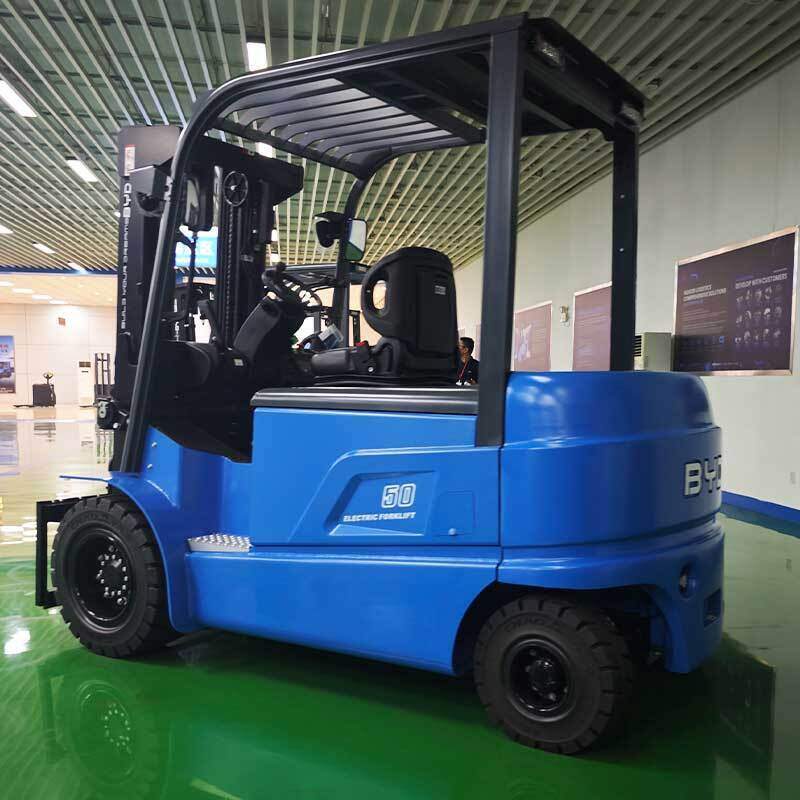
As low-carbon logistics equipment gains wider application across industrial storage scenarios, electric forklifts have become a core carrier of material handling work for most warehouse operators. Mastering correct operation and maintenance rules can help teams reduce unnecessary equipment wear, lower long-term operating cost, and improve overall logistics turnover efficiency.
Basic Pre-operation Check Procedures
Before any formal operation, operators should complete a series of basic checks to eliminate hidden risks in advance. First, inspect the power connection status and remaining power level of the battery pack, confirm no abnormal leakage or loose wire connection is found on the surface. Next, test the flexibility of the lifting mechanism, braking system and steering component, verify that the alarm and lighting functions can work normally during low-light working conditions. It is also necessary to check the condition of the load wheels and balance wheels, remove sundries wrapped around the wheel shaft to avoid abnormal shaking or part abrasion during subsequent movement.
Standard Daily Operation Specifications
During the formal operation process, operators should follow the load capacity limit specified in the equipment manual, avoid long-time overloading that may cause irreversible damage to the motor and hydraulic system. When the fork carries goods, keep the goods 10 to 20 cm above the ground to maintain the center of gravity stability of the whole vehicle, avoid sharp turning or sudden braking actions when moving at a relatively high speed. When working in narrow aisle areas, operators should slow down and pay attention to the surrounding personnel and shelf facilities, keep a safe distance with surrounding obstacles to avoid collision accidents. It is not allowed for non-professionals to operate the equipment without relevant training to avoid unnecessary safety risks.
Routine Maintenance to Extend Service Life
After completing daily work, operators should park the equipment in the designated charging area, lower the fork to the lowest horizontal position, cut off the main power switch before leaving the operation position. It is recommended to arrange regular cleaning of the equipment surface and heat dissipation components every week, remove dust and material debris accumulated in the ventilation slot to ensure the normal heat dissipation of the motor and control panel. For the battery pack, follow the specified charging process, avoid long-term power loss storage, and regularly check the electrolyte level for lead-acid battery types according to related operation requirements.
Efficiency Optimization Tips for Common Scenarios
For high-intensity continuous working scenarios, arranging reasonable operation shift rotation can avoid long-time continuous high-load operation of the equipment. Operators can classify the goods by weight and access frequency in advance, formulate a reasonable handling route to reduce unnecessary repeated steering and waiting time, which can effectively improve the overall material handling efficiency of the warehouse.


