
 English
 简体中文
 Русский
 Français
 Português
 Español


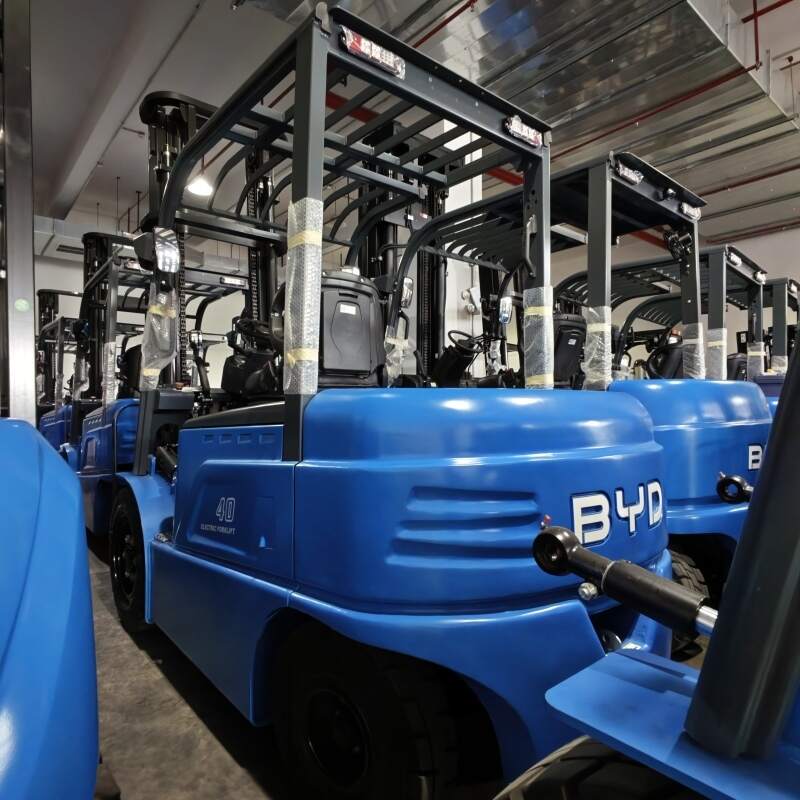
As the demand for low-carbon and environment-friendly intralogistics solutions keeps rising across different industrial sectors, electric forklifts have become one of the most widely deployed material handling equipment for indoor warehouses, manufacturing workshops and small-sized port cargo yards. Mastering relevant professional knowledge of electric forklifts helps teams achieve smoother daily operation with better cost control performance.
Core Functional Advantages of Electric Forklifts
Compared with traditional internal combustion powered counterparts, electric forklifts produce no local exhaust emission during operation, which makes them fully adaptable to enclosed operating spaces with strict air quality requirements, such as food processing workshops, pharmaceutical storage zones and cold chain warehouses. The low operation noise level also reduces noise pollution for surrounding staff, and the lower vibration output effectively eases long-term operation fatigue for equipment operators. For teams with stable daily handling volume, the energy cost per operation hour of electric forklifts stays at a relatively stable level without being affected by frequent fluctuation of fuel prices.
Standard Daily Operation Guidelines
Before every shift, operators need to conduct basic pre-check work systematically, including testing the braking sensitivity, steering flexibility, lighting signal system and remaining battery level, to rule out hidden risks before formal operation. During the driving process, operators need to keep a proper safety distance with surrounding personnel and obstacles, avoid sudden acceleration or emergency stop as much as possible, and do not carry loads that exceed the rated load capacity marked on the equipment nameplate. When lifting cargos to a high position, operators should keep the moving speed at a low level, and no personnel are allowed to stay or walk under the lifted forks at any time.
Practical Routine Maintenance Suggestions
Regular maintenance work is a core part to extend the service life of electric forklifts. Operators need to keep the battery electrode contact surfaces clean and dry regularly, to avoid dust accumulation or liquid corrosion that may cause poor power connection. It is not recommended to drain the battery power to extremely low level before charging, and users need to follow the official guidance to complete the full charging process in a ventilated, temperature suitable space. Besides, users should check the hydraulic system oil level and sealing condition at fixed intervals, clean the dust on the motor heat dissipation structure, and park the equipment in the designated safety zone with forks lowered and hand brake pulled up when not in use.


