
 English
 简体中文
 Русский
 Français
 Português
 Español


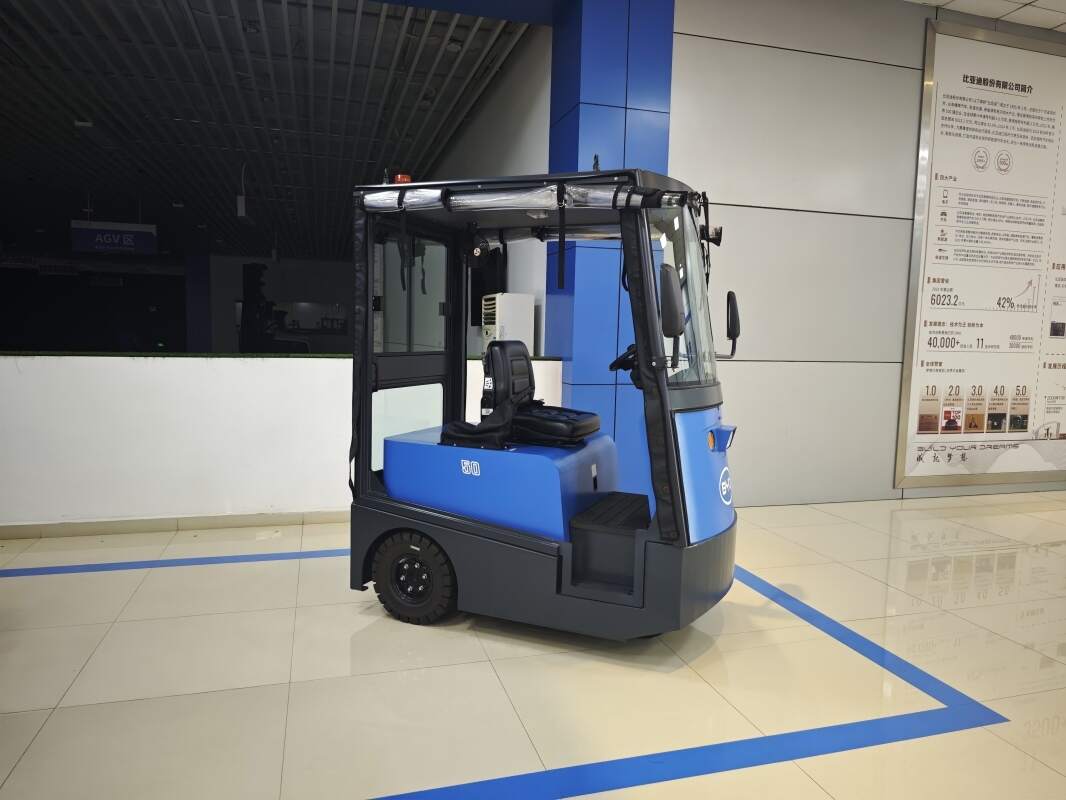
With the continuous development of green logistics and intelligent warehousing, electric forklifts have become one of the most widely used material handling equipment in industrial and commercial scenarios in recent years. Mastering systematic application and management knowledge of electric forklifts can help relevant practitioners give full play to the equipment’s value in daily operations.
Core Functional Characteristics of Modern Electric Forklifts
Compared with traditional fuel-powered handling equipment, modern electric forklifts have lower local operation noise, no tail gas emission at the use site, and relatively lower energy consumption cost per unit working hour, which is more suitable for long-time continuous operation in closed or semi-closed warehouse environments. The load capacity of mainstream products can cover the demand of most conventional material handling scenarios, and the adjustable mast height can meet the access operation requirements of different shelf heights.
Standardized Daily Operation Specifications
Before each shift of operation, operators need to check the sensitivity of the braking system, the remaining power level of the power unit, and the wear condition of the fork surface to confirm no obvious hidden dangers before formal work. During the driving process, operators need to adjust the driving speed according to the width of the operation channel, slow down when turning or meeting passing pedestrians, and avoid sharp acceleration or sudden braking as much as possible. When operating on a sloped section, keep the load facing the upper slope direction, and do not turn on the inclined road surface to avoid the risk of side tipping.
Routine Maintenance Points for Extended Service Life
For the power battery unit, operators need to check the liquid level regularly according to the product specification, avoid long-term overcharge or deep over-discharge, and keep the surface of the battery clean and dry in daily use. For the power motor and transmission parts, regularly remove the accumulated dust and sundries around the heat dissipation structure, and add lubricating oil to the rotating connection parts according to the specified cycle, so as to reduce the abrasion loss of mechanical parts. If there is abnormal noise or unsmooth operation in the use process, stop the equipment in time for troubleshooting, and do not carry out operation under unknown fault conditions.
Reasonable Scenario Matching Suggestions
For high-density narrow-channel warehousing scenarios, users can choose products with smaller turning radius to improve the space utilization rate of the site. For scenarios that involve frequent short-distance handling in outdoor open areas, it is recommended to select models that meet the corresponding protection level to adapt to different weather conditions. For enterprises with high continuous operation intensity, it is possible to configure spare power units to reduce the waiting time for power replenishment and ensure the continuity of daily handling work. Scientific operation and regular maintenance can effectively reduce the long-term operation cost of electric forklifts, and help the material handling link of logistics and manufacturing sites run more stably and efficiently.


