
 English
 简体中文
 Русский
 Français
 Português
 Español


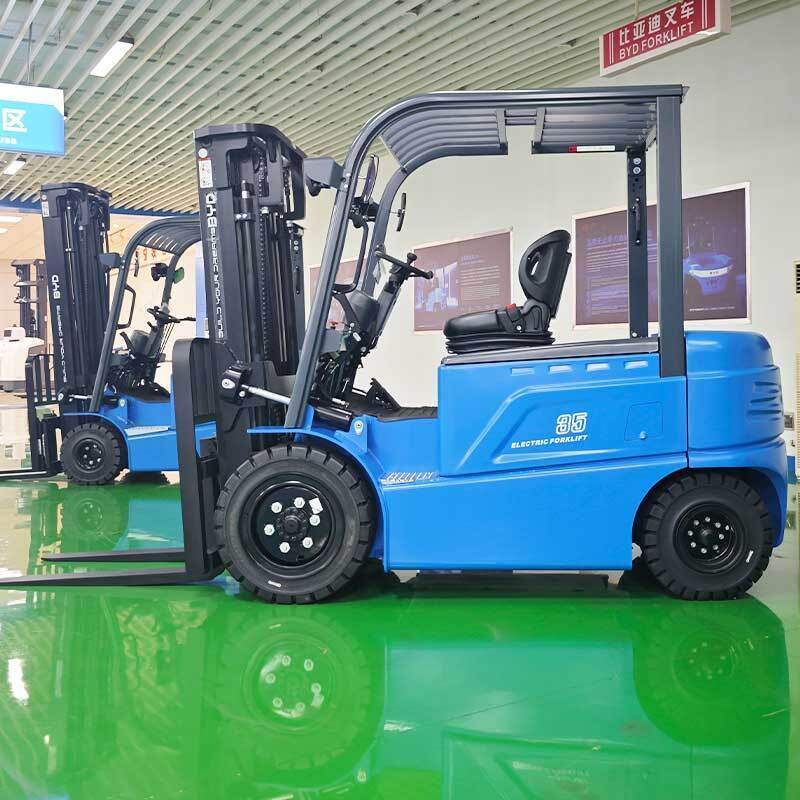
As low-carbon logistics gains wider popularity across the material handling industry, electric forklifts have become a mainstream option for most warehouse and distribution center users, thanks to their relatively low noise level and zero local emissions. Many users still lack systematic knowledge to maximize the performance of such equipment while lowering long-term operating costs, and this guide covers core practical points from operation, maintenance to scenario matching for reference.
Core Safe and Efficient Operation Specifications
Before starting the equipment every shift, operators need to conduct a basic check on the power level, brake flexibility, tire condition and lifting mechanism status, to avoid potential hidden risks during subsequent operation. During the driving process, operators should keep a stable running speed according to the site environment, keep proper distance with surrounding staff and stacking racks, and avoid sudden steering or emergency braking with heavy loads. When lifting goods, it is not recommended to lift the goods to an excessively high position during moving, to keep the center of gravity stable and reduce the risk of side rollover. Operators should also receive regular skill training to get familiar with the parameter limit of different equipment models, rather than operating beyond the rated load range for a long time.
Routine Maintenance Recommendations
Daily maintenance work does not require overly complex professional operations, and most of the routine inspection items can be completed by on-site operation and management personnel. After each shift, users need to wipe the surface of the equipment, clean up the dust and sundries accumulated on the motor and heat dissipation structure, and check the residual power level to arrange timely charging according to the next shift’s work schedule. Users should avoid over-discharging the power core, and do not expose the equipment to a high-humidity or high-temperature environment for a long time during the charging process, to protect the performance of the core components. Regular periodic professional inspection, including checking the circuit connection tightness and the wear degree of the transmission parts, can help discover potential minor issues in advance, reduce unexpected downtime, and stabilize the overall service life of the equipment.
Scenario Matching Optimization Tips
Different operation scenarios can adjust the use mode of electric forklifts accordingly to get better use effect. For closed indoor warehouse scenarios, the zero-emission feature of electric forklifts can help improve the overall working environment quality without additional exhaust gas treatment configuration. For low-temperature operation scenarios in winter, users can properly preheat the power system before formal operation, to make the equipment reach the optimal working state faster. For long-time continuous operation scenarios, users can arrange reasonable shift handover and charging plans according to the equipment’s battery capacity, to avoid interruption of the whole logistics process. Following proper use and management rules, electric forklifts can create stable long-term value for material handling work of different scales.


