
 English
 简体中文
 Русский
 Français
 Português
 Español


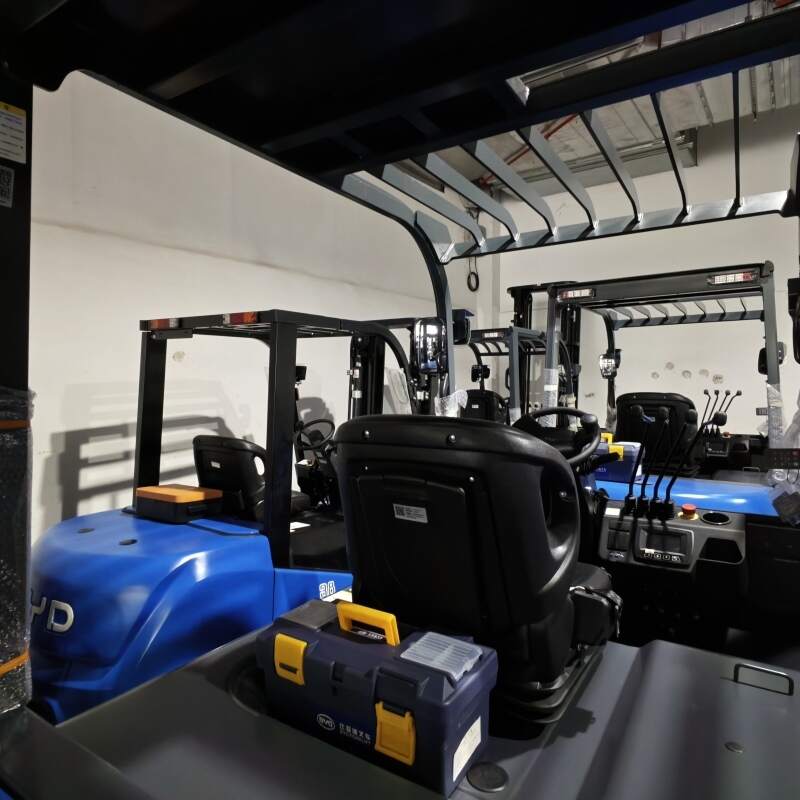
Against the background of accelerating low-carbon transformation of industrial logistics, electric forklifts have become one of the most widely applied core equipment for indoor and closed warehouse material handling scenarios. Mastering systematic professional knowledge of electric forklift operation, maintenance and scenario adaptation can help relevant practitioners reduce unnecessary operating cost and improve overall work safety level.
Fundamental Operation Specifications for Daily Use
Before each start-up, operators need to check the remaining power level of the power system, the flexibility of the brake mechanism, and the integrity of the load-bearing fork structure, to eliminate hidden risks in advance. During the operation process, operators should strictly follow the load weight limit marked on the equipment nameplate, avoid sharp steering or sudden speed change when carrying heavy goods, and keep a safe distance from surrounding working staff and storage shelves. For long distance trans-regional handling, operators should plan the driving route in advance to avoid passing through areas with uneven ground or obvious obstacles, which can reduce extra abrasion to the walking system.
Routine Maintenance to Extend Equipment Service Life
Regular maintenance work can effectively reduce the failure rate of electric forklifts in long-term operation. After each daily use, operators should wipe off the dust, sundries and residual goods stains on the equipment surface, and check the connection status of the power interface to avoid poor contact caused by accumulated dust. It is recommended to arrange professional personnel to conduct systematic inspection of the motor, control circuit and hydraulic lifting structure every fixed cycle, and add proper amount of special lubricating oil to the movable connection parts according to the operation manual, to keep the equipment in good working condition for a long time. For long-term idle equipment, the power system should be charged and discharged at fixed intervals to avoid irreversible performance attenuation caused by long-term power loss.
Scenario-based Performance Adjustment for Better Material Handling Output
According to different actual using scenarios, users can make proper adjustment to the operation parameters of electric forklifts to match the actual working demand. For narrow aisle warehouse scenarios, users can adjust the corresponding steering sensitivity parameter to improve the flexibility of small-range movement, so as to adapt to the limited working space. For goods stacking scenarios with high lifting height, users can properly adjust the lifting speed according to the weight of the loaded goods, to keep the operation process more stable. Proper parameter adjustment under the guidance of professional technicians can effectively improve the operation efficiency of the equipment without bringing extra load to the core components.


