
 English
 简体中文
 Русский
 Français
 Português
 Español


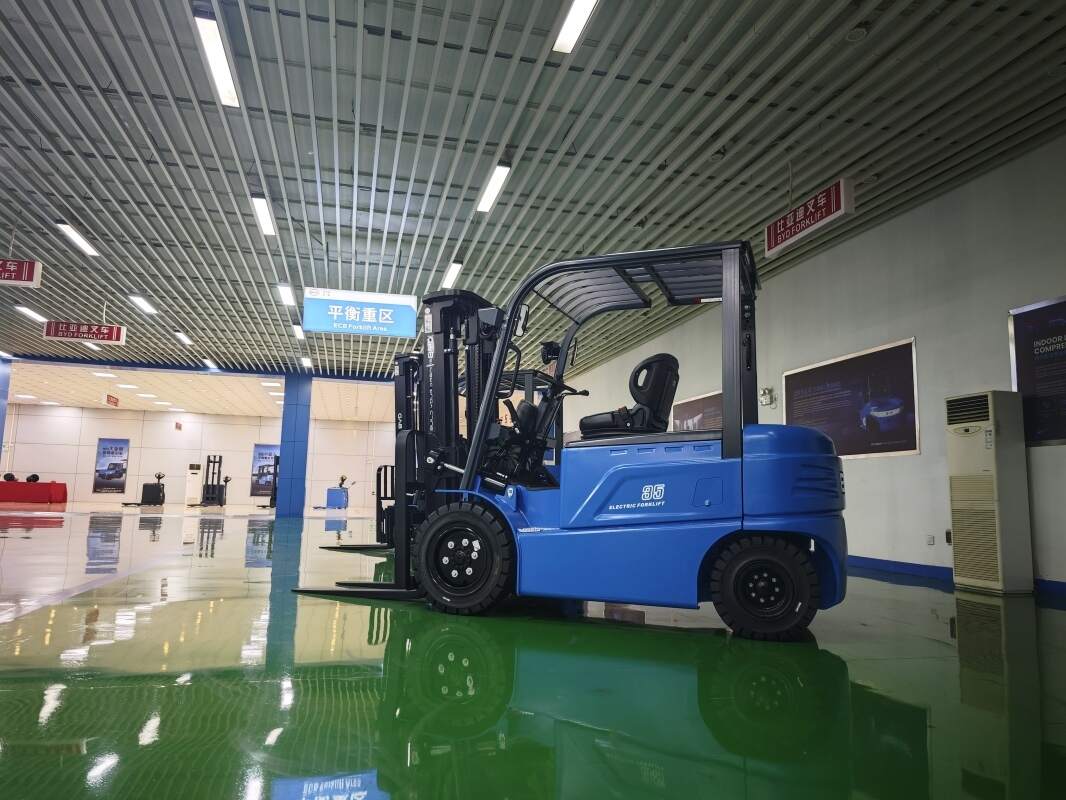
As the core equipment for modern warehouse and industrial material handling, electric forklifts have gained wide adoption across different industry sectors in recent years, thanks to their low noise emission and flexible operation features. Reasonable operation and maintenance management can help users give full play to the use value of such equipment in daily scenarios.
Core Advantages of Electric Forklifts for Material Handling
Compared with internal combustion counterparts, electric forklifts produce no tail gas during operation, which can meet the strict environmental requirements of enclosed storage spaces such as food warehouses and pharmaceutical logistics centers. Their overall operation noise is kept at a relatively low level, which helps reduce the fatigue of long-shift operators and improve the comfort of the whole working environment. Most current electric forklift models can adjust their output power dynamically according to the load weight, which avoids unnecessary energy consumption under no-load or light-load conditions.
Standard Operation Specifications to Prevent Unnecessary Loss
Operators need to receive systematic pre-job training before formally using the equipment, and they need to confirm the surrounding working environment is free of obstacles and unrelated personnel before starting the machine. When carrying goods, operators should avoid overloading beyond the rated load range, and keep the goods at a reasonable low height when moving to prevent the goods from falling off accidentally and causing safety risks. It is not recommended to make sharp turns at high speed during operation, especially when the equipment is moving on wet or sloped ground, to avoid side slip or rollover risks.
Routine Maintenance Practices to Stabilize Long-term Performance
Operators can conduct a simple pre-shift check before each use, focusing on checking the remaining power of the power unit, the flexibility of the lifting and steering system, and the wear condition of the tires. After finishing daily work, operators can wipe the dust and sundries on the surface of the equipment, and place the vehicle in the designated parking area with the forks lowered to a horizontal position. Regular professional inspection work can be arranged according to the actual frequency of equipment use, to timely find potential minor problems and solve them before they develop into larger faults.
Scenario-based Efficiency Optimization Suggestions
For high-frequency continuous operation scenarios, enterprises can arrange reasonable shift schedules for operators and make proper power supply matching plans to reduce unnecessary waiting time caused by power shortage. For narrow aisle working scenes, operators can adjust the running speed in advance to adapt to the space size, so as to improve the passing efficiency without collision risks. These practical operation and management measures can help improve the overall material handling efficiency of the warehouse system.


