
 English
 简体中文
 Русский
 Français
 Português
 Español


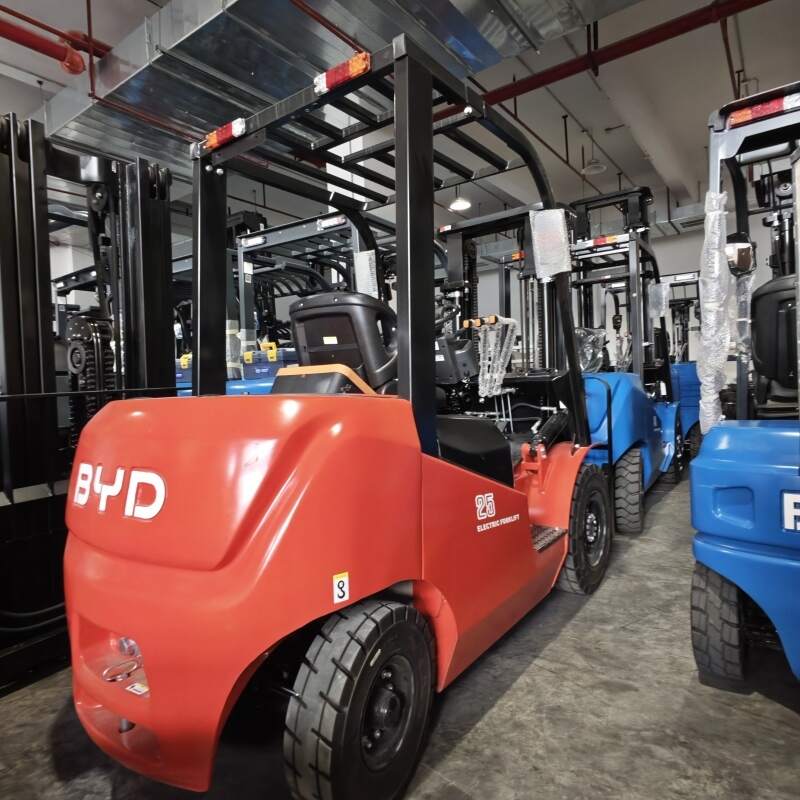
As low-carbon logistics and lean warehouse management concepts gain wider popularity across the material handling industry, electric forklifts have gradually become a mainstream choice for most indoor and semi-outdoor material handling scenarios, replacing a large share of traditional internal combustion counterparts with their low noise, zero local emissions and lower long-term operating cost characteristics. A systematic understanding of its core features, standard operation rules and maintenance methods can help operators maximize the value of the equipment while avoiding unnecessary safety risks.
Core Performance Advantages of Modern Electric Forklifts
Unlike fuel-powered handling equipment, electric forklifts rely on rechargeable power packs to provide power output, with no exhaust emission during normal operation, which can meet the environmental protection requirements of enclosed spaces such as food processing workshops, pharmaceutical storage areas and cold chain warehouses. The noise level during operation is far lower than that of internal combustion models, which can effectively reduce noise interference to surrounding workers and maintain a relatively comfortable working environment for long-duration operation shifts. The power output adjustment of the electric driving system is smoother, which can reduce the vibration during the operation process and avoid unnecessary damage to fragile cargos during handling.
Standardized Operation Specifications for Daily Use
Operators need to receive corresponding professional training before officially taking up the post, and complete pre-operation inspection work before each shift, including checking the remaining power level of the power pack, the flexibility of the lifting mechanism, the sensitivity of the braking system and the normal display of all instrument indicators. During the operation process, the load weight shall not exceed the rated load range marked on the equipment nameplate, and the moving speed shall be adjusted reasonably according to the site road condition, personnel flow and cargo stacking state, to avoid sudden braking or sharp steering that may cause cargo slipping or equipment tipping. Operators shall also keep a clear view of the surrounding environment at all times, and slow down in areas with crowded personnel or narrow passages.
Routine Maintenance Tips for Longer Service Cycle
Daily maintenance work does not require overly complex professional operations, operators can complete most of the basic inspection and maintenance tasks by following the official operation manual. After each shift, wipe the dust and residual cargo debris on the surface of the equipment, check the connection status of the power interface, and charge the power pack according to the specified operation steps to avoid over-discharging that may cause irreversible damage to the battery performance. Regularly check the wear degree of the tires and the lubrication state of the transmission parts, and arrange for professional technicians to conduct comprehensive inspection and debugging at the specified cycle, to find potential hidden troubles in time and reduce unexpected downtime.
Application Optimization for Different Scenarios
For different use scenarios, users can adjust corresponding operation parameters according to actual demand. For high-density narrow aisle warehouses, models with suitable body width and turning radius can be selected to improve the utilization rate of storage space. For low-temperature operation scenarios, corresponding protective measures for the power system can be added to ensure that the equipment can maintain stable working performance under low temperature conditions. Users can also make matching adjustments to the fork attachment according to the common cargo type, to further expand the applicable scope of the equipment.


