
 English
 简体中文
 Русский
 Français
 Português
 Español


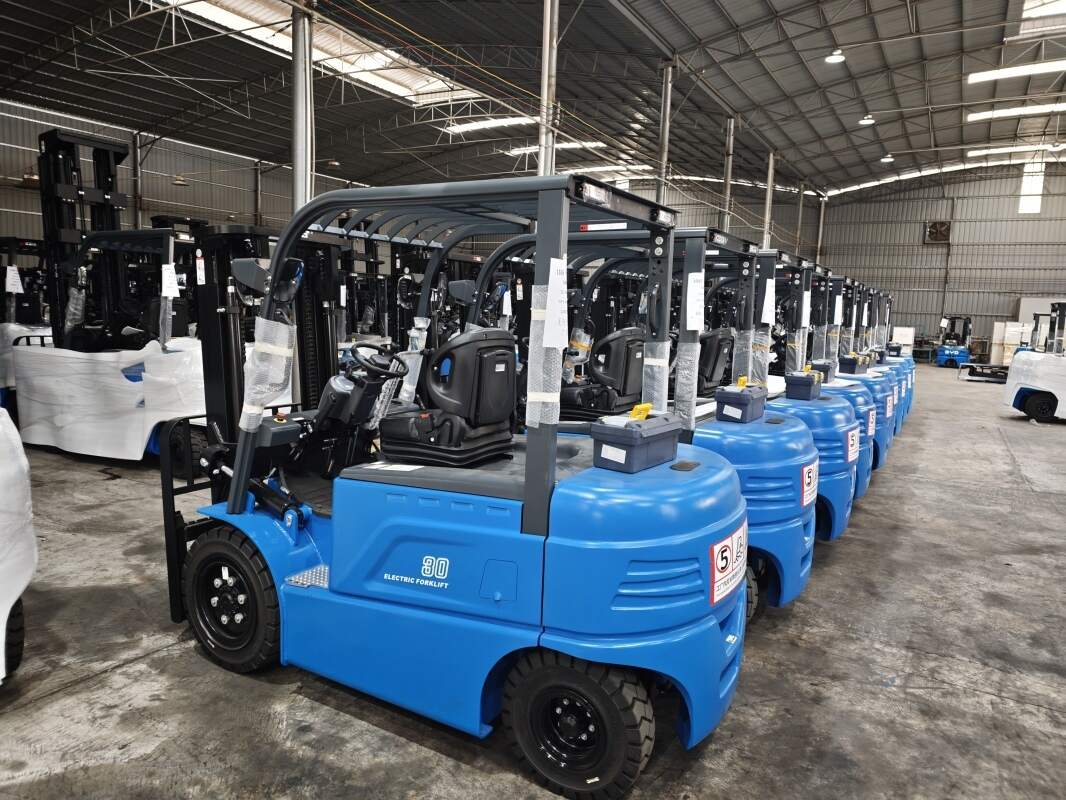
Electric forklifts have gradually become the mainstream choice for indoor warehouse material handling scenarios in recent years, thanks to their low noise, zero on-site emission and relatively low long-term operating cost features. Many frontline operators and warehouse managers still lack systematic cognition of operation norms and daily maintenance rules, which may lead to unnecessary performance attenuation and potential safety risks in actual long-term use.
Correct Basic Operation Norms for Daily Use
In the daily operation process, operators need to complete full pre-start inspection before each shift, including checking the remaining battery power, the flexibility of lifting and tilting hydraulic components, and the sensitivity of braking and steering systems. During the handling process, avoid overloading beyond the rated load range, and keep the load gantry tilted back properly to ensure the stability of goods during movement. Do not carry out sharp steering or frequent acceleration and deceleration on the wet and slippery warehouse ground, which can reduce the wear of solid tires and avoid the risk of goods falling off accidentally. Operators should also keep a proper safety distance with surrounding storage racks and walking personnel to reduce collision probability.
Rational Daily Maintenance to Extend Stable Service Life
Regular maintenance work should be arranged according to the actual working frequency and load intensity of the equipment. The battery module, as the core energy supply component, needs to avoid over-discharge and over-charge in daily use, and the surface of the battery pack should be kept dry and clean to avoid the entry of dust and debris that may cause hidden short circuit risk. The moving connection parts of the gantry and wheels can be lubricated with special lubricating oil on a regular cycle, to reduce the friction resistance between metal parts and avoid abnormal noise and component jamming. The waste generated in daily use can be cleaned up in time to prevent it from being stuck in the gap of transmission parts.
Scenario Matching to Improve Overall Handling Efficiency
When arranging the use of electric forklifts, warehouse managers can reasonably allocate the corresponding equipment according to the weight of conventional goods and the width of operation channels, to avoid the mismatch between equipment parameters and actual scenarios that causes waste of performance. Regularly organize operation personnel to receive skill update training, to help them master more mature operation skills, reduce unnecessary waiting time in the handling process, and further promote the overall operation efficiency of the warehouse material handling system. Following the above operation and maintenance rules can help enterprises give full play to the inherent advantages of electric forklifts, create a more stable and efficient logistics operation environment.


