
 English
 简体中文
 Русский
 Français
 Português
 Español


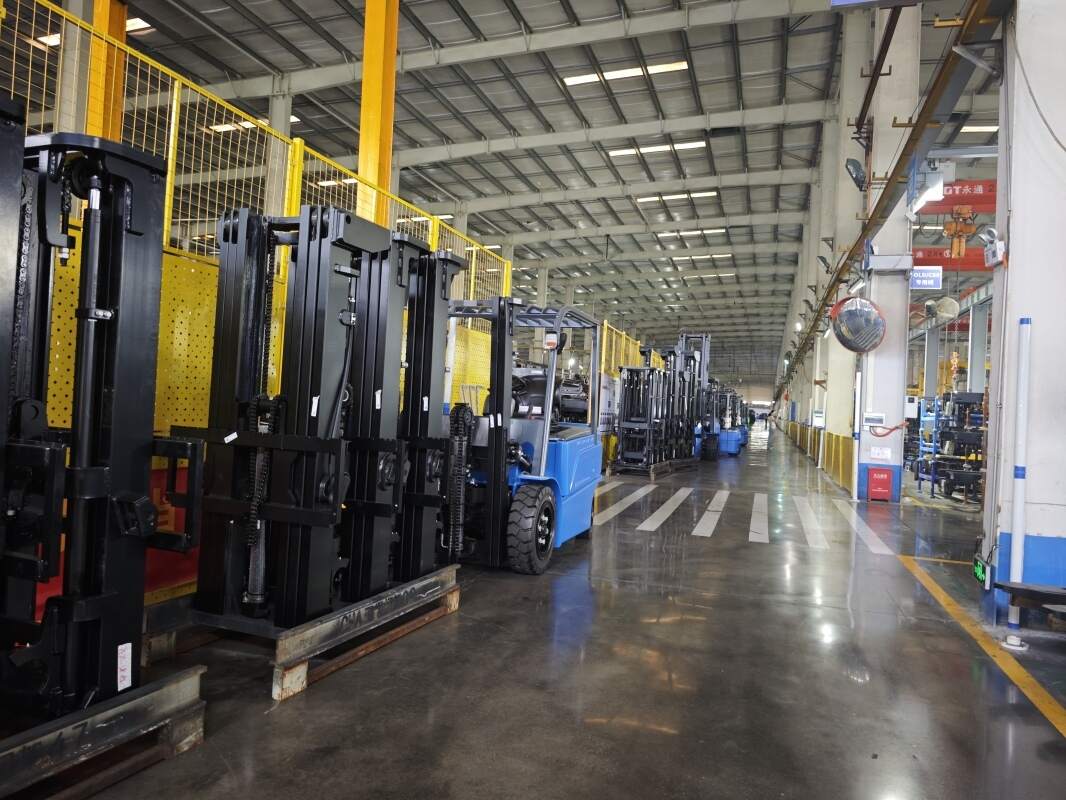
Against the background of low-carbon transformation in global logistics and warehousing sectors, electric forklifts have become the mainstream choice for most indoor material handling scenarios at present. Many frontline operators and warehouse managers still lack systematic cognition of the core characteristics, operation rules and maintenance points of this type of equipment. This guide shares practical professional insights from the application perspective, to help relevant personnel make better use of this material handling equipment.
Core Advantages of Electric Forklifts for Common Industrial Scenarios
Compared with traditional internal combustion powered handling equipment, electric forklifts produce much lower noise level during operation, and generate no exhaust emission, which can meet the environmental requirements of enclosed storage spaces, food processing workshops and pharmaceutical distribution areas. The smooth power output of electric forklifts can also reduce the probability of collision and falling of pallets and goods during transshipment, and the daily energy consumption cost is generally lower than that of internal combustion equipment with the same load rating.
Standardized Daily Operation Specifications
Operators need to complete systematic professional training before taking up the post. Before each startup, they should check the working status of the braking system, steering system, lifting chain and tire appearance, and confirm there are no irrelevant personnel or obstacles in the surrounding operation area before starting to drive. During the operation process, the rated load weight marked on the nameplate should be strictly followed, and operators are not advised to handle goods beyond the load limit. When driving on ramps, keep low speed and straight direction, avoid turning or stacking goods on ramps, and lower the forks and cut off the equipment power when leaving the operation position for a long time.
Routine Maintenance Practices to Extend Service Life
Standardized regular maintenance can effectively reduce the occurrence probability of failures and prolong the overall service life of the equipment. After each daily use, operators should clean up the dust and residual debris on the equipment surface in time, check the power status of the power battery, and complete the charging process in accordance with the standard process provided by the manufacturer, to avoid deep discharge or long-time overcharging. At fixed intervals, arrange professional technicians to conduct comprehensive inspection on the liquid level of the hydraulic system, the fastening state of circuit connections and the wear degree of brake linings. Timely treatment of minor component wear can prevent small problems from evolving into large failures that affect normal operations.
Scenario Matching Suggestions for Proper Configuration
Different operation scenarios can select equipment with corresponding parameters according to actual demands. For warehouse areas with high-frequency continuous operation, configurations with large energy storage capacity can be considered. For narrow aisle operation scenarios, models with more compact body width are more suitable. For special operation environments with low temperature or heavy dust, protective components of corresponding levels can be installed on the equipment to further improve scenario adaptability. Proper use, operation and maintenance management can make electric forklifts play a more stable role in material handling scenarios, and provide reliable support for the efficient operation of warehousing logistics.


