
 简体中文
简体中文 Русский
 Français
 Português
 Español
 لالعربية

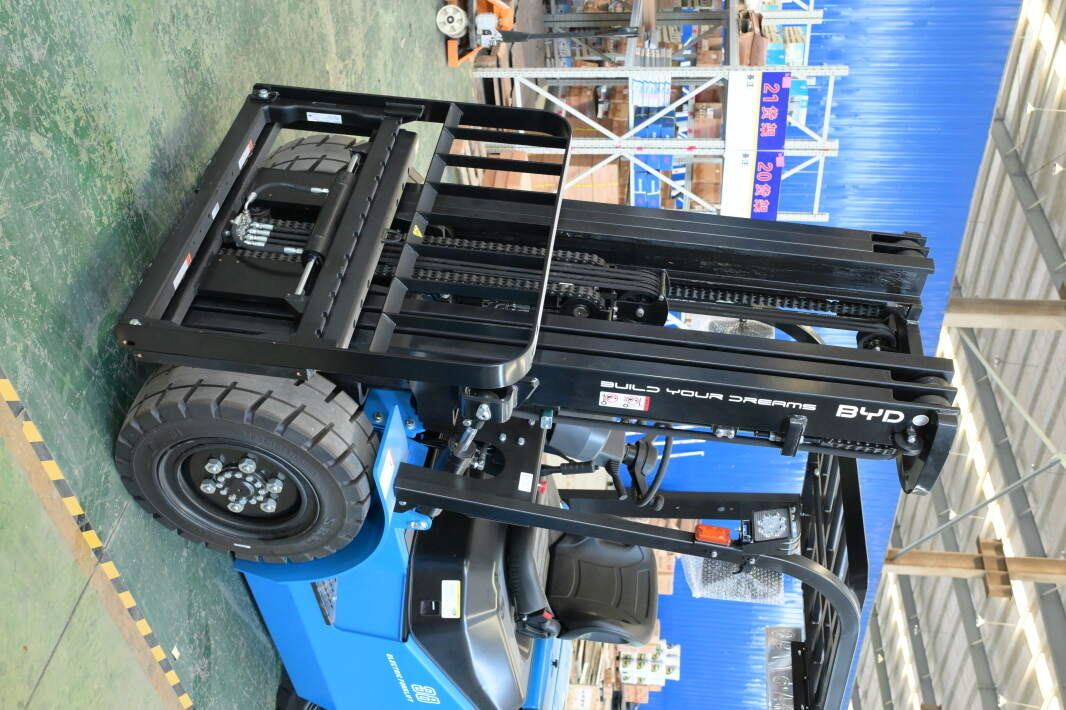
Unified classification standards for electric-powered industrial forklifts provide clear guidance for equipment selection, operation specification and daily maintenance, which can effectively reduce mismatching risks between equipment and actual operation demands.
The first core classification standard is based on rated load capacity. For models with rated load ranging from 0.5 ton to 2 tons, they are mostly designed for light-duty operation scenarios, which are widely used in small and medium-sized e-commerce warehouses, retail distribution centers and light industrial workshops to handle scattered small cargo. For models with rated load ranging from 2 tons to 5 tons, they are the most widely used general-purpose type at present, which can meet most conventional material transfer demands in ordinary manufacturing workshops, medium-sized storage yards and logistics transit stations. For heavy-duty models with rated load over 5 tons, they are mainly used for heavy cargo handling scenarios such as large industrial component processing areas, port container yards and large raw material storage zones.
The second basic classification standard is divided by applicable operation scenarios. The first category is indoor closed operation special models, which have no exhaust emission and extremely low operation noise, and meet the environmental protection requirements of food, pharmaceutical and precision electronic component storage scenarios that have strict requirements for indoor air quality. The second category is semi-outdoor operation adaptive models, which are equipped with standardized dust-proof and water-proof protection structures on the core electrical components, and can work stably in open-air factory areas and non-extreme outdoor weather conditions. The third category is narrow channel special operation models, which adopt optimized body structure design, can normally turn and operate in the operation channel with width less than 1.8 meters, and are very suitable for high-density three-dimensional storage scenarios that aim to maximize the utilization rate of warehouse space.
The third common classification standard is divided by power structure and body layout. Balance weight type electric forklifts are equipped with counterweight structure at the rear of the body, which has good operation stability and is suitable for frequent cargo stacking and high position handling operations. Pallet handling electric forklifts focus on horizontal transfer function, which can carry two workers or complete long-distance cargo transfer in large warehouses alone. Electric stackers are mainly used for low and medium height cargo stacking and goods access on shelves, which bring considerable cost performance for small warehouses that do not need long-distance horizontal transfer.
In actual use, different classification dimensions often overlap with each other, logistics and manufacturing enterprises can combine multiple indexes to select the most suitable electric industrial forklift products according to their own actual operation demands, so as to improve the overall operation efficiency of material handling links.


