
 简体中文
简体中文 Русский
 Français
 Português
 Español
 لالعربية

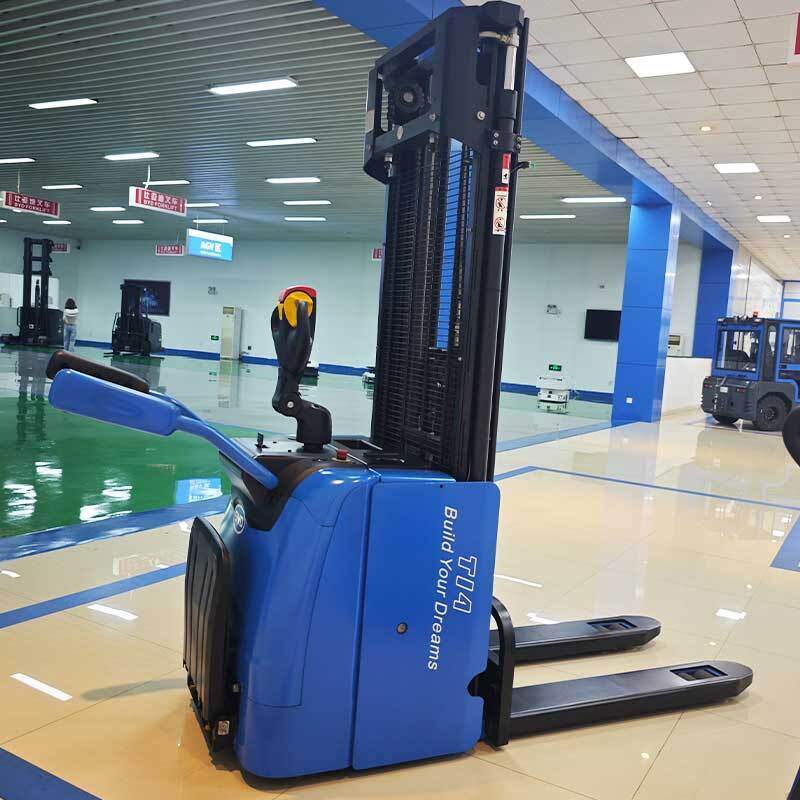
Intermittent production lines feature variable work orders, flexible workstation layout and fluctuating material transfer demands, which put forward differentiated requirements for supporting material handling equipment. Unlike continuously running production lines with fixed material flow paths, intermittent scenarios often face unplanned material replenishment demands, temporary adjustment of stacking areas and cross-shift handover of operation tasks, so targeted evaluation of electric pallet trucks can effectively avoid operation mismatch problems.
First, pay full attention to the scenario adaptability of equipment for variable production demands. You are suggested to check the actual load range covering most of your daily material transfer tasks, instead of only referring to the nominal load parameter, to avoid long-term overloading operation that will shorten the service life of core components. It is also necessary to test the turning flexibility of the equipment in the narrow passage between production stations and temporary storage areas, to make sure the truck can pass smoothly without scratching workpieces or surrounding facilities. For endurance performance assessment, you can calculate the peak continuous operation duration during concentrated material replenishment after batch switching, and reserve 15% to 20% of extra endurance margin to get rid of sudden power off during peak hours, and make full use of the low-workload gap between different batches to complete supplementary charging.
Second, prioritize the safety performance matching the dynamic personnel flow characteristics of intermittent production lines. Since there are often temporary staff crossing the operation paths and mobile workstations in such scenarios, you can evaluate the sensitivity of the equipment's obstacle sensing and automatic deceleration function, as well as the anti-slip and anti-slide performance on the slight ramp of the production workshop. You also need to check the learning cost of operation, to ensure most front-line operators can master the basic operation process after simple training, so as to reduce the risk of misoperation caused by frequent cross-post handover.
Third, incorporate long-term operation cost into the evaluation system, not just focus on the initial procurement expenditure. You can investigate the replaceability of common wearing parts, the cycle life of the energy unit, and the local after-sales service response speed of the supplier. Proper evaluation in these aspects can avoid unplanned production pause caused by long equipment maintenance period, and help the operation team get balanced input and output benefit in long-term use.


