
 简体中文
简体中文 Русский
 Français
 Português
 Español
 لالعربية

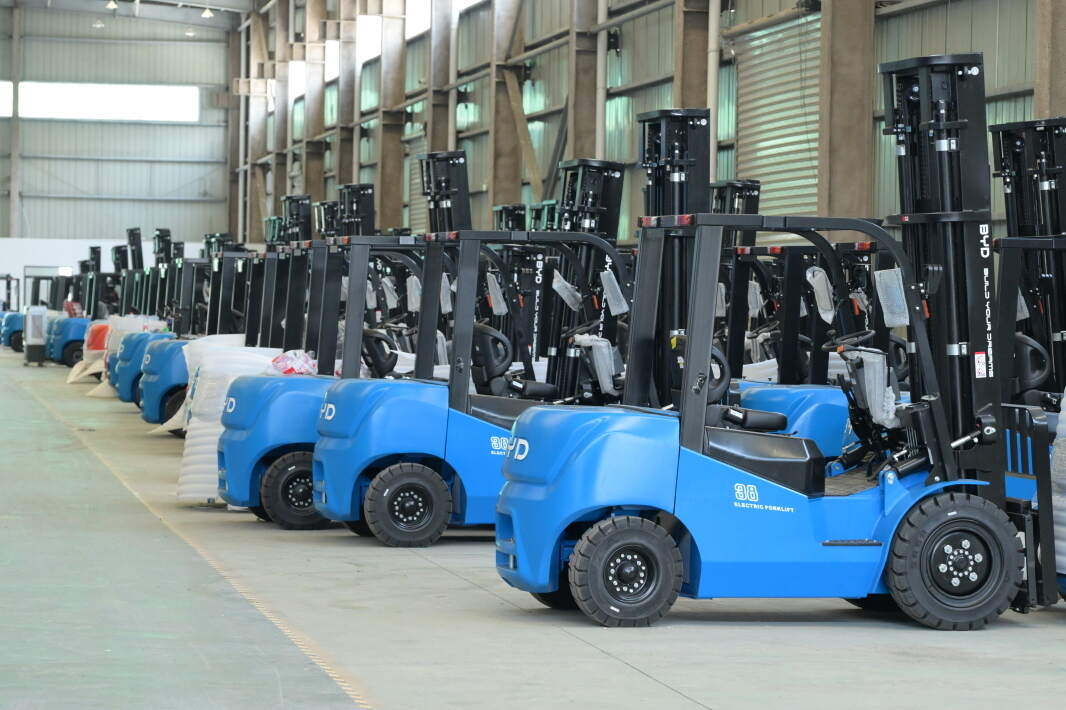
Working-cycle definitions serve as the core reference for performance assessment, operation matching and daily maintenance of lithium-ion industrial forklift units, creating unified standards for both equipment suppliers and end users to judge the actual operation state of material handling vehicles. The following three categories are the most widely adopted typical working-cycle definitions in current industrial application scenarios.
The first category is the low-intensity intermittent working cycle. This definition applies to operation scenarios where the daily accumulative running time of the forklift is no more than 2 hours, and the average load level in each operation does not exceed 60% of the unit’s rated load. Common applicable scenarios include small retail warehouses, workshop sporadic material replenishment, and light-duty goods sorting in small-sized distribution stations. Under this working cycle, the core evaluation index focuses on the low standby power consumption of the lithium-ion forklift system and the reliability of short-term peak power output, to make sure the equipment can meet scattered operation demands with low energy cost.
The second category is the medium-intensity regular working cycle. This definition covers operation scenarios where the forklift runs 4 to 8 hours per day in a single work shift, and the average load level stays between 60% and 80% of the rated load. It is the most common working mode for standard industrial warehouses, ordinary manufacturing plant internal material transfer and ordinary logistics distribution centers. Under this working cycle, the definition system will examine the cycle stability of the lithium battery pack, the consistency of continuous power output, and the basic wear resistance of moving components, to confirm the forklift can finish full single-shift tasks without extra charging during work hours.
The third category is the high-intensity continuous working cycle. This definition targets scenarios with two-shift or three-shift continuous operation, where the daily accumulative running time is over 12 hours, and the long-term average load level keeps between 80% and 100% of the rated load. Typical applicable scenarios include large hub logistics parks, port cargo yards and heavy industrial raw material transfer sites. Under this working cycle, the relevant evaluation dimensions will include fast charging adaptability, high-temperature continuous operation stability, and the attenuation rate control of the power system after long-time heavy load operation.
Complete standard working-cycle definitions also add auxiliary parameters such as the proportion of climbing operation, the proportion of low-temperature environment operation and the frequency of steering and acceleration, to help operators make proper use plans and formulate scientific maintenance schedules, so as to extend the service life of the equipment and get reasonable investment return.


