简体中文
 Русский
 Français
 Português
 Español
 لالعربية


For most warehouse, manufacturing and logistics operation teams, selecting a suitable counterbalance forklift requires far more consideration than initial purchase price alone. Many practitioners overlook long-term operational expenditure that takes up a large proportion of total investment, leading to unnecessary additional cost burden during daily usage. This practical analysis breaks down the economic performance of counterbalance forklifts from real operation scenarios, to help teams make more rational procurement and usage decisions.
First, we start from the upfront acquisition cost. The initial procurement input of counterbalance forklifts varies according to load capacity, configuration and power type. New energy electric counterbalance forklifts may have relatively higher upfront input compared with traditional internal combustion counterparts, but the gap will be gradually offset by subsequent daily operation savings in the whole service cycle. It is not reasonable to judge the economic performance of the equipment only by the one-time purchase cost.
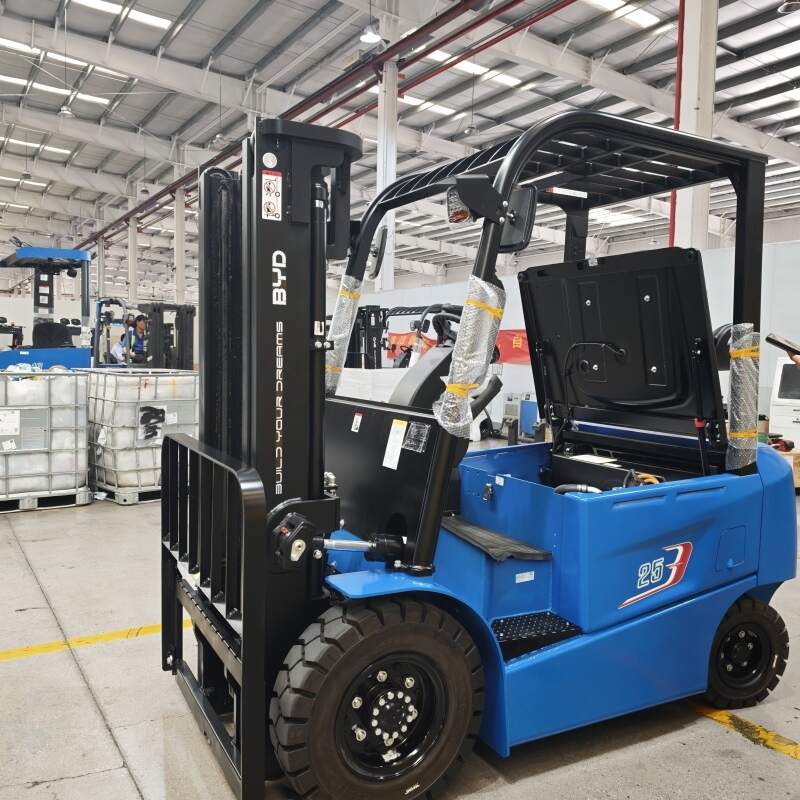
Second, the daily operating cost is the core part that affects the total economic performance of counterbalance forklifts. For traditional fuel-powered models, the expenditure on fuel consumption, tail gas treatment, and site ventilation related to emission control takes up a large share of monthly operation cost. For electric counterbalance forklifts, the power consumption cost per hour of operation is much lower than fuel cost under same load condition, and there is no extra expenditure related to exhaust emission management, which brings stable and predictable monthly cost control for operation teams.
Third, long-term maintenance cost and residual value also cannot be ignored. Traditional internal combustion counterbalance forklifts need regular replacement of engine oil, filter elements and other wearing parts of the power system, which brings frequent maintenance expenditure and longer downtime. Electric counterbalance forklifts have much simpler power transmission structure, with fewer wearing parts that need regular replacement, which cuts down annual maintenance cost effectively. At the end of service cycle, the qualified electric forklift also retains relatively higher residual value, further optimizing the overall input-output ratio.
As a professional new energy material handling solution provider, Jian Shu New Energy focuses on BYD electric forklift products. If you have demands for counterbalance forklift economic assessment, product consultation and customized solution matching, you can send your inquiry to [email protected], our professional team will provide you with targeted support.