
 简体中文
简体中文 Русский
 Français
 Português
 Español
 لالعربية

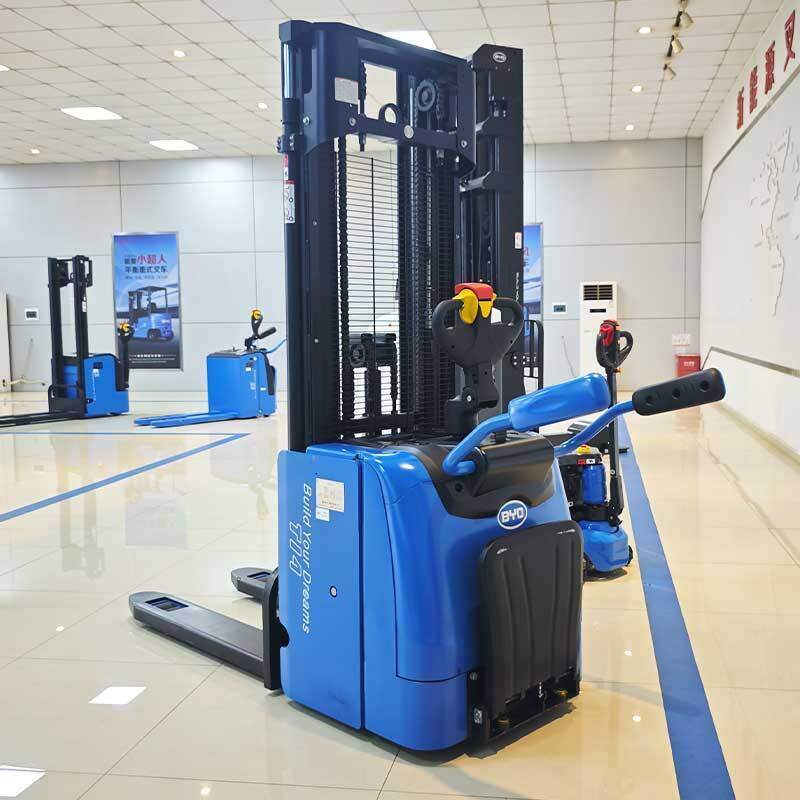
With the continuous advancement of low-carbon logistics development and the upgrading of warehouse operation standards, electric forklifts have become one of the most common material handling equipment in various industrial scenarios. Different from internal combustion forklifts, electric forklifts rely on power-driven systems to complete cargo handling, high-position stacking and short-distance transfer tasks, featuring relatively low operating noise and zero on-site exhaust emissions to fit the requirements of closed warehouse working environments.
Core Pre-operation and Daily Operation Specifications
Before starting the electric forklift for daily work, operators need to complete full pre-inspection work first, including checking the remaining power of the power system, the flexibility of the steering mechanism, the sensitivity of the braking system and the normal state of the lifting components. Operators need to receive professional systematic operation training before taking up the post, avoid operating the equipment beyond the rated load range for a long time, and keep a sufficient safe distance from surrounding personnel and obstacles during the driving process. For different road conditions inside and outside the warehouse, operators should adjust the driving speed in time, avoid sudden braking or sharp turning that may cause goods to fall or the equipment to slip.
Routine Maintenance Points for Stable Equipment Operation
Daily maintenance of electric forklifts focuses on the inspection and upkeep of the power supply unit, driving motor and internal control circuit. Management staff should clean up the dust and sundries attached to the equipment surface on a regular basis, check the connection tightness of each circuit connector, and avoid long-term overcharge or deep discharge of the power battery unit. When the equipment is not in use for a long time, the power battery should be kept at a reasonable state of charge, and the whole equipment should be placed in a dry and ventilated environment to avoid moisture corrosion of internal precision electronic components. Regular lubrication of transmission and moving parts can reduce the wear rate of spare parts, and timely replacement of worn accessories can keep the equipment in a good operating state.
Application Efficiency Optimization for Warehouse Scenarios
In the daily warehouse material handling process, reasonable operation route planning can effectively reduce unnecessary driving distance of electric forklifts, and arranging the handling sequence according to the fixed storage location of different goods can improve the overall operation flow efficiency. Combined with the actual average cargo weight and stacking height, selecting equipment with matching performance parameters can avoid unnecessary performance waste. In the peak period of centralized operation, making a reasonable power replenishment plan in advance can reduce standby waiting time caused by sudden insufficient power, and help the entire warehouse operation system maintain a continuous and stable working state.


