
 简体中文
简体中文 Русский
 Français
 Português
 Español
 لالعربية

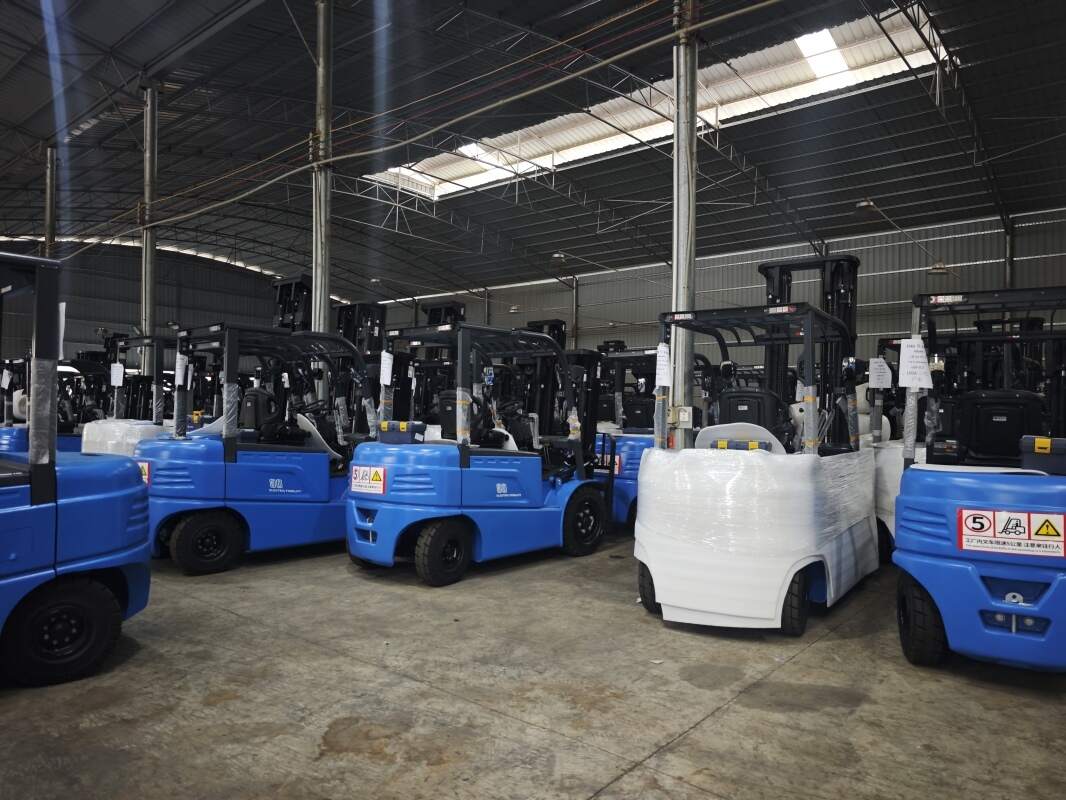
As the most widely used material handling equipment in modern industrial and warehouse scenarios, electric forklifts have been recognized by most operation teams for their low noise, zero on-site emission and relatively flexible operation characteristics. Mastering correct usage and management rules can effectively reduce operation risks, prolong equipment service life and bring stable performance output for daily material turnover work.
Core Safety Operation Specifications
Before each shift of formal operation, operators need to complete pre-inspection work including brake sensitivity, remaining battery level, tire condition and surrounding view clearance, to eliminate hidden risks in advance. During the operation process, it is not recommended to carry excess cargo beyond the rated load limit, and operators need to slow down in advance when turning, passing narrow channels or crossing pedestrian activity areas. It is also not allowed to carry irrelevant personnel on the forklift body for transportation, to avoid accidental collision or fall injuries. Operators should also keep the cargo load within the center of the fork frame, to prevent side tilt or cargo slipping during moving.
Routine Daily Maintenance Guidelines
Regular standardized maintenance work helps reduce unexpected equipment failure rates in daily use. For the power system part, operators can regularly check the tightness of power connection interfaces, clean the dust accumulated on the heat dissipation structure, and avoid long-term storage at 100% full power level when the equipment is not used for a long time. For the hydraulic lifting system, regular check of hydraulic oil level and sealing performance can avoid abnormal jamming during cargo lifting and lowering processes. All maintenance work should be completed in a static power-off state to avoid misoperation risks.
Energy Efficiency Optimization Suggestions
Reasonable adjustment of operation habits can effectively reduce overall energy consumption of the equipment and extend single-charge endurance mileage. Operation teams can plan reasonable material turnover routes in advance according to the layout of the warehouse, reduce unnecessary repeated long-distance driving, and avoid frequent sharp acceleration or sudden brake behaviors in the operation process. For different cargo weight ranges, selecting the corresponding operation power mode can also avoid unnecessary power loss. Different special usage scenarios such as low-temperature cold storage, high-dust production workshop or open outdoor site also need targeted adjustment of protection measures, to adapt the equipment performance to the actual usage environment better.


