
 简体中文
简体中文 Русский
 Français
 Português
 Español
 لالعربية

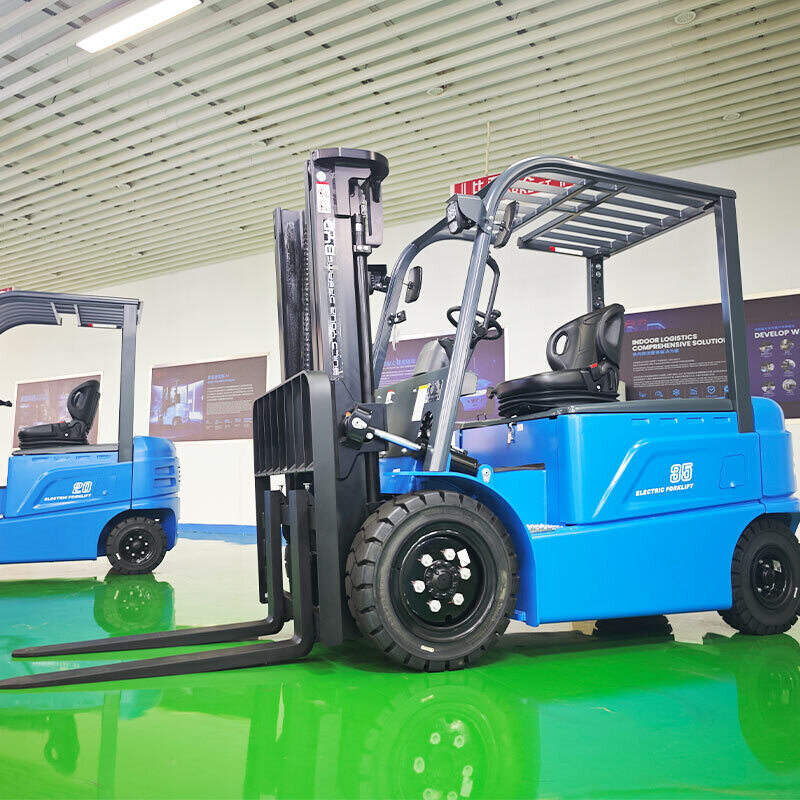
Against the global trend of low-carbon transformation in logistics and material handling sectors, electric industrial forklifts have accounted for a growing proportion of new equipment procurement in recent years. As the core power component that directly determines the operating range, load capacity stability and whole-life operation cost of forklifts, battery chemistries have become one of the most key factors for enterprises to consider when selecting electric forklift products. Different battery chemical systems have distinct performance characteristics, and no single type can meet all operation demands in all scenarios, which requires operators to match appropriate solutions based on their actual working conditions.
The first widely applied mature battery chemistry is the lead-acid system that has been used for decades in industrial equipment. This type of battery uses lead as the negative electrode, lead dioxide as the positive electrode, and dilute sulfuric acid as the electrolyte. Its most prominent advantage is the low initial procurement cost, plus stable and controllable performance in conventional ambient temperature. For small and medium-sized enterprises that only arrange single-shift operation with less than 4 hours of daily forklift usage, this battery system can fully satisfy basic operation demands. It is worth noting that flooded lead-acid batteries need regular distilled water replenishment during daily use, and the charging process should be carried out in a well-ventilated space to avoid the accumulation of released hydrogen. The typical cycle life of this system ranges from 1000 to 1500 charge-discharge cycles when the discharge depth is controlled under 80%.
The second mainstream battery chemistry that has seen rapid popularization in recent years is the lithium iron phosphate based lithium-ion system. This type of battery uses lithium iron phosphate as the cathode material, carbon material as the anode, and does not contain heavy metals that are harmful to the human body in the production process. Its energy density is about 3 times that of conventional lead-acid batteries, which can effectively reduce the whole vehicle weight under the same rated capacity, or extend the continuous operation time for the same vehicle model. The typical cycle life of this system can reach more than 3000 charge-discharge cycles, and it supports fast charging that can fill 80% of full capacity within 1 to 2 hours, which is very suitable for multi-shift continuous operation scenarios such as large distribution centers and cold chain warehouses. There is no need for daily water replenishment or special maintenance, which reduces extra labor input for operation teams.
There is also a relatively niche mature battery chemistry applied in special industrial forklift scenarios, which is the nickel-based battery system. This system has outstanding low-temperature resistance performance, which can maintain more than 70% of rated capacity even in the environment below minus 20 degrees Celsius, so it is more suitable for outdoor forklift operation in high latitude cold regions. Its initial procurement cost is higher than the previous two systems, and its energy density is lower than that of lithium iron phosphate batteries, so its application scope is limited to specific scenarios with extreme low temperature demands. When selecting suitable battery chemistries for industrial forklifts, operation managers need to comprehensively evaluate factors including daily operation hours, local ambient temperature, budget arrangement and maintenance team configuration, so as to reduce the total operation cost in the full lifecycle and obtain more stable material handling efficiency.


