
 简体中文
简体中文 Русский
 Français
 Português
 Español
 لالعربية

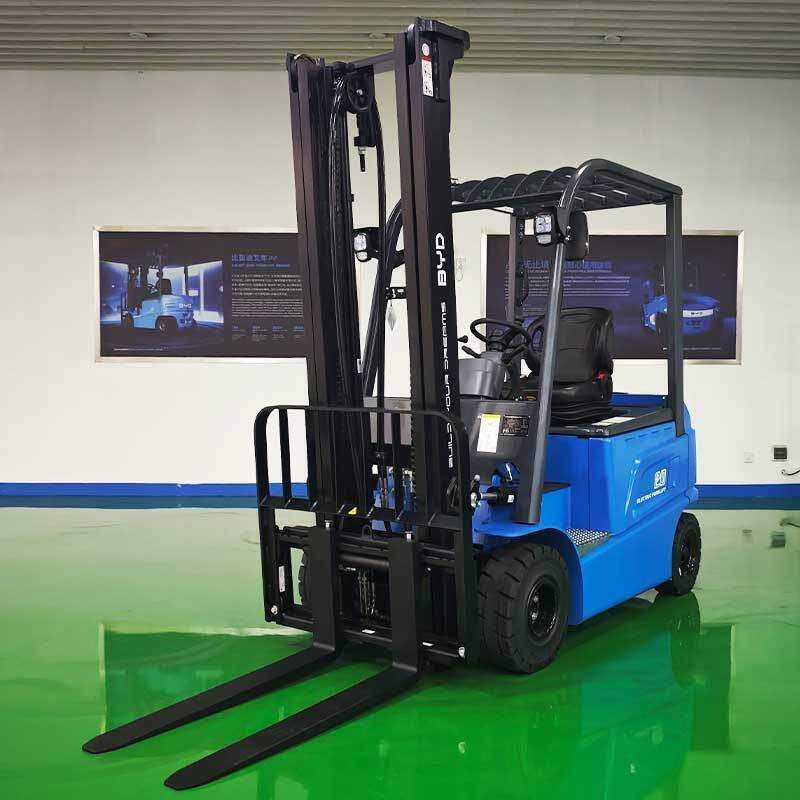
With the widespread popularization of low-carbon operation concepts in industrial sectors, electric forklifts have become one of the most popular material handling solutions for closed indoor scenarios including warehouses, distribution centers and light manufacturing workshops in recent years, bringing new optimization directions for daily cargo turnover work.
Core Performance Advantages of Modern Electric Forklifts
Different from traditional internal combustion handling equipment, modern electric forklifts produce no exhaust emission at the operation site, and their overall operation noise is kept at a relatively low level, which will not cause continuous disturbance to on-site staff or affect the air quality of closed working spaces. The power output of electric forklifts is more stable and linear, and the operation precision of steering and speed adjustment is higher, which can adapt to fine operation scenarios such as high-position stack of goods, narrow passage passing and frequent short-distance transfer. For most small and medium-sized operation scenarios, the long-term energy consumption cost of electric forklifts is also at a relatively acceptable level.
Standardized Operation Points to Reduce Unnecessary Wear
Operators need to receive complete pre-job skill training, and get familiar with the basic parameters including rated load, steering sensitivity and braking response distance of the equipment before independent operation. Before each shift, operators need to check the remaining battery level, the sensitivity of the braking system and whether the forks have obvious deformation, and remove obstacles in the operation passage in advance. In the daily operation process, it is not recommended to carry goods exceeding the rated load, slow down in advance when turning, keep the forks at a low position when driving on the ramp to avoid the risk of cargo slipping, and cut off the main power supply in time after long-time parking.
Rational Daily Maintenance to Extend Equipment Service Life
Daily maintenance work should be arranged according to the actual use frequency of the equipment. The dust and sundries accumulated on the surface of the vehicle and the heat dissipation channel of the battery pack should be cleaned regularly to avoid the blockage of the heat dissipation structure affecting the normal heat dissipation effect. Users should follow the official specification to complete the charging and discharging cycle of the battery, and avoid long-term storage in a state of full power or complete power loss. It is also necessary to check the sealing performance of the hydraulic system and the wear degree of the tire regularly, and arrange professional personnel to check and deal with minor abnormal problems in time, so as to avoid small faults evolving into situations that affect normal production scheduling. When selecting and using electric forklifts, enterprises can combine the actual parameters of their own operation scenarios to make reasonable planning, so as to give full play to the use value of the equipment and steadily improve the turnover efficiency of on-site materials.


