简体中文
 Русский
 Français
 Português
 Español
 لالعربية


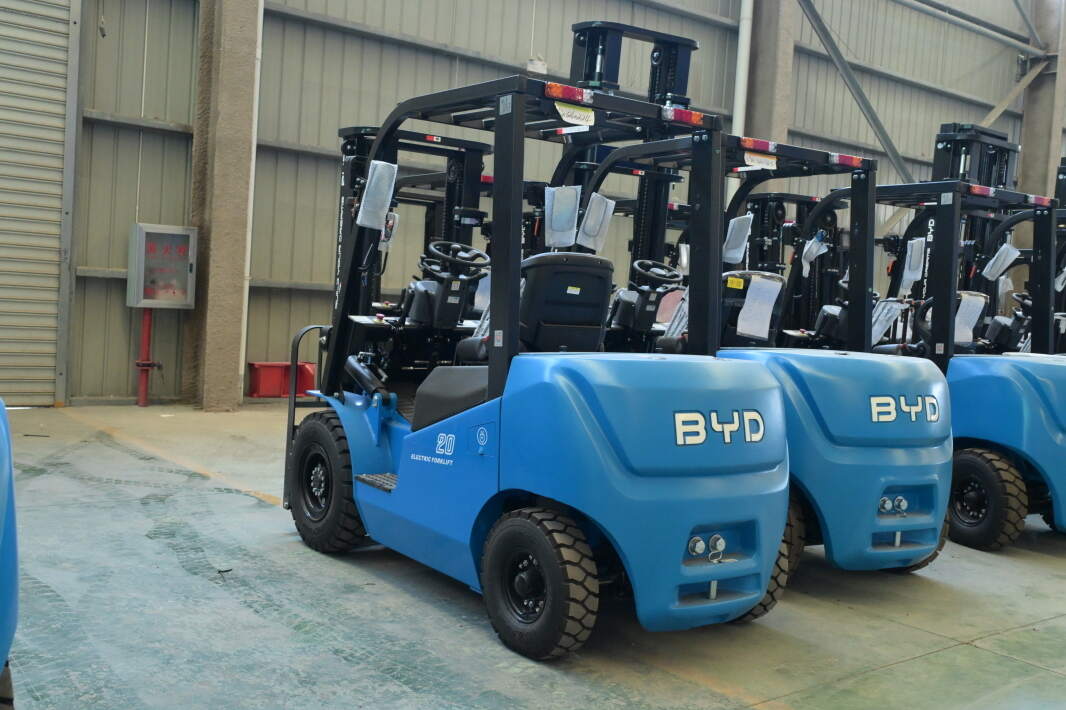
When you plan to introduce counterbalance forklifts for your warehouse, logistics yard or manufacturing facility, clarifying core demand points in advance can help you avoid unnecessary mismatches between equipment performance and actual usage scenarios. As Jianshu New Energy, which focuses on BYD electric forklift series products, we have sorted out 8 representative practical questions for your reference, you can contact our team via [email protected] for targeted professional support at any time.
The first question you need to confirm is the maximum load capacity required for daily operation. Different cargo weights and loading scenarios correspond to different standard load parameters, and it is not recommended to pursue excess load capacity blindly to avoid unnecessary cost waste.
The second question refers to the maximum lifting height required in your daily working scenarios. If your operation involves high-level shelf storage, you need to match the proper mast height parameter to meet the access demand for goods at different heights.
The third question is about the daily working hours of the equipment. You can confirm the battery endurance and charging matching plan according to the average continuous use time every day, so as to arrange the equipment use schedule reasonably.
The fourth question relates to the site conditions of your working area. You need to confirm whether the ground is flat, the size of passage width, and whether there are special requirements for climbing capacity of the equipment, to ensure the equipment can pass all areas of the site smoothly.
The fifth question is about the operation type of the equipment. You can confirm whether your operation needs to complete special actions such as side shifting, material clamping, or long material handling, so as to select matching attachment configurations as needed.
The sixth question involves the operation environment temperature and ventilation conditions. If the equipment needs to work in high or low temperature environment for a long time, you can communicate with the supplier about the adaptive performance of the equipment under corresponding environment.
The seventh question is about the after-sales service support system. Confirm the on-site response efficiency of maintenance, supply cycle of spare parts, and regular maintenance arrangement rules, to reduce the downtime risk of the equipment in long-term operation.
The eighth question relates to the relevant operation training support. Standardized operation guidance can help operators master correct operation skills faster, reduce misoperation, and extend the service life of the equipment.
All the above questions can help you sort out your actual demand more clearly when communicating with the equipment supplier, and assist you to find the equipment solution that best fits your daily usage scenarios.