
 简体中文
 Русский
 Français
 Português
 Español
 لالعربية


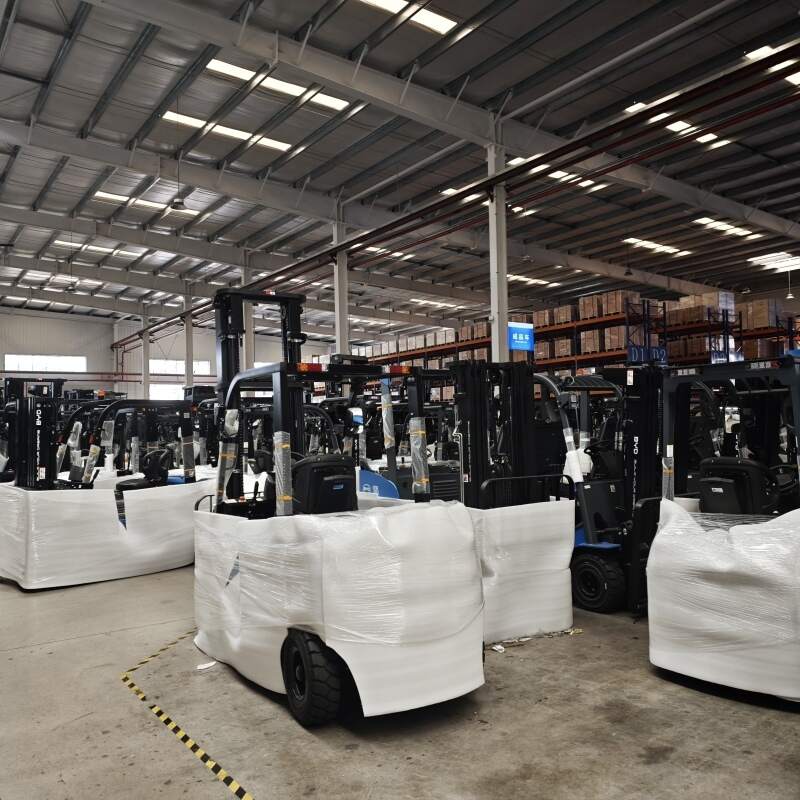
Against the background of accelerating low-carbon transformation in the global logistics sector, electric forklifts have gradually become one of the most widely used material handling equipment in indoor warehouses, distribution centers and light industrial production lines. For frontline operators and warehouse managers, mastering systematic operation and maintenance knowledge can effectively extend the service life of equipment, reduce unnecessary operating costs, and improve the overall stability of material handling processes.
Core Standard Operation Specifications for Daily Use
Before starting the equipment, operators need to conduct a routine inspection covering the power level, brake sensitivity, lifting fork deformation status and wheel wear degree, to exclude hidden safety hazards in advance. During the operation process, it is necessary to maintain a proper driving speed matching the on-site channel environment, avoid sudden acceleration or sudden braking, and keep a safe distance with surrounding personnel and stacked goods. When carrying out stacking and unloading operations, the center of gravity of the loaded goods should be kept within the allowable load range of the equipment, and overload operation is not allowed, so as to avoid equipment damage or goods falling accidents.
Scientific Daily Maintenance Skills to Extend Equipment Service Life
Daily maintenance of electric forklifts does not require overly complicated professional operations, but needs to follow a fixed regular rhythm. After each shift is completed, operators need to wipe the dust and residual sundries on the surface of the equipment, check the connection status of the power interface, and place the equipment in the designated parking position instead of occupying the operation channel for a long time. Professional maintenance personnel can conduct in-depth inspection of the power system, walking motor and hydraulic lifting structure on a weekly or monthly basis, timely replace the aging wear parts that have reached the service cycle, and avoid small hidden dangers evolving into large equipment failures.
Efficiency Optimization Strategies for Different Application Scenarios
In closed indoor warehouse scenarios, the zero-emission and low-noise characteristics of electric forklifts can give full play to their advantages, and enterprises can reasonably match the operation route according to the layout of goods storage locations, reduce unnecessary turnaround paths, and improve the average handling volume per unit time. For users who carry out handling operations in open non-corrosion scenarios, it is necessary to avoid long-term direct exposure of the equipment power unit to strong sunlight or rain, so as to keep the equipment in a stable working state for a long time.


