
 简体中文
 Русский
 Français
 Português
 Español
 لالعربية


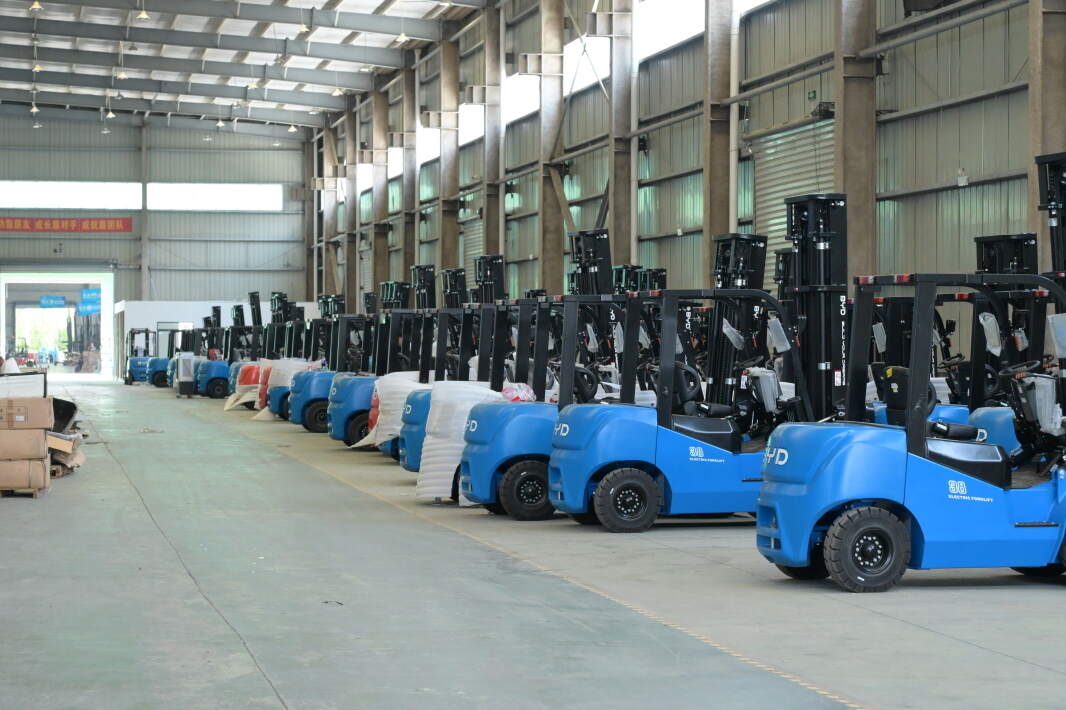
With the continuous promotion of low-carbon logistics concepts in recent years, electric forklifts have become one of the most widely used handling equipment in closed industrial and warehouse scenarios, replacing a large number of traditional internal combustion handling equipment. Many practitioners in the logistics and manufacturing field hope to grasp systematic practical knowledge to give full play to the value of this equipment, rather than only operating it according to simple on-site training.
Core Advantages of Modern Electric Forklifts in Daily Material Handling
Compared with traditional internal combustion forklifts, electric forklifts produce no exhaust emission during operation, which is more suitable for enclosed warehouse spaces with strict ventilation requirements, such as food storage workshops, pharmaceutical distribution centers and high-standard electronic component warehouses. Their overall operation noise is controlled at a relatively low level, which will not cause continuous noise interference to on-site staff who work for long hours. Most electric forklifts adopt a relatively simple transmission structure, so the operation sensitivity is relatively high, which can reduce the misoperation probability of new operators after proper training.
Standard Daily Operation Specifications for electric forklift Users
Before starting each shift, operators need to check the remaining power level of the battery, the flexibility of the lifting and tilting system, and the effectiveness of the braking system, to eliminate hidden risks in the preparation stage. During the operation process, operators need to control the driving speed according to the on-site road conditions and personnel density, avoid sudden acceleration or emergency braking on the slippery ground caused by spilled goods, and do not carry extra passengers on the load part of the equipment. When the forklift is not in use, it is required to park the equipment in the designated parking area, lower the forks to a position close to the ground, and cut off the power supply of the whole equipment.
Routine Maintenance Tips to Extend Electric Forklift Service Life
Regular maintenance work does not need to consume too much extra labor cost, and most of the basic work can be completed by on-site logistics team members after receiving simple guidance. It is necessary to wipe the dust and sundries accumulated on the surface of the power battery regularly, check whether the connection points of the circuit are loose, and avoid using non-matched charging equipment to supply power for the battery for a long time. For the hydraulic lifting system, the staff should check the liquid level of the hydraulic oil every two weeks, and replace the deteriorated hydraulic oil according to the specified cycle. The tire wear condition also needs to be inspected regularly, and the severely worn tires should be replaced in time to avoid sideslip risk during operation.
Feasible Methods to Optimize Electric Forklift Work Efficiency
Enterprises can plan the driving routes of electric forklifts in advance according to the storage layout of the warehouse, mark the no-passing area and temporary stacking area on the ground, and reduce unnecessary detours during the handling process. The reasonable scheduling of different forklifts can avoid idle waiting or repeated route crossing between multiple devices, so that the overall handling efficiency of the whole warehouse can be improved steadily.


