
 简体中文
 Русский
 Français
 Português
 Español
 لالعربية


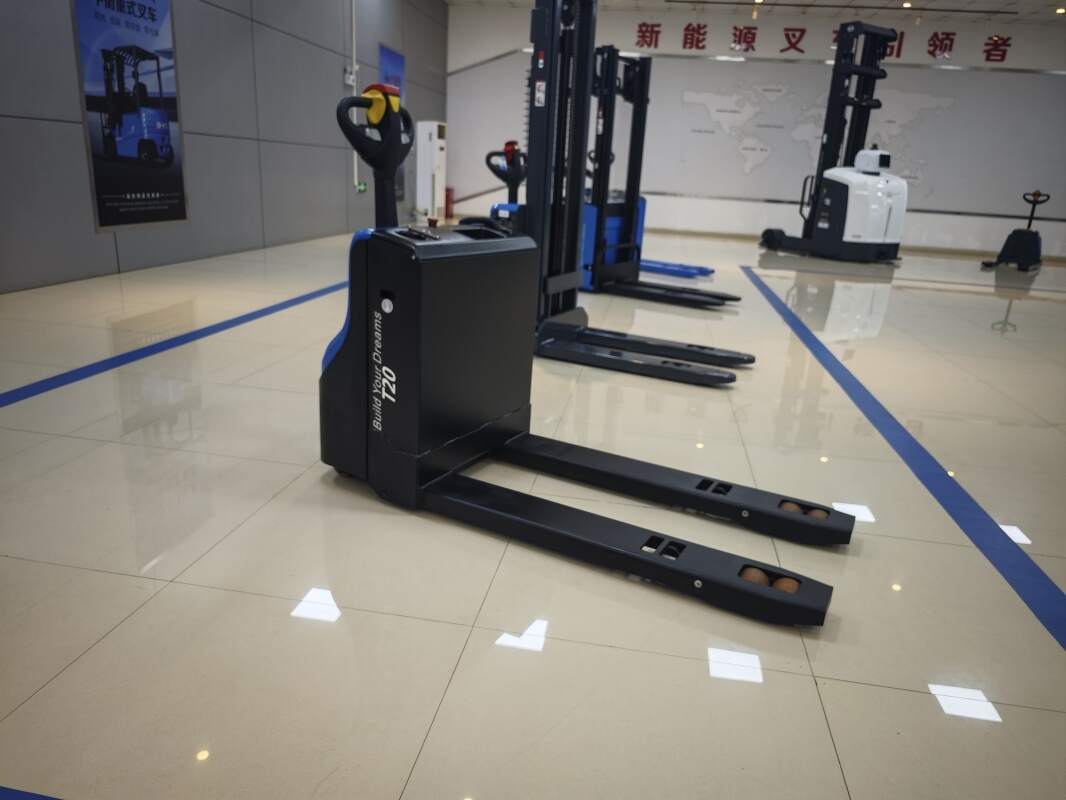
Against the background of low-carbon logistics development, electric forklifts have become one of the most widely used material handling equipment in indoor warehouses, distribution centers and light industrial production workshops. Proper mastery of operation norms and maintenance methods can help staff give full play to the performance of the equipment, avoid unnecessary faults, and create higher value for daily logistics operations.
Core Standardized Operation Norms
Before each startup, operators need to complete basic pre-inspection work, including checking the remaining power level, the flexibility of the braking system, the intact condition of the cargo fork structure, and the unobstructed state of the operation control handle. During the driving process, staff need to keep a safe distance from surrounding personnel and shelf structures, avoid overloading beyond the rated load range, slow down when turning or passing through narrow passages, and avoid sudden acceleration or sudden braking operations that may cause cargo slipping. When operating on a sloped passage, keep the cargo facing uphill direction to prevent slipping risks, and do not carry out fork lifting or unloading actions on the non-specialized slope section.
Scientific Routine Maintenance Arrangement
Regular maintenance work is a core link to prolong the overall service life of electric forklifts. For the power battery part, staff should avoid the situation of deep discharge below the specified low power threshold for a long time, and do not pull out the power supply in the middle of the charging process before the full charging cycle is completed. The surface of the equipment body and the heat dissipation structure should be cleaned regularly to prevent dust accumulation from affecting the heat dissipation efficiency of the motor and control module. The hydraulic oil level and the sealing performance of the oil pipeline should be checked at regular intervals, and the aging sealing elements should be replaced in time to avoid oil leakage that affects the lifting stability.
Practical Energy Efficiency Optimization Tips
In daily operation, reasonably planning the operation route according to the distribution of goods and storage locations can effectively reduce no-load driving distance, cut down unnecessary energy consumption, and improve the unit operation efficiency. Operators can adjust the operation rhythm properly to avoid frequent start and stop operations in a short time, which will increase the loss of power components. For equipment that needs to be idle for more than two weeks, the power switch should be turned off completely, and the battery should be charged to the specified power level before storage, and supplementary inspection and power replenishment should be carried out every certain period of idle time. Following the above operation and management specifications can effectively reduce the failure rate of electric forklifts, improve the safety of on-site material handling, and help enterprises obtain more stable economic benefits in long-term equipment use.


