
 简体中文
 Русский
 Français
 Português
 Español
 لالعربية


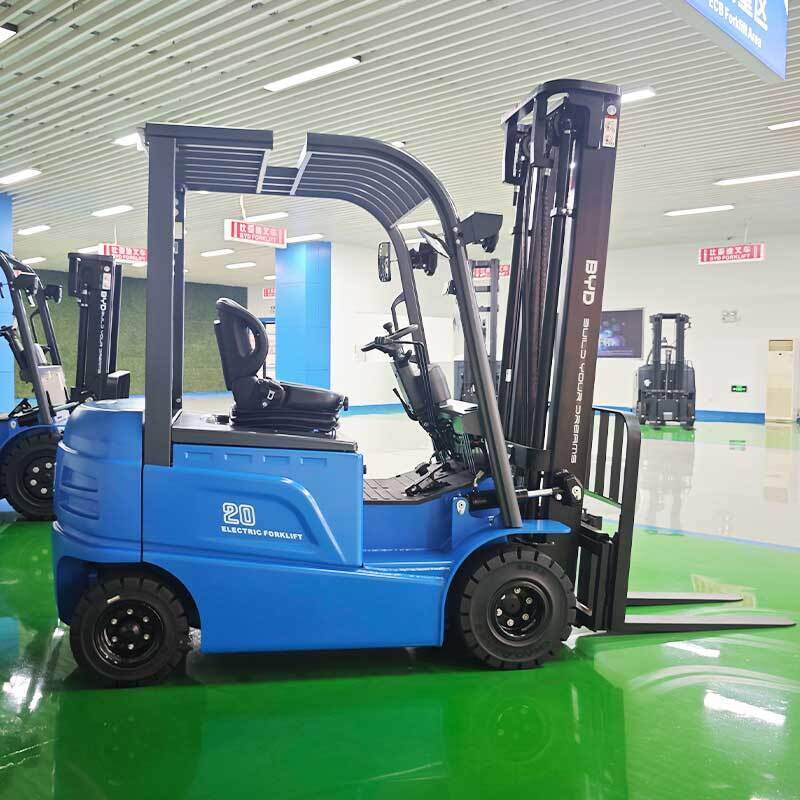
With the continuous promotion of low-carbon logistics concepts, electric forklifts have become one of the most widely used material handling equipment in indoor warehouses, manufacturing workshops and distribution centers in recent years. Proper use and regular management of such equipment can bring stable value to daily logistics operation, while improper operation may lead to unnecessary equipment wear and potential safety hazards.
Core Standard Operation Rules for Daily Use
Before starting the equipment, operators need to check the surrounding working environment first, confirm there are no obstacles or unrelated personnel within the moving range, and check the remaining power status, brake sensitivity and lifting function of the equipment in advance. During the operation process, operators should keep the load center within the allowable range specified by the equipment parameters, avoid sudden acceleration or sudden braking actions, and do not carry out over-height lifting or overloading operations that exceed the rated load value. When the operation is finished, the equipment should be parked in the designated area, the lifting frame should be lowered to the lowest position, and the power supply should be cut off in time.
Routine Maintenance Points to Extend Stable Service Life
Different from internal combustion forklifts, the core power components of electric forklifts have different maintenance logic, and regular inspection of the power energy storage module is the key daily work. Operators need to clean the dust and sundries on the surface of the equipment regularly, check the connecting lines of the power module every fixed cycle, and avoid long-term full power or zero power storage state, which will affect the overall cycle life of the power system. The wear degree of walking wheels and transmission parts should also be checked regularly, and lubrication maintenance should be carried out according to the operation frequency to avoid excessive resistance leading to extra power consumption.
Efficiency Optimization Strategies for Daily Material Handling
To give full play to the advantages of electric forklifts in low noise and no exhaust emission, operation managers can plan the handling route reasonably according to the layout of the storage space, reduce the repeated turning and long-distance empty driving time, and match the corresponding load capacity equipment according to the common weight of daily goods. With reasonable operation scheduling, the overall material handling efficiency can be improved effectively on the premise of complying with safety specifications.


