
 简体中文
简体中文 Русский
 Français
 Português
 Español
 لالعربية

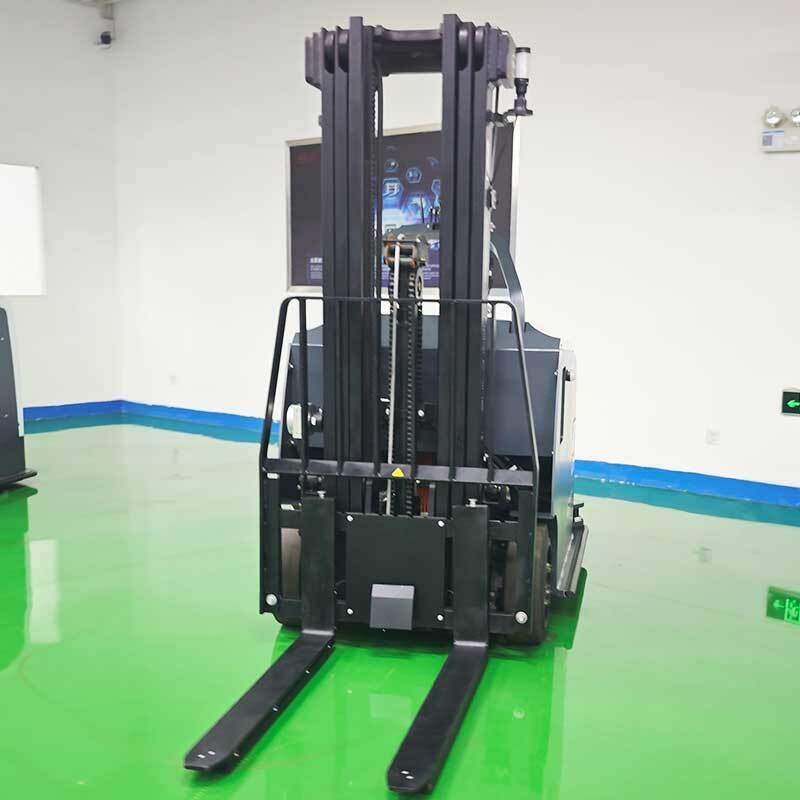
In daily warehouse and logistics operation scenarios, operators often need to handle pallets of different sizes from different supply chains, and improper fork spread adjustment will easily lead to partial load, cargo slipping, or even unnecessary abrasion between forks and pallet structures. The clear and reasonable fork spread adjustment range parameter system is an important basic specification to ensure the stable operation of electric pallet trucks.
Before formal parameter adjustment, operators should first confirm the effective movement range of the fork spread locking structure of the equipment, and confirm that the adjustment stroke does not exceed the safety limit marked on the equipment body. The minimum allowable adjustment distance should ensure that the two forks can be smoothly inserted into the pallet entry gap without scraping the pallet bottom supporting structure, while the maximum allowable adjustment distance should ensure that the outer edge of the fork will not exceed the outer contour of the pallet by more than 10mm, to avoid accidental collision with surrounding goods, shelf legs or personnel.
For different common pallet sizes, there are corresponding reference parameters for matching adjustment. For the widely used 1200*800mm standard pallet, the fork spread can be adjusted to the range of 680mm to 720mm, to ensure that the two forks are evenly stressed on both sides of the pallet center line, symmetrically supporting the main load-bearing beam of the pallet. For the narrow 800*600mm small pallet used in retail replenishment scenarios, the fork spread should be reduced to the range of 480mm to 520mm, so that the two forks can completely cover the bottom support structure of the small pallet, and avoid the hidden danger of single side suspension of the pallet during the moving process. For the large-size 1500*1200mm heavy-duty industrial pallet, the fork spread can be extended to the range of 980mm to 1020mm, which expands the force bearing area of the fork, disperses the local pressure of the heavy load, and reduces the probability of pallet cracking or deformation.
After completing each adjustment of the fork spread, operators need to complete a no-load test run for 1 to 2 meters, to check whether the locking mechanism of the forks is completely stuck without loose displacement. It is not allowed to apply excessive external force to pry the slide rail of the forks during adjustment, so as not to cause deformation of the slide rail and affect the adjustment accuracy in subsequent use. Proper use of these adjustment parameters can effectively extend the service life of the forks of electric pallet trucks, reduce the cargo damage rate in daily operations, and meet the safety production requirements of conventional logistics scenarios.


