
 简体中文
 Русский
 Français
 Português
 Español
 لالعربية


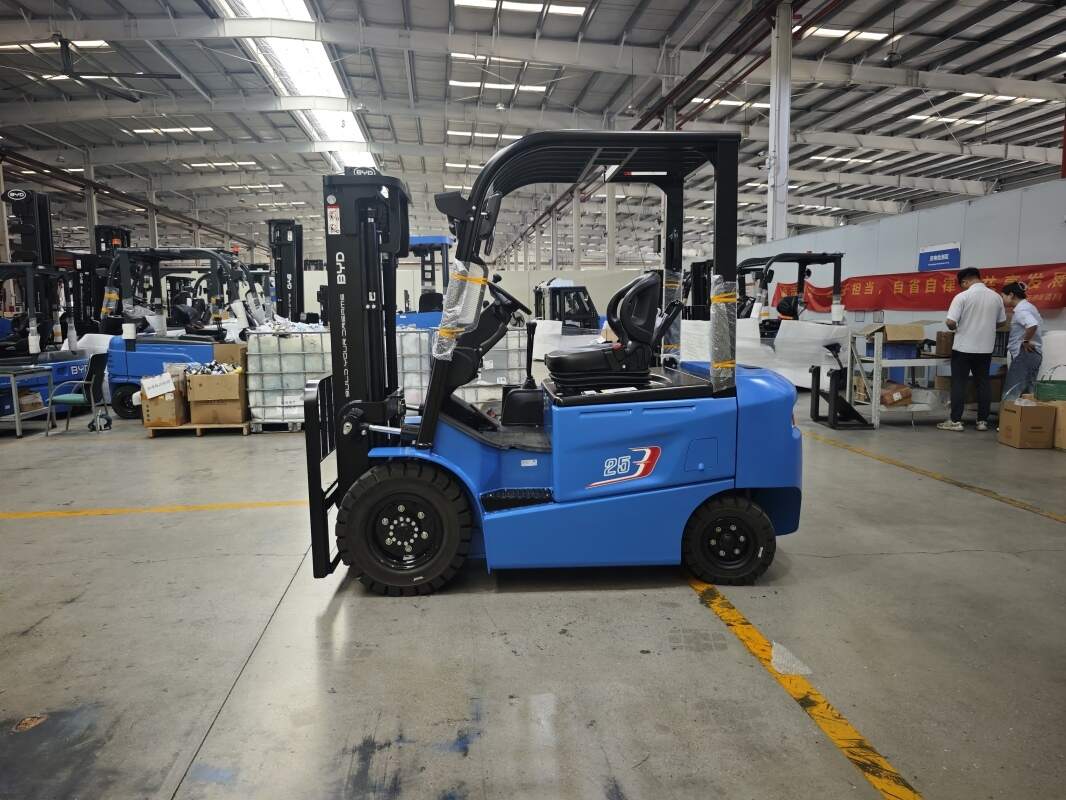
As low-carbon logistics and standardized warehouse management develop rapidly in recent years, electric forklift has become a common and widely recognized material handling equipment for most indoor and semi-outdoor working scenarios. Compared with internal combustion counterparts, it features lower operating noise, no exhaust emission and relatively lower long-term operation cost, which requires operators to master corresponding professional knowledge to give full play to its normal performance.
Basic Operation Norms for Electric Forklift
Before formal operation, operators need to complete corresponding safety training and pass official assessment, check the remaining power, brake sensitivity, lifting mechanism flexibility and tire condition before starting the equipment every shift. During operation, staff should keep proper driving speed according to site road condition, avoid sharp turn or sudden brake when carrying loads, keep the load center within the allowable range marked on the equipment nameplate, and do not carry overweight goods to avoid potential safety hazards. When the equipment gives low power warning, operators should arrange to return to charging area in proper route in time, do not continue to operate under low power state for a long time to avoid damage to the power supply system.
Daily Routine Maintenance Practices
Regular proper maintenance can effectively extend the service life of electric forklift and reduce unexpected failure rate. After each shift, operators should wipe off the dust and sundries attached to the vehicle body, check the surface condition of power connector, keep the contact part clean and dry, avoid residual water or dust causing poor contact. Professional maintenance personnel should check the wear condition of walking motor, hydraulic oil level and lubrication status of transmission parts every fixed cycle, replace the aging fitting according to actual wear degree, and do not use unqualified replacement parts to avoid abnormal operation. The charging environment should keep good ventilation, avoid high temperature or humid condition, operators should follow the official guidance of equipment to complete charging operation, do not overcharge for a long time.
Application Efficiency Optimization Suggestions
In actual warehouse operation, managers can arrange operation route reasonably according to the site space layout, reduce unnecessary turning and reversing times, plan the goods stacking position within the maximum allowable lifting height of the equipment. For different working scenarios, select the matching attachment according to actual demand, to expand the application scope of the equipment without modifying the core structure privately. Regularly organize operators to carry out skill update training, help staff master the latest operation skills and safety specifications, to ensure stable operation of all material handling links.


