
 简体中文
 Русский
 Français
 Português
 Español
 لالعربية


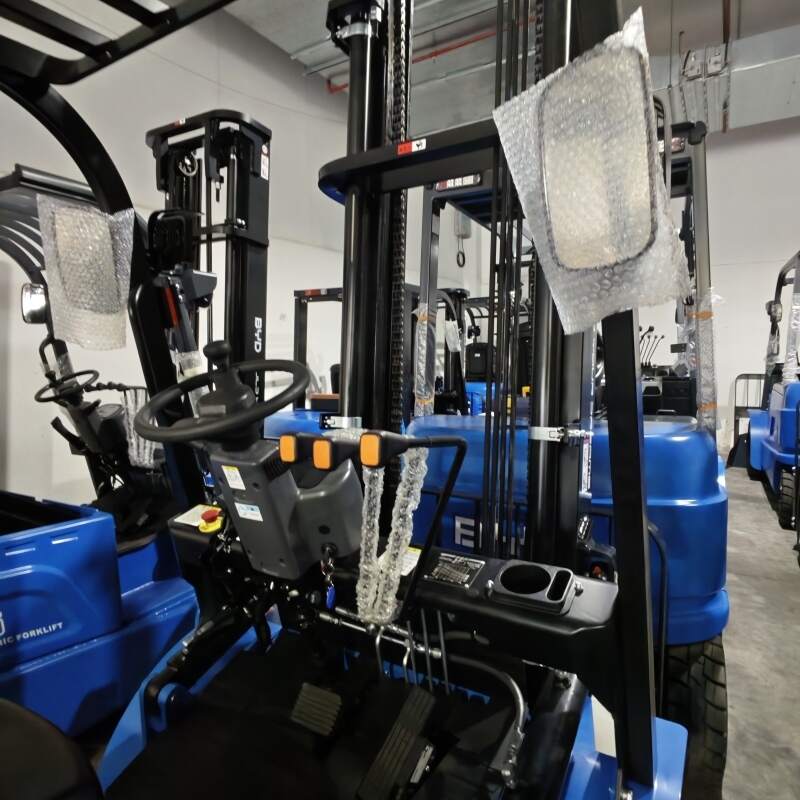
As low-carbon logistics development gains wider recognition across the material handling sector, electric forklifts have gradually become common core equipment in most warehouse and distribution center scenarios, replacing a large share of traditional internal combustion handling equipment. Mastering proper use and management rules can help operators give full play to the performance of such equipment and reduce unnecessary operation risks.
Core Advantages of Electric Forklifts for Modern Logistics
Different from fuel-powered counterparts, electric forklifts rely on battery packs as the core power source, which produces no tail gas emission during operation, making it more suitable for semi-enclosed and fully enclosed indoor working environments with poor ventilation. The overall noise level during operation is also controlled at a relatively low range, which will not cause continuous disturbance to other on-site staff working around, creating a more comfortable working environment for the whole team. The power output curve of electric forklifts is smoother, which can provide more stable power support in frequent start-stop and short-distance commuting scenarios, adapting to the high-frequency operation rhythm of modern warehouses.
Standard Operation Norms for Daily Use
Before each formal shift, operators need to conduct a quick pre-use check, covering the remaining power status of the battery, the flexibility of the steering and lifting system, the braking sensitivity and the normal operation of the light prompt devices. Operators need to receive corresponding professional training before taking up the post, and avoid overloading the equipment beyond the rated load range during the handling process. When driving along the passage, keep a safe distance from surrounding shelves, staff and other handling equipment, and slow down in areas with poor sight lines to avoid collision risks.
Routine Maintenance Tips to Extend Service Life
After each shift is over, operators need to park the electric forklift in the designated parking area, lower the lifting fork to the lowest position, cut off the power supply in time, and connect the equipment to the corresponding charging device according to the actual remaining power. It is not recommended to leave the battery in a long-term undercharged state, which may affect the overall performance of the battery pack in the long run. Regularly clean the dust and debris accumulated on the surface of the equipment and inside the moving parts, check the wear degree of the tire and replace the worn parts in time according to the actual use situation.
Applicable Scenario Matching Suggestions
For different operation demands, users can select the corresponding configuration of electric forklift products according to the actual load weight, maximum handling height and the width of the on-site passage. For cold storage, food processing and other scenarios with special environmental requirements, electric forklifts can better meet the industry access requirements compared with fuel models. With reasonable operation and maintenance management, the electric forklift can maintain a stable working state for a long time, bringing reliable support for the daily operation of the whole logistics system.


