
 简体中文
 Русский
 Français
 Português
 Español
 لالعربية


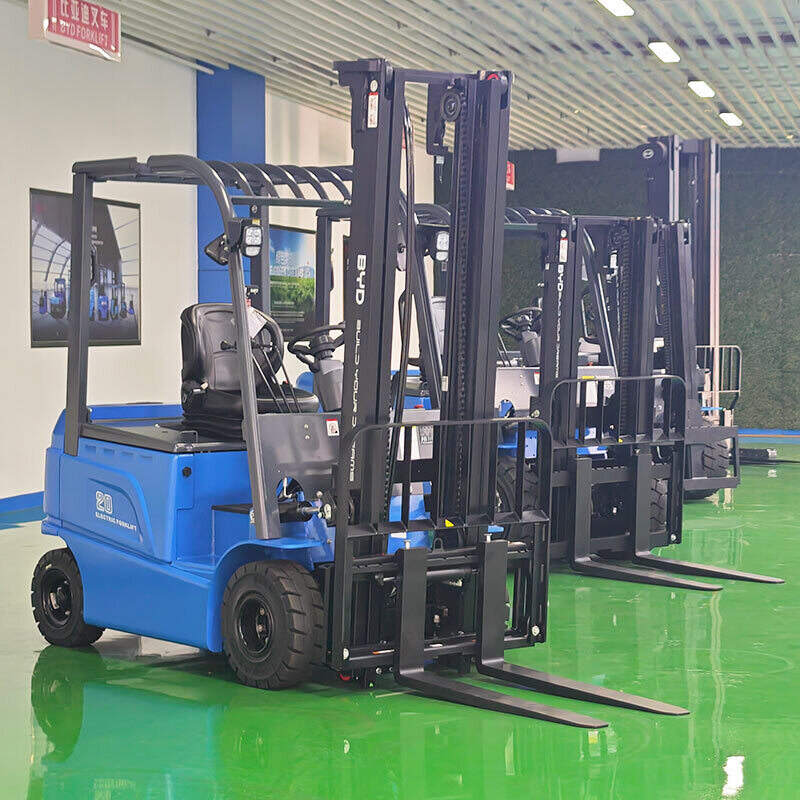
As the global warehousing and manufacturing industry gradually improves the requirements for low-carbon operation, electric forklifts have become the mainstream material handling equipment chosen by most operation scenarios. Systematic mastery of relevant application knowledge can effectively reduce unnecessary operation loss, lower long-term comprehensive use cost, and create a more stable and safe operation environment for frontline operators.
Standard Pre-operation Check and Operation Specification
Before starting each shift of operation, operators need to complete a full range of appearance and function check first, including checking tire wear status, brake response sensitivity, whether the connecting parts of the gantry are loose, and whether the external circuit of the power system has exposed damage. It is not allowed to start the equipment for formal operation before eliminating all hidden dangers that can be found through visual inspection. In the process of operation, the driving speed should be kept within the safe range adapted to the site environment, sudden steering and emergency braking should be avoided as much as possible when carrying loaded goods, and the actual load weight should not exceed the rated load value marked on the official nameplate of the equipment, so as to avoid the risk of equipment rollover or goods slipping. When stacking or unstacking high-position goods, the sight of the operator should be kept as much as possible on the position of the goods and the surrounding obstacles, and the operation action should be smooth and gentle.
Daily Maintenance Strategies to Optimize Service Cycle
Different from internal combustion handling equipment, electric forklifts focus on the maintenance of power components and electrical systems in daily management. After each use, the remaining power of the battery should be checked in time, and long-term storage in a power loss state should be avoided, which may cause irreversible attenuation of battery performance. The dust and sundries accumulated in the heat dissipation gap of the equipment should be cleaned regularly to ensure that the heat dissipation efficiency of the power system remains in a normal state. The movable connection points of the gantry and the steering system should be lubricated on a regular cycle, to reduce the mechanical wear caused by long-term reciprocating operation. It is not recommended to use high-pressure water to directly flush the electrical control compartment during cleaning, to avoid short circuit failure caused by water entering the precision electrical components.
Scenario Adaptation and Efficiency Improvement Suggestions
For different operation scenarios, appropriate adjustment of operation details can further maximize the use value of electric forklifts. For narrow-channel dense storage scenes, adjust the maximum running speed to a relatively gentle range, and plan the operation path in advance, which can effectively reduce the collision risk between the equipment and the shelf. For outdoor flat operation scenes, keeping the tire pressure within the officially recommended standard range can reduce the rolling resistance of the vehicle, effectively reduce unnecessary power consumption, and increase the single continuous operation time. For high-frequency operation scenarios with long continuous working hours, arrange intermittent charging intervals reasonably according to the actual power state, which can avoid unexpected shutdown of equipment in the peak operation period and affect the overall logistics operation rhythm.


