
 简体中文
 Русский
 Français
 Português
 Español
 لالعربية


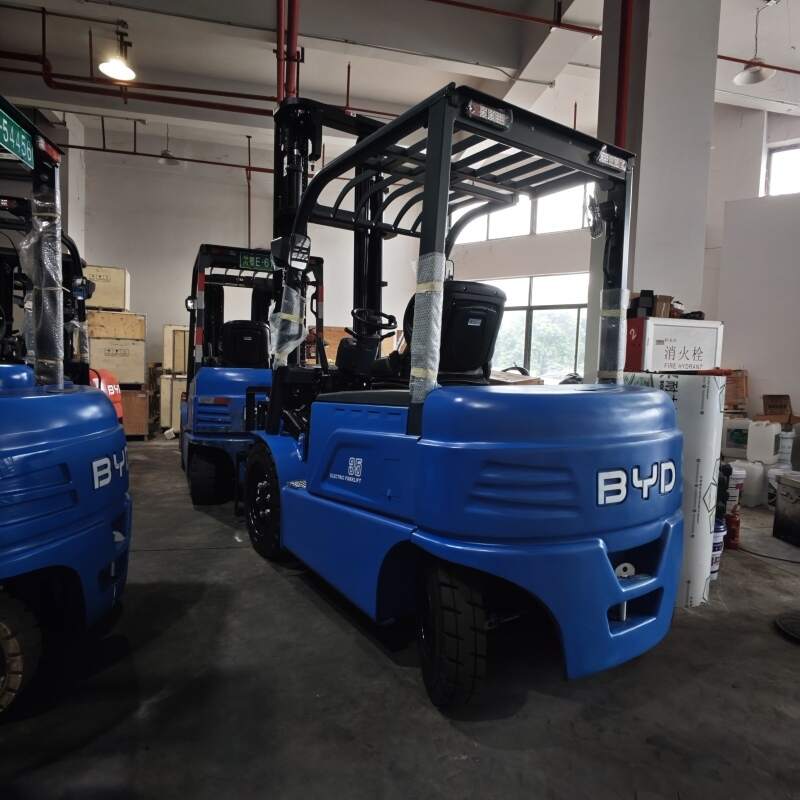
With the continuous development of green logistics, electric forklifts have become one of the most widely used material handling equipment in modern warehouses, manufacturing workshops and distribution centers. Unlike internal combustion counterparts, electric forklifts feature lower noise emission, no exhaust pollution, and relatively lower long-term operating cost, which fit the current low-carbon development trend of various industrial scenarios.
Core Performance Characteristics of Qualified Electric Forklifts
Most standard electric forklift models are designed with load capacity ranging from 1 ton to 5 tons, which can meet the handling demands of most conventional industrial scenarios. The whole vehicle structure focuses on the protection of core power components, to ensure stable operation even under continuous high-intensity working conditions for 6 to 8 hours. The adjustable mast lifting height can be adapted to different shelf layout demands, which improves the space utilization rate of the storage area to a certain extent. The built-in safety protection modules will trigger corresponding reminder mechanisms when abnormal operation occurs, to reduce the risk of accidental operation errors.
Standard Operation Specifications for Daily Usage
Operators need to receive systematic pre-job training before officially using the equipment, and get familiar with the basic operation logic of control levers, steering system and safety protection components. Before starting the vehicle every day, it is necessary to check the remaining power of the power module, the flexibility of the braking system, and the surface condition of the tire parts, to eliminate potential safety hazards in advance. During the operation process, operators need to avoid overloading beyond the rated load range, and keep a safe distance from surrounding personnel and obstacles when turning and lifting goods, to ensure the smooth progress of handling work.
Routine Maintenance and Energy Saving Tips
Regular maintenance work can effectively extend the service life of core components, and reduce the probability of unexpected equipment failure. Users can arrange professional personnel to clean the dust and sundries on the surface of the power module and motor parts every 2 to 4 weeks, check the wear degree of transmission parts regularly, and add appropriate amount of lubricating oil according to the actual usage frequency. To improve energy efficiency, it is recommended to charge the equipment in a dry and ventilated environment, avoid over-discharging the power module, and plan the handling route reasonably during peak operation hours to reduce unnecessary repeated driving paths. For different working scenarios, users can select corresponding configuration parameters of electric forklifts according to actual ground condition, average handling distance and maximum load weight, to get stable and efficient equipment usage experience.


