
 简体中文
 Русский
 Français
 Português
 Español
 لالعربية


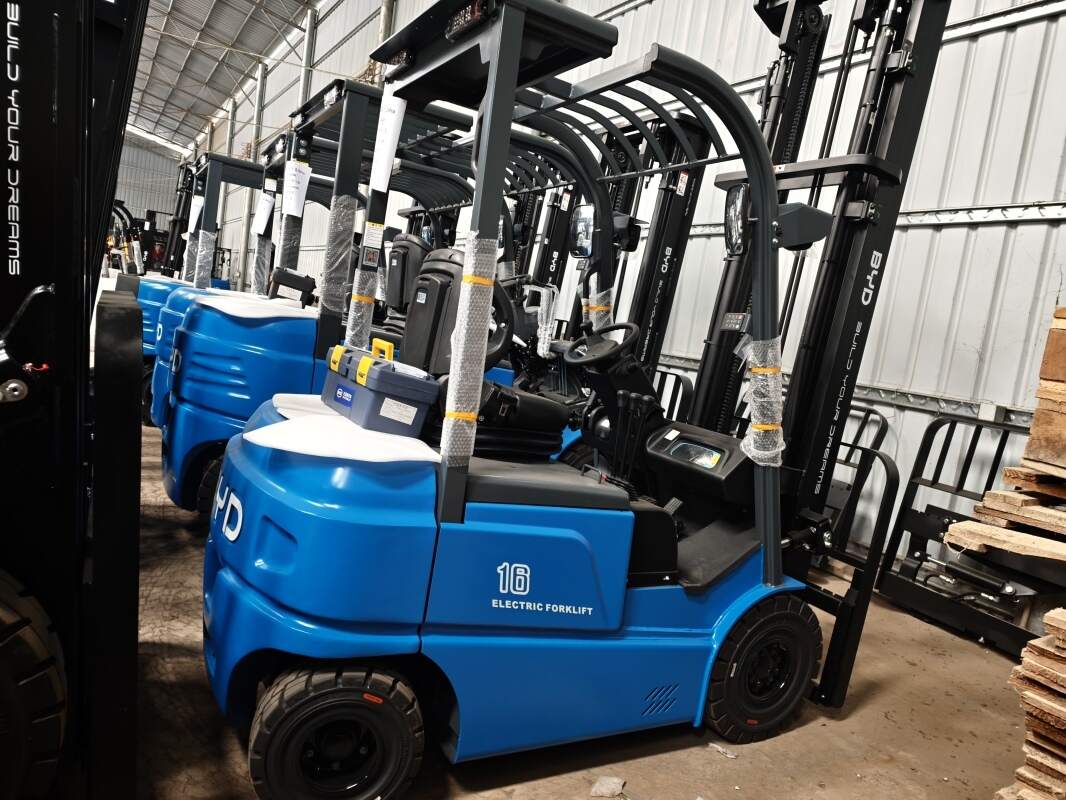
With the continuous development of low-carbon logistics systems across various industrial sectors, electric forklifts have become one of the most widely deployed material handling equipment in closed indoor operation scenarios in recent years. Compared with traditional internal combustion counterparts, their operation features lower noise emission, zero on-site exhaust and relatively lower long-term operating cost, which fits the development trend of modern green industrial operation.
Core Performance Characteristics of Electric Forklifts in Daily Use
The power system of conventional electric forklifts is composed of energy storage battery and driving motor, with stable power output, small turning radius, which is suitable for narrow warehouse passages. The response speed of the whole machine operation is uniform, which reduces the probability of operational errors. Most of the current models of electric forklifts adopt ergonomic design for human-machine interaction interface, effectively reducing the fatigue level of operators after long hours of continuous work in shifts.
Standard Operation Specifications to Avoid Unnecessary Risks
Operators need to complete systematic professional operation training before taking up the post. Before each operation, they should check the braking system, remaining power, and lifting functions to confirm all parts are in normal state. During operation, the load weight should be strictly controlled within the rated load range, and overloading operation is not allowed. In narrow passages and crowded areas, operators should give prompt honking in advance, control the driving speed within the safe interval. When unloading and stacking goods, pay full attention to the distribution of surrounding obstacles, to avoid goods scratching storage shelves or nearby working personnel.
Routine Maintenance Strategies to Optimize Equipment Status
After daily operation, operators should park the equipment in the designated charging area in time, and complete the energy supplement of remaining power. It is necessary to check the appearance state of the battery pack regularly, clean the dust and sundries attached to the electrode interface to avoid poor contact affecting charging efficiency. Lubricate the transmission parts of the lifting chain and walking wheel regularly, check the wear degree of the brake pads, and replace the wearing parts whose loss reaches the threshold in time. Do not disassemble the power control system of the equipment without permission, and all fault troubleshooting work should be completed by professionally trained technical personnel.
Scenario Matching Suggestions to Maximize Operating Value
For different warehouse operation demands, select the electric forklift model with corresponding parameters. For high-level stacking scenarios, you can select the model whose mast lifting height meets the height requirement of storage shelves. For scenarios of frequent short-distance cargo transfer, you can select the model with lighter dead weight and more flexible steering. For scenarios of long-term high-frequency operation, you can select the configuration with larger energy storage capacity. Reasonable model matching can give full play to the comprehensive use efficiency of the equipment.


