
 简体中文
 Русский
 Français
 Português
 Español
 لالعربية


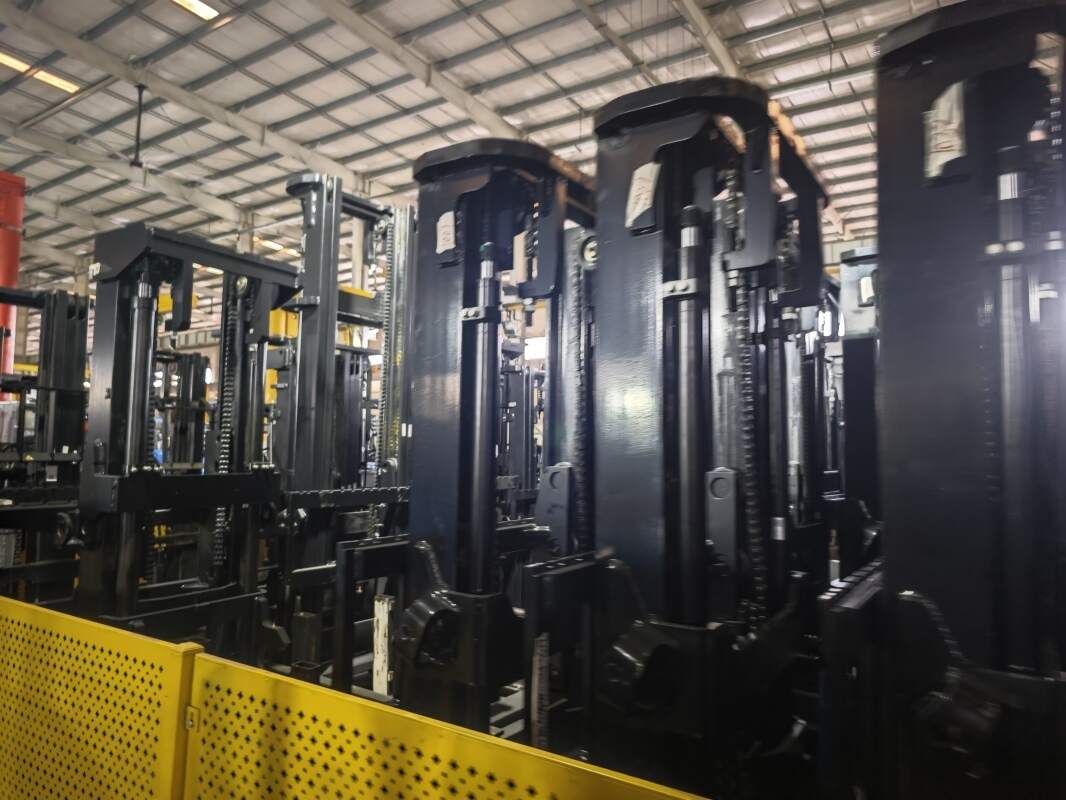
As energy-saving and environment-friendly material handling tools, electric forklifts have been widely applied in various logistics, manufacturing and storage scenarios in recent years. Mastering correct use and management rules can help relevant practitioners give full play to the equipment’s advantages, reduce unnecessary loss and lower long-term operation cost.
Core Daily Operation Specifications
Before each start-up, operators need to conduct basic inspection on the braking system, power level, hydraulic lifting structure and surrounding operation environment, to rule out hidden risks in advance. During the operation process, staff should avoid overloading beyond the rated load range, slow down the speed when turning or passing through narrow aisles, and keep a safe distance from surrounding passing personnel and stacked goods. It is not recommended to carry out fierce operations such as sharply turning steering wheels or suddenly accelerating in a short time, which may cause extra abrasion to core components. When the equipment is not in use for a long time, operators should cut off the main power and park the vehicle in the designated flat area.
Routine Maintenance Reference Points
Regular daily maintenance helps prolong the whole service cycle of electric forklifts. Operators can check the abrasion condition of walking tires regularly, keep the surface of battery electrodes clean to avoid poor contact, and add proper lubricating oil to transmission and rotating parts on schedule. It is not suggested to park the equipment in high temperature, high humidity or heavy corrosive environment for a long time, to avoid premature aging of the shell and internal lines. For the power battery part, users should avoid over-discharging, and select the charger that matches the rated parameter to complete the charging process in a ventilated and dry environment.
Scenario Adaptation Optimization Tips
Different operation scenarios put forward different requirements for the performance of electric forklifts. For narrow-aisle storage scenarios, users can adjust the corresponding operation parameter settings to get better steering flexibility. For high-lifting operation scenarios, staff need to pay attention to the load weight attenuation with the increase of lifting height to avoid potential safety risks. For outdoor operation scenarios, personnel should do a good job in shell protection, and avoid long-term wading in rainy days. Regular calibration of the load sensing part can also help improve the operation accuracy and reduce the error in goods handling.


