
 简体中文
简体中文 Русский
 Français
 Português
 Español
 لالعربية

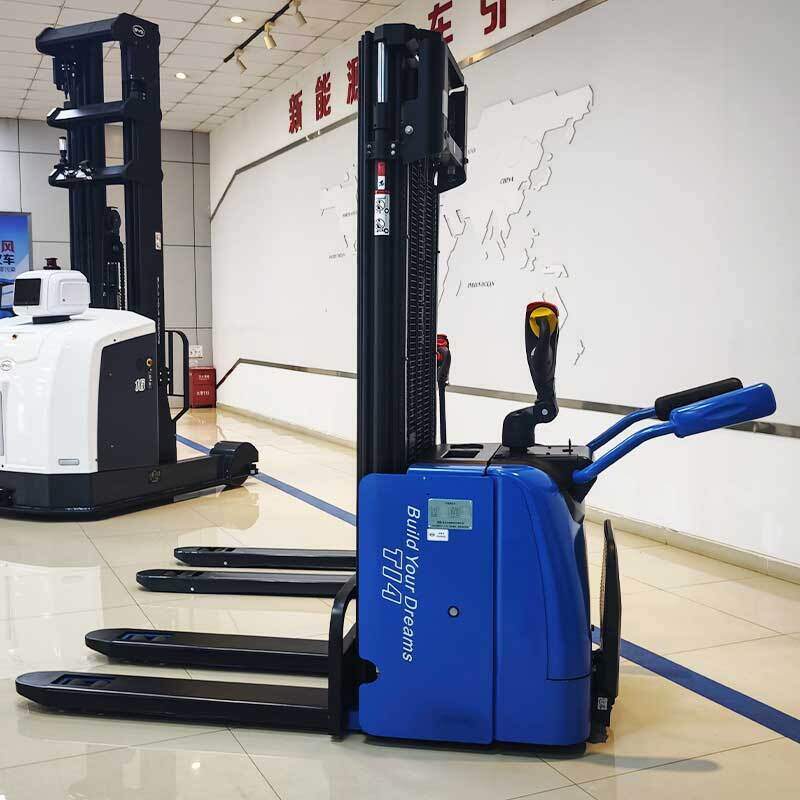
Electric forklifts are core material handling equipment widely used in warehousing, manufacturing and distribution scenarios, and standardized pre-use inspection before the first operation of each working day is the basic guarantee to avoid sudden failures, reduce safety risks and extend the service life of equipment. The whole inspection process shall be carried out in strict accordance with the following steps without missing any key links.
First, complete the appearance and peripheral component check before powering on. Operators need to walk around the whole equipment first to observe whether there is obvious external deformation, crack or oil leakage on the body structure, check the tire wear degree to confirm there is no foreign matter embedded in the tread and the tire pressure stays in the normal range, verify that the fixing parts of the wheel hub are not loose. Next, check the fork assembly to confirm there is no obvious bending or crack on the fork body, the positioning lock of the fork hook is in normal locking state, the mast structure has no abnormal welding crack, and the overhead guard is firmly fixed without loosening. For lead-acid battery models, operators also need to check the electrolyte liquid level to avoid leakage risk, and confirm the battery terminal connection has no obvious oxidation or virtual connection.
Second, finish the pre-power safety confirmation. Before inserting the key to power on, operators need to confirm all operation levers stay in the neutral position, the parking brake is fully pulled up, no sundries or irrelevant personnel stay in the 2-meter range around the whole equipment, and there is no obstacle that will affect the subsequent test operation. Do not power on the equipment under the condition of unclear surrounding environment to avoid accidental collision.
Third, carry out the function performance verification after power on. After the equipment is powered on normally, first observe the dashboard to confirm all fault indicator lights do not send out abnormal alarms, and the power display value meets the requirement of full-load operation for the current shift. Then test the braking system: drive the equipment at the lowest speed for a short distance, step on the brake device to confirm the braking response is sensitive and there is no unilateral deviation or slipping phenomenon. Then test the steering system, turn the steering wheel to the limit position in both forward and reverse direction to confirm there is no abnormal jamming or noise. Then test the lifting system, lift the fork to the height of 0.5 meters, keep it for 30 seconds to confirm there is no obvious sliding down of the fork, and the tension of the lifting chains on both sides is uniform. Finally, test all warning devices including the horn, safety warning light and reverse buzzer to ensure they can send out effective reminding signals normally.
After all above checks are completed, operators need to check the handover record of the previous shift, confirm no unprocessed hidden danger is recorded on the equipment, then sign on the daily inspection record form, and the electric forklift can be put into formal operation. Implementing these inspection requirements strictly can effectively reduce the occurrence rate of sudden equipment failures, help enterprises meet the occupational health and safety management specifications, and create a safer and more efficient material handling environment.


