
 English
 简体中文
简体中文 Русский
 Português
 Español
 لالعربية

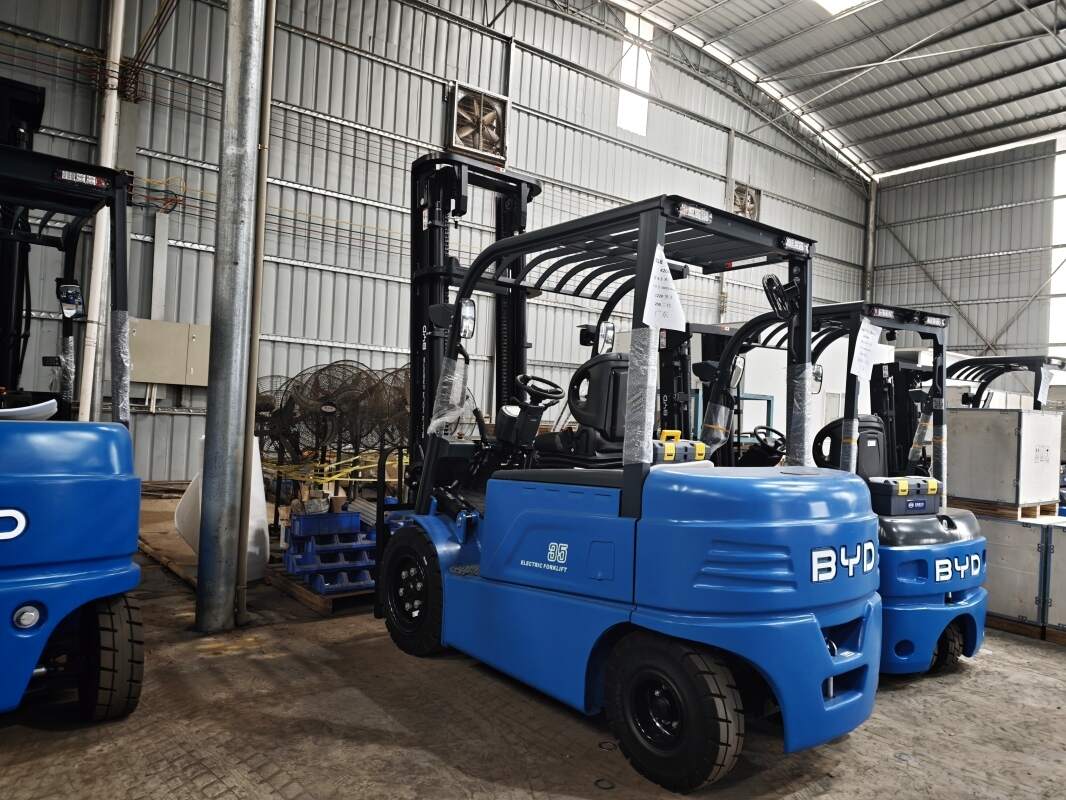
With the continuous promotion of low-carbon operation concepts in the modern industrial field, electric forklifts have gradually become one of the most widely used material handling equipment in various scenarios. Understanding the core performance, operation norms and maintenance logic of such equipment can help relevant practitioners give full play to its application value, and reduce unnecessary operating risks in daily work.
Core Performance Characteristics of Electric Forklifts
Compared with traditional internal combustion handling equipment, electric forklifts produce no local exhaust emission during the whole working process, and the overall operating noise is controlled at a relatively low level, which is more suitable for closed indoor scenarios such as standard warehouses, production workshops and cold storage areas. Its power system runs with relatively stable vibration, and the energy consumption cost per unit of operation is lower than that of fuel-powered equipment under normal use conditions, which can better adapt to the long-term operation needs of medium and small material handling scenarios.
Standardized Daily Operation Specifications
Before starting each operation, operators need to check the remaining power of the equipment, the sensitivity of the braking system, the tightness of the lifting chain and the smoothness of the steering structure, and confirm there are no irrelevant obstacles or personnel in the surrounding operation area. During the operation, the equipment shall not carry goods exceeding the rated load, no personnel shall stand or walk under the lifted lifting portal, operators need to slow down in advance when turning, and take reversing driving or arrange on-site guidance personnel when the line of sight is completely blocked by high stacked goods. It is not allowed to turn or park the equipment horizontally on the sloped ground to avoid potential sliding risks.
Practical Daily Maintenance Points
After finishing the daily operation, operators need to wipe off the dust and sundries accumulated on the body surface, and arrange charging work in the dry and ventilated special charging area in time, and try to avoid running the equipment until the power is completely exhausted. Regularly check the liquid level of the hydraulic oil, the heat dissipation state of the driving motor and the wear degree of the sealing parts, replace the aging accessories in time when abnormal signs are found. If the equipment needs to be idle for a long time, supplementary charging work shall be carried out at fixed intervals to slow down the performance attenuation of the power battery, so as to extend the overall service life of the equipment effectively. Following the above relevant norms to use and maintain electric forklifts can effectively improve the safety and stability of on-site material handling work, and reduce the comprehensive operating cost of the equipment in the whole life cycle.


