
 English
 简体中文
 Русский
 Português
 Español
 لالعربية


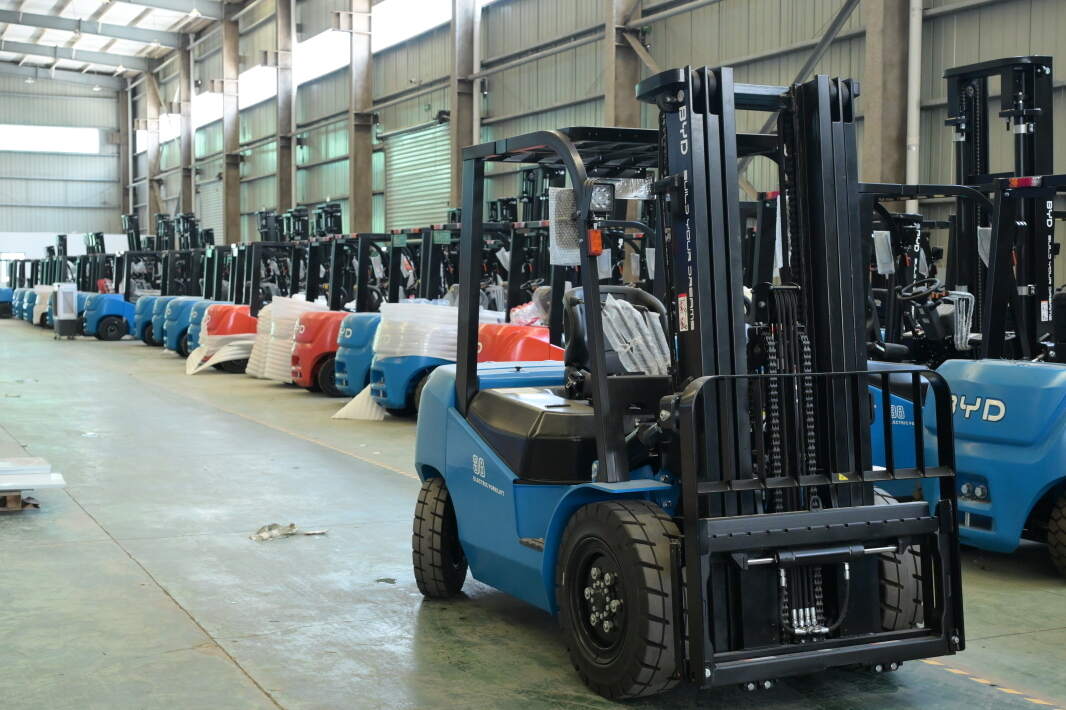
As the core supporting equipment for modern industrial and warehouse material handling, electric forklifts have been widely applied across multiple scenarios for their low running noise, zero local emissions and stable operating performance. Mastering standard operation rules and scientific maintenance methods can help operators avoid unnecessary equipment damage, reduce unexpected downtime and improve the overall operation efficiency of the logistics team.
Basic Daily Operation Norms
Before starting the equipment, operators need to check the remaining battery level, brake sensitivity, surface wear of forks and the surrounding working environment, to avoid hidden risks caused by unconfirmed status. During the driving process, operators should strictly follow the load limit marked on the equipment nameplate, avoid overloading that may cause damage to the hydraulic system or driving structure. When passing through narrow aisles or crowded working areas, operators should slow down and send out prompt signals to surrounding staff. When carrying goods, keep the fork 10 to 15 centimeters above the ground, avoid lifting the goods to a too high position during driving which may raise the center of gravity and cause side roll risks. It is not allowed to carry extra personnel on the equipment, and do not drive transversely on slopes to avoid safety accidents.
Routine Maintenance Key Points
For the power battery part, operators should follow the official charging specifications, avoid over-discharging the battery to less than 20% of total capacity for a long time, and use matched charging equipment to avoid damage to the battery cell structure. Operators need to regularly clean the dust and sundries accumulated at the heat dissipation vent, check the sealing status of the hydraulic pipeline to confirm no oil leakage, and check the wear degree of tire tread regularly. If the equipment is left idle for more than two weeks, arrange regular supplementary charging to maintain the battery activity, and wipe the surface of the equipment to avoid corrosive substances affecting the service life of the shell and circuit components.
Scenario Adaptation Suggestions
In special working scenarios such as low temperature cold storage, users can properly adjust the use frequency according to the equipment protection level, arrange short rest intervals after long time continuous operation to avoid overheating of the driving motor. In high humidity environment, regularly check the waterproof and moisture-proof performance of the circuit interface, to avoid short circuit caused by condensed water. Reasonable matching of operation rhythm and maintenance plan can help the electric forklift maintain a stable running state in long-term use, and effectively control the long-term operation cost of material handling links.


