
 English
 简体中文
 Русский
 Português
 Español
 لالعربية


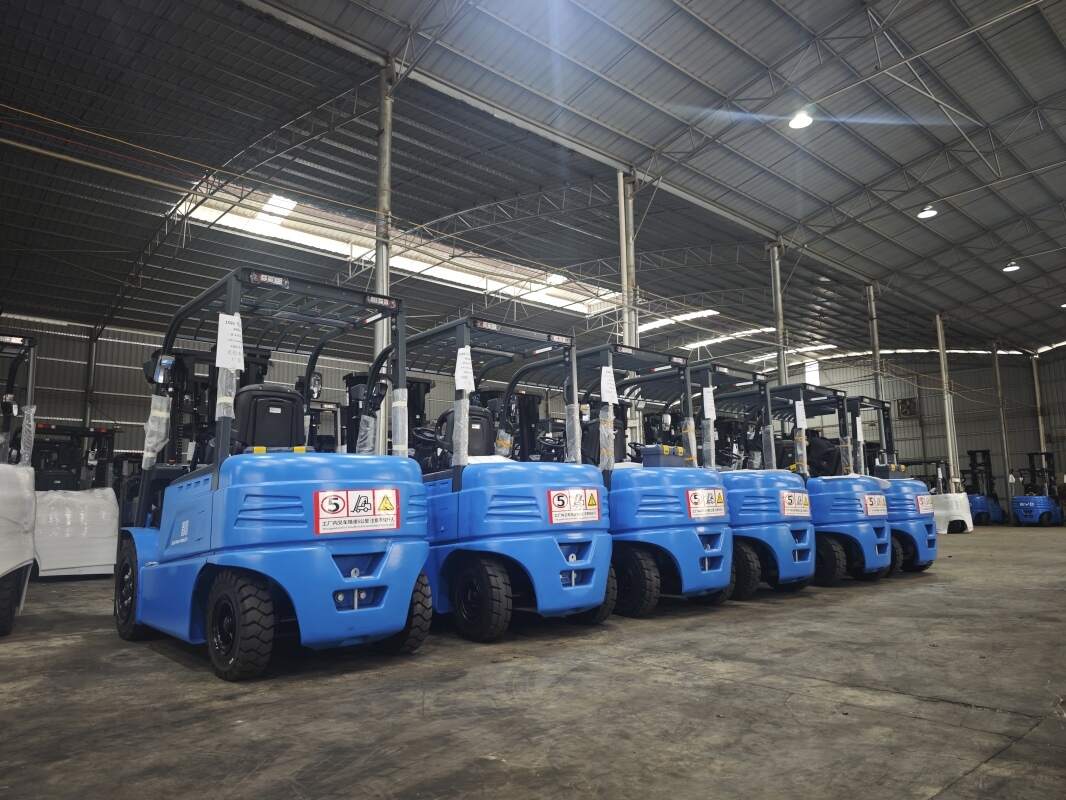
As low-carbon logistics development gains wider popularity across industrial sectors, electric forklifts have become one of the most widely applied material handling equipment in indoor warehouses, distribution centers and light manufacturing workshops. Compared with traditional fuel-powered handling equipment, electric forklifts show unique value in operation cost control, noise reduction and emission reduction, and mastering its full application logic can help enterprises give full play to equipment use value while reducing unnecessary operation risks.
Core Advantages of Electric Forklifts in Modern Warehousing
Most electric forklifts rely on rechargeable power modules as the energy source, which does not produce exhaust gas during the whole operation process, so they are more suitable for closed indoor working scenes that have high requirements for air quality. The overall noise level of driving and cargo lifting process is far lower than that of fuel equipment, which can reduce long-term hearing fatigue of on-site operators and create a more comfortable working environment. The energy consumption cost per unit running time is relatively low, and the transmission structure is simpler than that of fuel power systems, which reduces the number of vulnerable parts that need frequent replacement in daily use.
Standard Daily Operation Specifications for Operators
Before starting each shift, operators need to check the remaining power of the power module, the flexibility of the braking system, the integrity of the tire surface and the sensitivity of the lifting control handle, and record abnormal conditions in time before putting the equipment into operation. During the operation process, operators should avoid sudden acceleration and sudden steering when the vehicle is fully loaded, keep a safe distance from surrounding personnel and stacking shelves, and do not lift the load beyond the rated load mark of the equipment for a long time. When the operation task of the shift is completed, the equipment should be parked in the designated charging area, the supporting legs and lifting gantry should be placed at the lowest safe position, and the power switch should be turned off to avoid unnecessary power loss.
Targeted Regular Maintenance Measures
The power module is the core component of the electric forklift, and operators should regularly check the tightness of the connecting terminals, keep the surface of the power module clean and dry, and avoid using damp rags to wipe the internal circuit structure. The lubrication points of the lifting gantry and the walking bearing parts should be filled with special lubricating grease at the specified cycle to reduce the abrasion loss caused by long-term friction. The old lubricating oil in the hydraulic system should be replaced regularly according to the use frequency, and the sealing ring of the hydraulic pipeline should be checked for aging, so as to avoid the phenomenon of slow lifting or load falling during the operation process.
Practical Efficiency Improvement Practices
Enterprises can arrange the charging schedule of electric forklifts reasonably according to the peak and trough period of daily material handling tasks, and avoid arranging a large number of equipment centralized charging in the peak working period, which will lead to the shortage of available handling capacity. Operators can classify the weight of daily handling goods in advance, and match the electric forklifts with corresponding rated load according to different working scenarios, so as to avoid the waste of equipment performance caused by using large-tonnage equipment to handle light goods for a long time. A set of dynamic equipment scheduling mechanism can be established according to the actual layout of the warehouse, so as to reduce the no-load driving distance of the forklift between different operation points, and further improve the overall operation efficiency of the whole handling link.


