
 English
 简体中文
 Русский
 Français
 Português
 لالعربية


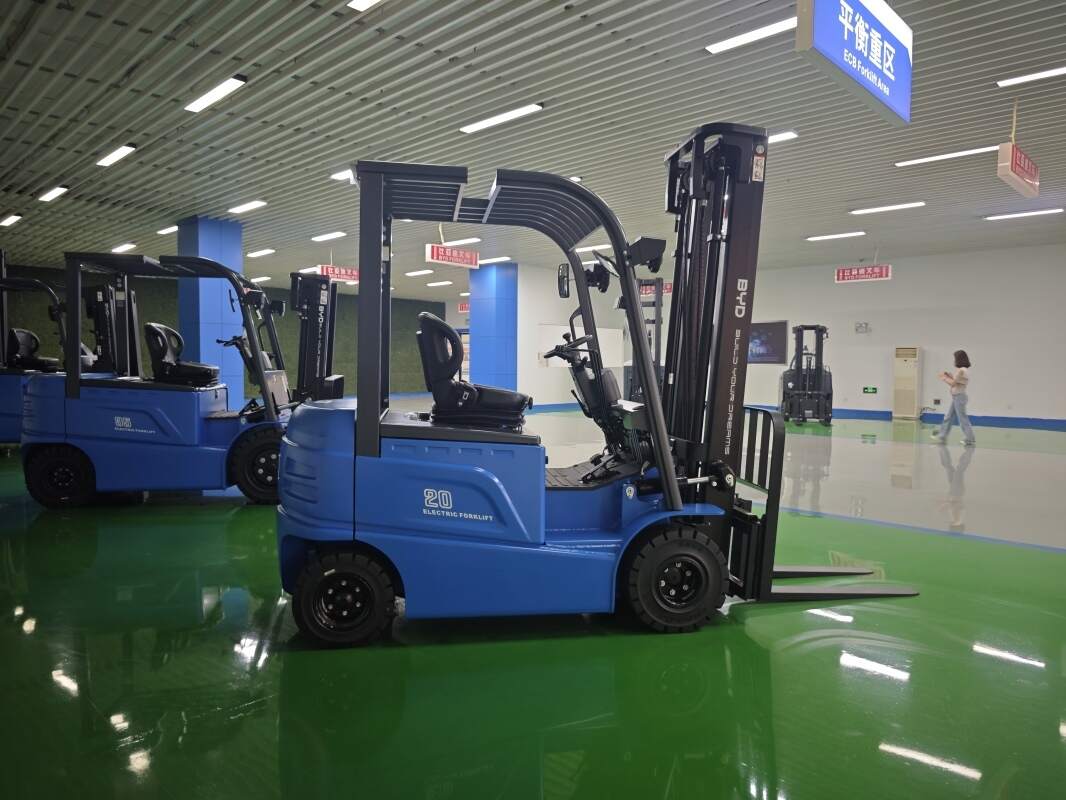
Electric forklifts have become a core type of material handling equipment widely applied in modern warehousing, manufacturing, and logistics distribution sectors in recent years. This professional guide sorts out verified industry practical knowledge for frontline operators, warehouse managers and equipment management personnel, to help them grasp correct use logic and maximize the value of such equipment.
Core Performance Features of Electric Forklifts
Compared with traditional internal combustion counterparts, modern electric forklifts produce no exhaust emission on the operation site, and generate much lower running noise, which is more suitable for long-time working in closed indoor spaces. The energy consumption cost per unit running hour is relatively controllable, and the overall operation cost in long term use shows prominent advantages for most indoor working scenarios. The whole structure has fewer wearing parts related to power output, which reduces extra workload of daily fault elimination for equipment management teams.
Standardized Daily Operation Rules
Operators need to complete corresponding professional skill training before formal on-duty work. Before each start, personnel need to check the sensitivity of brake system, remaining power display, and the flexibility of all control levers. Before entering the appointed working zone, operators should confirm no unrelated obstacles or wandering personnel in the operation route. Under heavy load state, the driving speed should be kept at a relatively low level, and operators should honk in advance when turning, to avoid safety risks. It is not suggested to drive transversely on sloped surfaces, to prevent cargo slipping or sideslip of the equipment.
Routine Maintenance and Management Tips
Operators should arrange proper charging after daily operation, and try to avoid running the battery until full depletion, which can extend the overall cycle life of the power unit. It is suggested to check the battery connection terminals regularly to confirm no obvious oxidation trace, and check the hydraulic system for possible oil leakage at fixed intervals. If the tire wear degree exceeds the preset safety threshold, relevant components need to be replaced in time. Personnel can clean up dust and sundries attached on the equipment surface periodically, to prevent debris from entering moving parts and causing unnecessary wear. Professional technicians can be arranged to conduct in-depth inspection according to the cycle specified by official operation manuals.
Reasonable Scenario Matching Suggestions
Different working scenarios can select electric forklifts with matching parameters, to get better use experience. For warehouses with high position shelves, users can choose models with matched lifting height, to meet the demand of high-position cargo access. For narrow aisle working zones, compact body models can be selected to improve the space utilization rate of the warehouse. For low temperature cold storage working scenes, users can choose specially adapted models to cope with special working conditions. Proper parameter matching between equipment and actual demand helps to extend equipment service life, and promote the overall cargo turnover efficiency.


