English
 简体中文
 Русский
 Français
 Português
 لالعربية


For warehouse and industrial material handling operations, selecting the right forklift model directly affects operation efficiency, safety and long-term operating cost. Many operation managers often face the choice between counterbalance forklift and reach truck, two of the most widely used electric warehouse handling equipment, and sorting out their core applicable scenarios can avoid unnecessary investment waste.
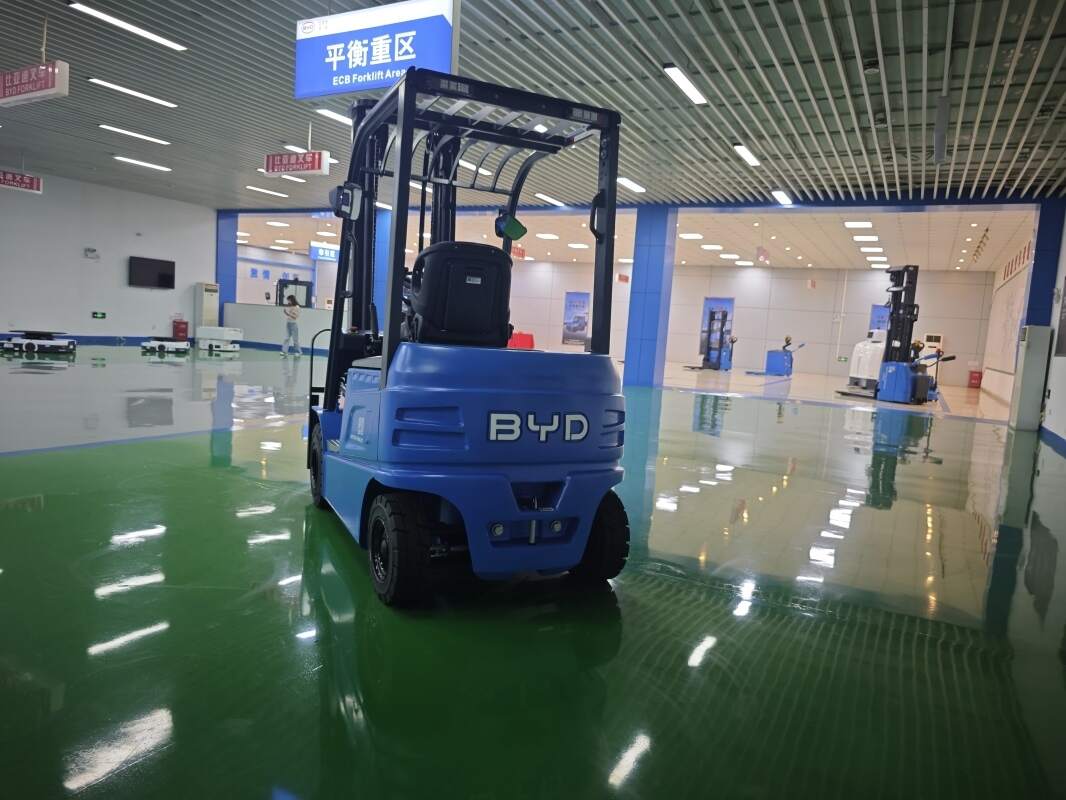
The first core factor to evaluate is the required working aisle width. The counterbalance forklift relies on the rear counterweight to offset the load torque at the front end, and it does not need additional supporting legs to extend into the operation area, so its minimum required working aisle width is usually 3.2 to 3.8 meters, which is friendly for scenarios that need to frequently turn and adjust position. The reach truck adopts the design that the mast or fork can move forward for a certain distance, so its required minimum working aisle width is only 2.6 to 3.2 meters, which can save more warehouse space for arranging storage racks.
The second key reference factor is the required maximum lifting height. The conventional electric counterbalance forklift is mostly designed with lifting height between 3 meters and 6 meters. Limited by the overall center of gravity structure, if the lifting height is further increased, its operation stability will decrease accordingly, so it is more suitable for scenarios with medium and low racks, frequent cross-zone material transfer and loading and unloading operations. The reach truck is optimized for high-position access scenarios, whose conventional lifting height can reach 8 to 12 meters, and can give full play to its advantages in high-density three-dimensional storage warehouses.
The third factor to consider is the actual operation scenario coverage. The electric counterbalance forklift has a wider load capacity range, and it can adapt to operations on flat outdoor pavement besides indoor scenes, with relatively low requirements on ground flatness and ground bearing capacity. The reach truck is more suitable for closed indoor scenes, with relatively higher requirements on ground flatness, and its load capacity is mostly concentrated in the range of 1 ton to 2.5 tons, which is more targeted for special storage access scenarios.
When making final selection, operators can make comprehensive judgment combined with their own actual aisle size, rack height, load weight and daily operation scope. We are Jianshu New Energy, focusing on BYD electric forklifts. If you have any demand for model consultation and supporting scheme, you can contact us via [email protected].