
 English
 简体中文
简体中文 Русский
 Français
 Português
 لالعربية

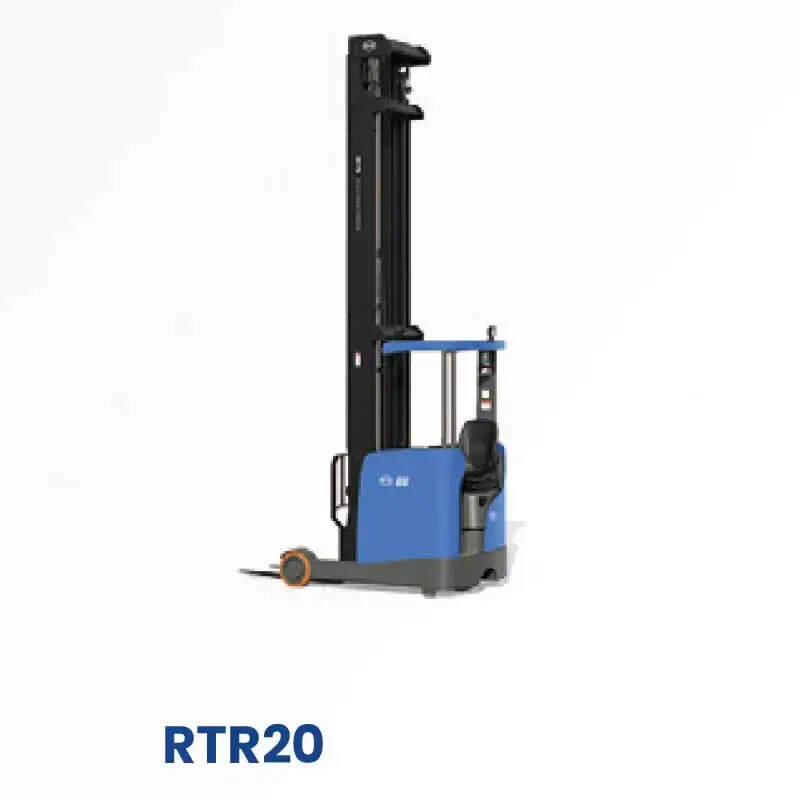
Electric forklifts have emerged as a widely adopted core equipment in modern logistics and warehouse scenarios, with obvious advantages including low operating noise, zero on-site emissions and relatively low long-term operation costs. For frontline operators and facility managers, mastering standardized use and management methods can help give full play to equipment performance, reduce unnecessary downtime, and provide reliable support for daily material handling tasks.
Standard Operation Specifications for Daily Use
Before each startup, operators need to complete basic inspections covering remaining battery level, brake sensitivity, fork deformation status and warning device function, to eliminate hidden risks before operation. It is not recommended to drive the equipment with overload cargo, nor to operate on roads with slope exceeding the official rated parameter, so as to avoid side slip or equipment damage. During the driving process in narrow warehouse aisles, operators should slow down in advance and send out proper warning to nearby walking staff, to avoid accidental collisions. It is also not allowed to lift personnel by the cargo forks for high-place operation, which does not conform to general safety operation norms.
Routine Maintenance Guidelines to Extend Service Life
Regular basic maintenance work can effectively reduce the failure rate of electric forklifts in long-term use. Operators need to keep the surface of battery components clean, arrange charging work in a cool and ventilated environment, and avoid frequent full discharge behavior which may cause damage to the battery structure. It is also necessary to check the hydraulic oil level, tire wear degree and connector tightness at fixed intervals, to ensure all functional modules work in normal status. When the equipment is left idle for a long time, operators should lower the forks to the lowest position, pull up the hand brake, and disconnect the main power switch to avoid unnecessary power consumption.
Scenario Adaptation Tips for Different Application Demands
For special operation scenarios, targeted adjustment of usage schemes can further improve the matching degree between equipment and work tasks. For cold chain storage scenarios at low ambient temperature, operators need to regularly check the wiring interfaces for condensation, and follow the official guidelines for low-temperature use of batteries. For high-frequency continuous operation scenarios such as logistics distribution centers, arranging reasonable battery rotation charging schemes can effectively reduce the waiting time caused by power supplement. For fully enclosed indoor operation scenarios, regular cleaning of the heat dissipation channel can keep the equipment running stably for a long time. Scientific and normative operation and management processes can help electric forklifts create greater value for different logistics operation systems, and bring more stable output for daily material handling work.


