
 English
 Русский
 Français
 Português
 Español
 لالعربية


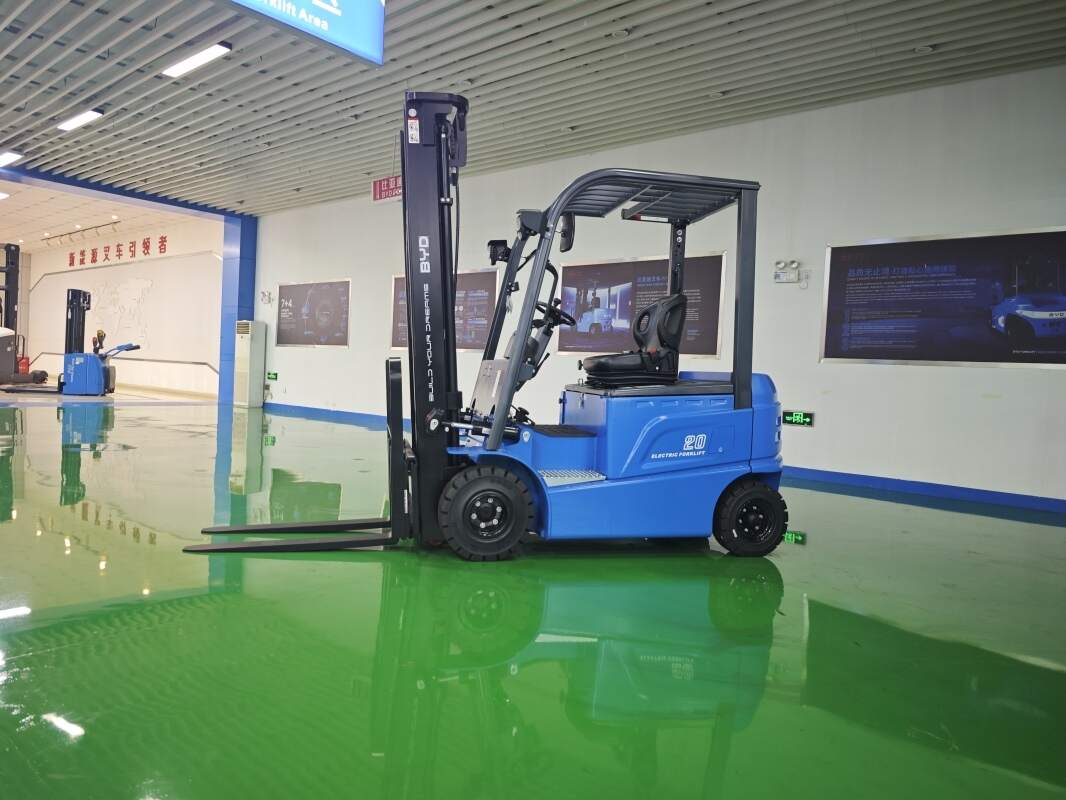
As low-carbon logistics development continues to expand across the material handling sector, electric forklifts have become one of the most widely applied equipment in modern warehouse scenarios, bringing notable advantages in low noise and zero local emission over traditional internal combustion counterparts. Mastering proper operation and maintenance rules of such equipment can help operation teams obtain better use experience and more stable output.
Core Daily Operation Specifications
Before each shift, operators need to complete a full pre-operation check covering remaining battery level, braking sensitivity, lifting component flexibility and tire condition, to rule out hidden risks before formal work. Operators need to follow load limit requirements clearly marked on the equipment body, avoid overloading goods beyond rated capacity, and reduce sharp acceleration or sharp steering actions as much as possible during high-speed movement. For narrow aisle operation, operators need to keep full attention to surrounding obstacles and personnel, to avoid unnecessary collision that may cause damage to equipment or goods.
Standardized Daily Maintenance Routines
After each daily use, operators need to wipe off dust, sundries and residual goods debris attached to the equipment surface, especially the heat dissipation gaps of the power system and the connection parts of the battery pack. For the power battery assembly, users need to follow official charging procedures, avoid over-discharging the battery to extremely low level on a regular basis, and arrange full charge in a stable temperature environment. Maintenance personnel need to conduct regular inspection on the wiring harness, lubricate the movable hinge parts of the gantry regularly, and replace worn vulnerable parts in time according to actual operation status, to avoid small defects developing into larger failures that affect normal work schedules.
Energy Efficiency and Service Life Optimization Strategies
In daily operation, the warehouse management team can reasonably plan the goods handling route, reduce unnecessary long-distance empty driving of electric forklifts, and make full use of the equipment load capacity in each operation task. When the equipment is not in use for a long time, users need to park it in a dry, ventilated place that avoids direct sunlight or extreme low temperature environment, and keep the battery at medium charge level for storage. These simple and executable measures can effectively reduce the overall operating cost of the equipment, and support the stable operation of the entire warehouse material handling system.


