
 English
 Русский
 Français
 Português
 Español
 لالعربية

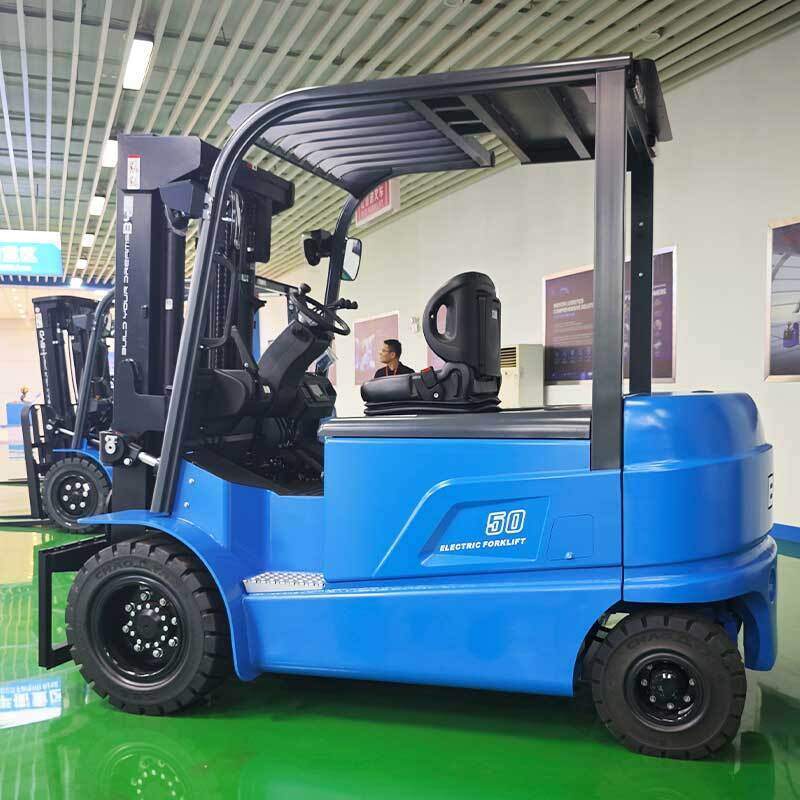
With the continuous promotion of low-carbon logistics in modern industrial scenarios, electric forklifts have become one of the most widely applied material handling equipment in closed warehouses, distribution centers and indoor workshop environments, due to their relatively low noise emission and zero local exhaust characteristics. Mastering standardized usage and maintenance rules can help fleet managers extend the service life of equipment, and improve overall operation efficiency of the whole logistics workflow, bringing stable operating benefits for the whole material handling system.
Core Operation Pre-check Tips
Before starting each shift of operation, operators need to complete a series of basic inspection steps, to avoid hidden safety risks caused by long time non-use or frequent heavy load operation. The inspection scope covers the power system status, tire wear level, lifting mechanism flexibility, brake sensitivity and lighting signal completeness. Operators should also confirm the surrounding working space is free of irrelevant personnel and obstacles before formal operation, to prevent accidental collision in narrow warehouse aisles, especially for the scenarios with dense stacked goods.
Standardized Operation Specifications in Daily Scenarios
During normal handling process, operators need to keep the load weight within the rated load range of the equipment, avoid sudden acceleration and emergency braking as much as possible, and keep the lifting height of the goods at the lowest safe position during moving process to reduce the risk of goods falling. When operating on ramp or uneven road sections, operators should adjust the driving speed reasonably, and avoid turning on slopes to prevent side slip of the equipment. For long distance transfer scenarios, it is recommended to run the equipment at a stable medium speed, to reduce unnecessary power consumption and cut the frequency of supplementary charging in working hours.
Scientific Daily Maintenance Rules
Regular maintenance work can effectively reduce the failure rate of electric forklifts, and cut long-term operation cost for logistics teams. For the power system, operators should follow the official charging rules, avoid full discharge or long time overcharge, and keep the surface of power modules dry and clean. For the hydraulic lifting system, it is necessary to check the sealing performance of the oil pipeline periodically, and replace the lubricating grease of the moving parts on schedule according to the operation hour statistics. After each operation shift, operators should park the equipment in the designated area, turn off all power supplies, and record the abnormal status observed in the operation process in the corresponding log for subsequent troubleshooting.


