
 English
 Русский
 Français
 Português
 Español
 لالعربية


Pedestrian operated electric forklifts are widely used in narrow warehouse aisles, retail back storage areas, small processing workshops and other scenarios that require high maneuverability and zero local emission. Different from ride-on forklift models, this type of material handling equipment is fully controlled by operators walking alongside the vehicle, which makes the control logic and matching conditions quite different from other products. Mastering the core influencing factors can help enterprises give full play to the use value of the equipment and avoid unnecessary operation risks.
1. Load and Travel Parameter Matching
The first key factor is the reasonable matching of load status and travel parameters. Operators need to strictly refer to the rated load mark on the forklift body, and do not place goods that exceed the specified weight on the fork. In the process of traveling, the running speed of the equipment should be kept within the range that matches the normal walking speed of the personnel, so as to ensure that the operator can respond to unexpected road conditions in time. When passing through gentle slopes or wet and slippery ground, the running state should be adjusted in advance to avoid sideslip or goods slipping.
2. Integrated Safety Protection Configuration
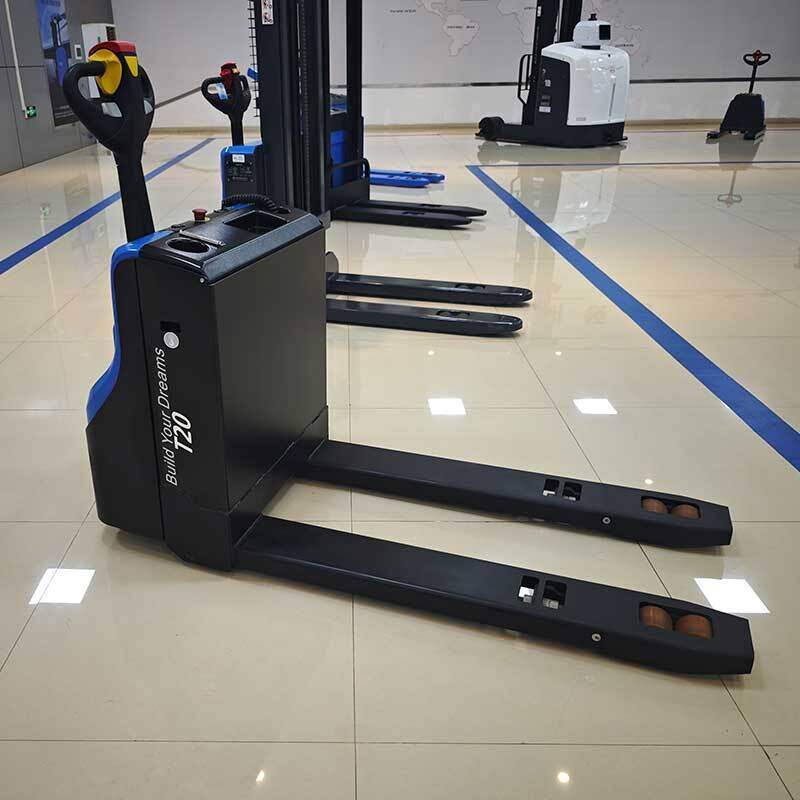
The second key factor is the full play of the supporting safety protection mechanisms. The standard configuration of qualified pedestrian operated electric forklifts includes emergency stop buttons, automatic deceleration modules when turning, sound and light warning prompts, and anti-collision surrounding protection structures. Operators should check the validity of these protection functions before each shift, and do not modify or shield the relevant safety components without authorization, to reduce the risk of collision with surrounding personnel and stacked goods.
3. Stable Battery Performance and Regular Maintenance
The third key factor is the reasonable management of power battery performance. The endurance of the battery should match the daily operation duration of the scene, to avoid sudden power failure in the middle of the handling process. In daily maintenance, staff should follow the specified operation guidelines to charge the equipment, avoid overcharging or deep discharge for a long time, and regularly check the connection status of the battery circuit, so as to extend the service life of the power system and reduce long-term operation cost.
4. Standardized Operator Training
The fourth key factor is the systematic training of operation personnel. New operators need to receive full operation skill training before taking up the job, get familiar with the control logic of the walking type electric forklift, and master the passage rules in different operation scenarios. Regular safety retraining can help personnel develop good operation habits, reduce misoperation, and create a safer working environment for the whole material handling process.
For users who need reliable pedestrian operated electric forklift products and supporting services, we are Jianshu New Energy, focusing on BYD electric forklift related supply and supporting solutions. For any consultation demand, you can contact us via [email protected].


